
In mid-September, Democrats showed their strongest lead in the election cycle, outpacing Republicans by 8.6 points among likely voters according to Quantus Insights. Emerson and Marquette also reported a clear Democratic advantage as control of Congress nears crucial examination.
This advantage comes amid a political climate influenced by dissatisfaction with the country’s trajectory and President Trump’s low approval ratings.
National generic-ballot polls reflect party voter preference for Congress rather than evaluating individual candidates. They provide a wider perspective of the political landscape, but local campaign dynamics, district boundaries, and voter turnout will ultimately decide the outcome.
Key Points
Quantus Insights identified Democrats leading by 50.3% to 41.7% among likely voters, marking their largest advantage this cycle. In Marquette surveys, Democrats led by eight points among registered voters and 13 points among likely voters. Emerson’s poll reflected an eight-point Democratic lead nationally, following an 11-point margin in July.
Quantus noted 60% of likely voters believe the nation is headed in the wrong direction. As of September 22, Kalshi estimated Democrats with a 61% chance of Senate control, while Polymarket showed a 65% implied probability for a Democratic congressional sweep.
RealClearPolling’s 2026 Generic Congressional Vote average put Democrats ahead by 8.5 points, with 50.5% to 42% support in polls conducted from September 2 to 20.
Analyzing the Democrats’ Lead
Quantus Insights conducted a survey from September 15 to 18 with 1,389 likely voters. Results showed 50.3% supporting Democrats in their district, 41.7% choosing Republicans, 6.3% undecided, and 1.7% preferring other candidates. The survey had a design-adjusted margin of error of plus or minus 2.9 points.
Democrats maintained a lead among habitual voters. Those who voted in the 2022 midterms favored Democrats 50% to 43.9%, while individuals participating in all general elections from 2018 to 2024 showed a preference for Democrats by 50.3% to 43.9%.
Several demographic divides help explain these outcomes:
- Gender: Women preferred Democrats by 20.3 points; men favored Republicans by 4.2 points.
- Age: Voters under 30 gave Democrats a lead of 33.7 points, while those aged 30 to 44 showed a 23.2-point advantage.
- Geography: Suburban voters backed Democrats by 49.9% to 42%, while rural voters supported Republicans 58.4% to 34.2%. Urban voters favored Democrats by 37.2 points.
Trump’s approval rating stood at 39.6%, with 59.1% disapproving, resulting in a net approval rating of -19.5 points. Although many expressed dissatisfaction with both parties, the Democratic lead did not translate into widespread confidence in governance.
Emerson and Marquette Polling
Other polling series echoed similar sentiments. Emerson College Polling, conducting a survey from August 16 to 17 among 1,000 likely voters, found Democrats leading 51% to 43%, with a 3-point margin of error. Marquette Law School’s poll from September 2 to 9 showed Democrats ahead 50% to 42% among 864 registered voters. Among 581 likely voters, their lead was 54% to 41%, with a margin of error of 4.3 points.
Though methodologically different, each poll indicates Democrats holding a distinct advantage, reinforcing challenges for Republicans.
Prediction Markets Sentiment
As of September 22, Kalshi predicted a 61% chance for Democratic Senate control, favoring wins in states like Alaska, Maine, and Michigan. Polymarket priced a Democratic sweep at 65%, with 30% for a Republican Senate and Democratic House, and 8% for a Republican sweep. These markets have attracted over $13 million in trading volume.
While prediction markets quickly incorporate polling, news, and other developments, their outcomes rely on trader speculation and financial risk, making them volatile.
What Lies Ahead
Turnout remains an ambiguous factor. Quantus discovered 88.1% of respondents were certain of voting, but certainty dropped to 73.9% among voters under 30, the age group showing the largest Democratic support. This gap between preference and participation could impact how much Democratic advantage translates to actual votes.
 Trump’s 2024 Reelection and Evolving Voter Dynamics
  Defense Secretary Emerges as Key Player in the Trump Administration
  Hegseth’s Vision for the Military: Balancing Tradition and Innovation
 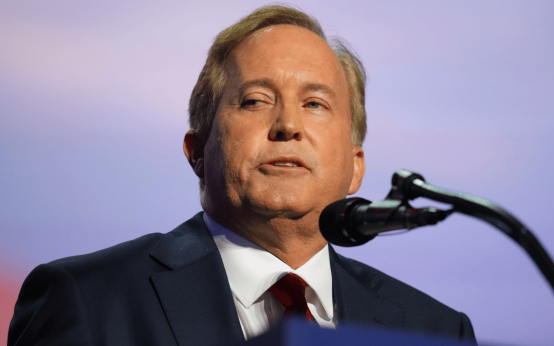 Significant Funding Boosts Ken Paxton’s Texas Senate Campaign Amid Tight Race
  U.S. States Extend Gas Tax Waivers Amid Rising Fuel Costs Due to Iran Conflict
  USCIS Raises Immigration Fees