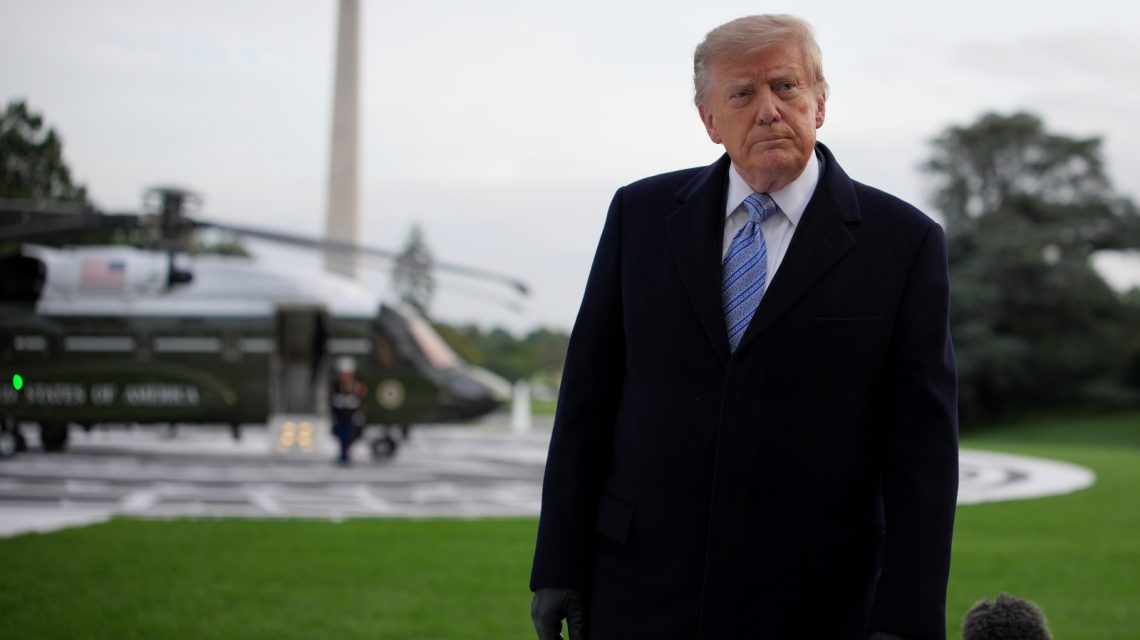
President Donald Trump’s administration revealed a decision to cut nearly $1 billion in funding by utilizing a method called ‘pocket rescission.’ The administration described these reductions as efforts to eliminate what it considers harmful government spending.
Details of the Rescission
The announcement detailed significant cuts, including $567 million from Health and Human Services (HHS) allocated to noncitizens and $15 million from Department of Homeland Security initiatives related to providing welfare for individuals considered as ‘illegal aliens.’ Additionally, $25 million is being cut from noncitizen educational programs, along with other unspecified program rescissions.
Congressional Reaction
Republican Senator Susan Collins of Maine strongly criticized the move, accusing the Office of Management and Budget (OMB) of undermining Congress’s financial authority. She noted the sudden nature of the announcement, describing it as an attempt to unlawfully cancel funds that were approved and signed into law.
“Without warning or consultation, Congress just received an $810 million package of pocket rescissions from the Administration,” Collins stated.
Collins further highlighted that the Government Accountability Office (GAO) deems pocket rescissions illegal according to the Impoundment Control Act. She pledged to collaborate with colleagues to address the situation.
Understanding Pocket Rescission
The GAO defines a pocket rescission as a presidential request to Congress to cancel funding near the fiscal year’s end, potentially preventing its allocation for new obligations. The fiscal year concludes on September 30, which is just five days away.
This strategy can prevent Congress from responding within its 45-day period, challenging its budgetary authority. The GAO emphasizes the constitutional power granted to Congress for budgeting and appropriation, while the executive manages the funds.
Political Criticism and Defense
Democratic lawmakers also voiced their criticism. Senator Patty Murray of Washington expressed disbelief, labeling it a theft from American citizens.
“These are funds Congress has delivered on a bipartisan basis and should be helping people—not cut off by a president more focused on building a ballroom than investing in families,” Murray commented.
Senator Jeff Merkley of Oregon echoed similar sentiments, stressing that Congress determines program design and funding levels, not the president.
Connecticut Senator Chris Murphy criticized Senate Republicans for repeatedly backing Trump’s actions and warned of continued unilateral financial moves by the administration.
Administration’s Justification
The OMB defended the rescission over social media, asserting the administration is actively removing ‘wasteful funding’ to ensure savings for Americans.
Specific Cuts
The administration indicated additional cuts, such as $15 million from the Department of Justice’s Community Relations Service and $9 million from international debt relief meant for countries pursuing climate change policies. Other reductions include $28 million from excessive HHS research programs and $5 million from the HHS Office of Minority Health.
Moreover, $56 million earmarked for counseling support by the Department of Housing and Urban Development is being reduced due to concerns about promoting discrimination, and $10 million from Minority Business Development initiatives is rescinded for FY 2026.
 Upcoming Congressional Elections: Key Districts to Watch
  President Trump’s Pre-Midterm Interview on Key Issues
  Trump’s 2024 Reelection and Evolving Voter Dynamics
  Defense Secretary Emerges as Key Player in the Trump Administration
  Hegseth’s Vision for the Military: Balancing Tradition and Innovation
  Significant Funding Boosts Ken Paxton’s Texas Senate Campaign Amid Tight Race