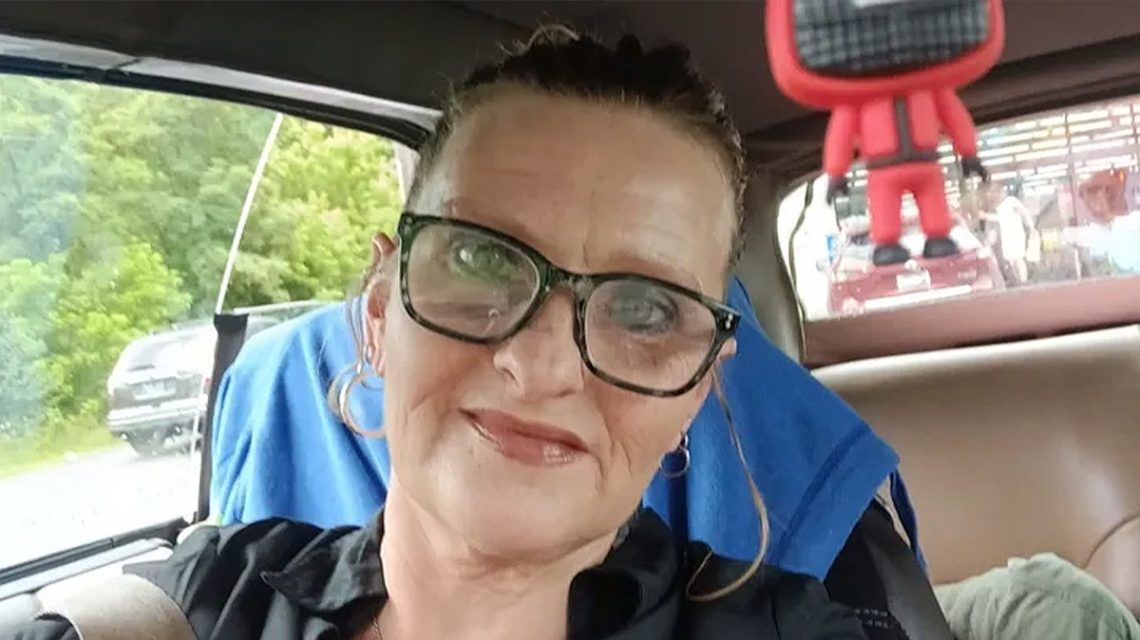
A Tennessee grandmother has taken legal action against a North Dakota city and its police department. She accuses them of wrongfully detaining her for nearly six months due to errors involving artificial intelligence facial recognition technology during a bank theft investigation.
Angela Lipps, 50, from Elizabethton, Tennessee, claims police arrested her at gunpoint while she was caring for her neighbor’s four children in July 2025. A lawsuit filed on September 15, 2026, indicates that authorities used a flawed AI facial recognition match to extradite Lipps from Tennessee to North Dakota, despite her having no connection with the crime there.
I sat in a county jail in Tennessee for 108 days. They said I was a fugitive from justice. I had no bail. No one interviewed me. I just sat and waited.
Lips shared her experience through a GoFundMe post. She said she spent 108 days in Tennessee jail before being transferred to North Dakota and eventually cleared of charges.
The bank theft case originated in April and May 2025, involving an unknown woman who allegedly utilized fake IDs and stolen identities for bank fraud in Fargo and West Fargo, North Dakota. According to the lawsuit, authorities mistakenly used a photo from a fraudulent ID card instead of surveillance footage to conduct facial recognition searches using Clearview AI.
Clearview AI mandates that facial recognition matches serve as leads rather than definitive identifications. However, Fargo police allegedly regarded the AI match as a positive identification without confirming it independently. Conversely, the West Fargo Police Department decided against pursuing charges due to the uncorroborated AI match.
The lawsuit mentions a West Fargo police captain who described AI facial recognition as a “last-ditch effort” in investigations. Lipps claims police neglected evidence indicating she was hundreds of miles away during the bank thefts.
Furthermore, the complaint details how Detective Lucas Heck ignored Lipps’ financial or travel records proving her presence in Tennessee and failed to conduct photo lineups with bank tellers. Surveillance footage highlighted physical differences between Lipps and the suspect, including a distinct build and a neck tattoo absent on the suspect.
On July 14, 2025, U.S. Marshals surrounded a neighbor’s house in Tennessee and arrested Lipps at gunpoint based on a nationwide warrant. She was extradited to North Dakota, where she faced eight felony charges with potential maximum sentences of up to 10 years in prison.
Prosecutors dropped all charges on December 24, 2025, after Lipps provided bank records proving her presence in Tennessee during the thefts. After her release, Lipps discovered her residence, car, and personal belongings had been lost in her absence.
Fargo officials later admitted to investigative errors in their usage of facial recognition technology during a March 2026 press conference. Mayor Tim Mahoney acknowledged these mistakes and mentioned steps taken to address them.
Experts including Clare Garvie, deputy director of Technology Law & Policy with the Policing Project, and Nate Freed-Wessler of the American Civil Liberties Union, have noted an increase in misidentifications from AI use in law enforcement. Freed-Wessler expressed concerns over the rise of wrongful arrests linked to AI, adding that officers often neglect to document their reliance on such technology.
 TikTok Couple Arrested for Alleged Arson in West Virginia
  21-Year-Old University of Georgia Student Survives Eight-Story Fall
  Texas Authorities Arrest Suspect Over Potential Capitol Attack
  Arizona State University Hockey Incident Leads to Coach’s Administrative Leave
  Senate Vote on Data Center Electricity Cost Legislation
  Fatal Hit-and-Run Leads to Additional Shooting Incident in Miami-Dade