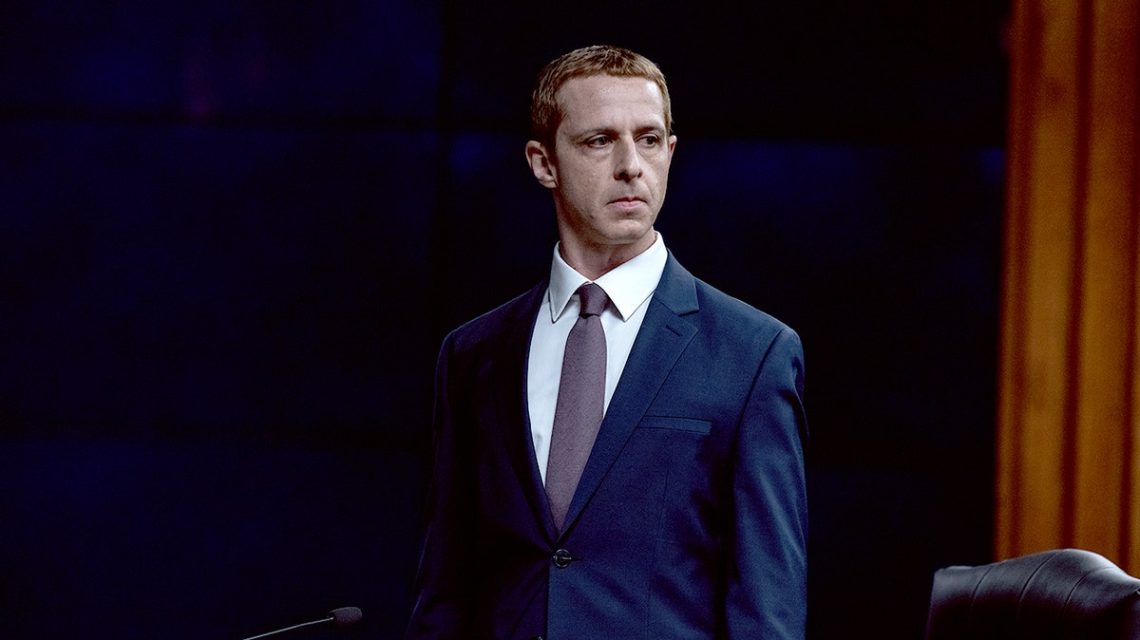
The trailer for Sony Pictures’ The Social Reckoning introduces a film starring Jeremy Strong, Jeremy Allen White, and Mikey Madison. Directed by Aaron Sorkin, this movie arrives in the era of Trump 2.0, spotlighting the complexities surrounding tech giants perceived as aligning with President Donald Trump post-2024 election. Mark Zuckerberg, co-founder of Facebook and CEO of Meta, takes center stage once again.
Previously depicted in the renowned film The Social Network, Zuckerberg returns to the cinematic world. The 2010 film highlighted his creation of Facebook and the subsequent legal battles. Directed by David Fincher and written by Aaron Sorkin, the film starred Jesse Eisenberg as Zuckerberg and was celebrated for capturing the digital age’s zeitgeist. Sorkin’s screenplay won an Oscar, and both Fincher and Eisenberg received nominations.
A Sequel’s Controversy
Sixteen years later, The Social Reckoning emerges as a sequel, attempting to follow in the footsteps of its predecessor. However, neither Fincher nor Eisenberg return. Sorkin assumes both writing and directing roles, casting Jeremy Strong as Zuckerberg. This film revisits the Wall Street Journal‘s reports, dubbed ‘The Facebook Files,’ driven by investigative journalist Jeff Horowitz (Jeremy Allen White) and Facebook whistleblower Frances Haugen (Mikey Madison). The reports ranged from algorithms fostering hate groups to Instagram’s impact on young girls’ mental health.
Sorkin’s film directs its lens primarily on Facebook’s responsibility for right-wing radicalism, ignoring the existence of far-left dynamics. Haugen, the data scientist turned whistleblower, becomes central, haunted by a friend radicalized through Facebook. The movie blames Facebook for spreading conspiracy theories and lies concerning vaccines, alongside events like the January 6th Capitol riot.
Nuance and Criticism
One pivotal scene depicts Zuckerberg’s team watching the Capitol riot, seemingly blaming Facebook for extremism. Pressured to ban Trump, Zuckerberg acquiesces, mirroring real events. Sorkin portrays Zuckerberg as a sociopathic figure around the principle of free speech, sparking debates with investors over Facebook’s role as a public square.
Sorkin’s biases surface in his narrative focus. The film critiques Facebook for societal downfalls without addressing broader socio-political narratives. Despite this, the movie’s depiction of Zuckerberg as a free speech proponent offers nuanced debates on platform responsibility.
Filmmaking and Performances
In terms of production, Sorkin’s direction falls short compared to his screenwriting pedigree. Collaborators such as cinematographer Jeff Cronenweth and composer Alexandre Desplat contribute their talents, yet the film lacks the mastery of Fincher’s The Social Network. Jeremy Strong’s performance, while committed, doesn’t mirror Eisenberg’s depth as Zuckerberg, resonating alien-like instead.
The Social Reckoning aspires to resonate as a modern investigative tale but delivers a vision criticized for perceived political biases. The movie’s essence shifts from engaging to instructional, catering primarily to audiences already skeptical of Zuckerberg and inclined toward partisan narratives.
The Verdict: The Social Reckoning seeks to capture the essence of its predecessor but leans heavily on partisan interpretations, leading to its description as rigid and elitist. For its lack of balanced storytelling and perceived polemics, it garners a mixed reception predominantly among certain audience segments.
Rating: R for language. Duration: 1 hour, 52 minutes. Available in theaters.
Joseph A. Wulfsohn penned this review. He is a media reporter for Fox News Digital.
 Order 4’s Turbulent Battle and Championship Shift at TNA’s Bound for Glory
  Sneak Peek at Season 2 of ‘Heated Rivalry’ with Creator Jacob Tierney
  Sicario 3: Script Changes and Returning Stars
  Ben Affleck Talks Luxury Items and Parenting
  Drew McIntyre’s Expansion into Acting and the Impact of WWE on Entertainment
  Troye Sivan Embraces Solitude in New Album