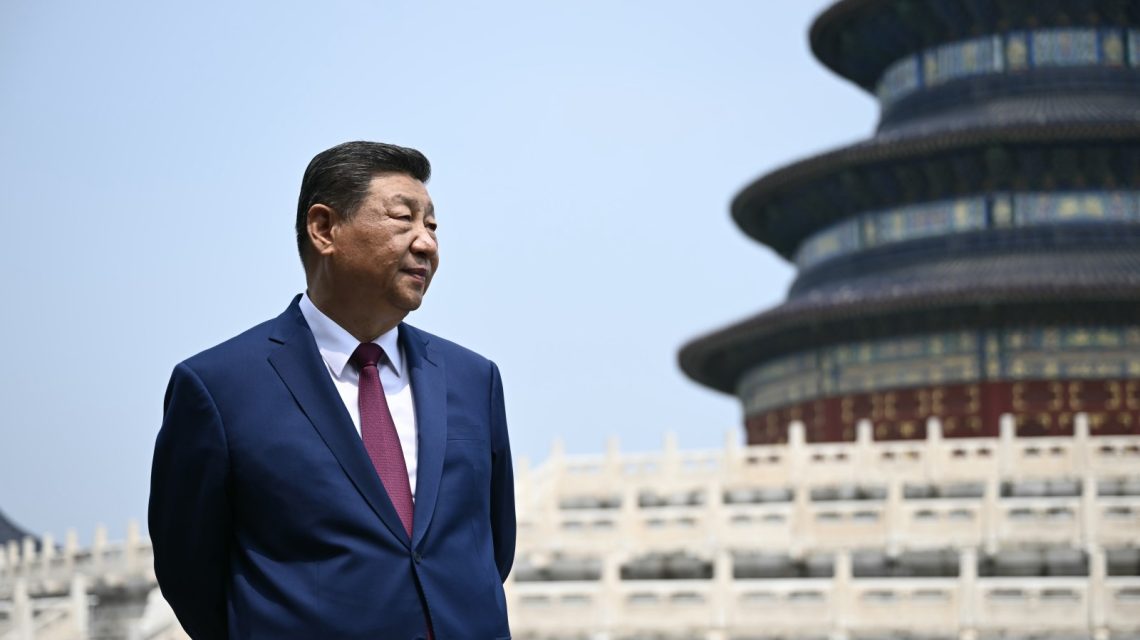
U.S. officials have recently reevaluated their predictions regarding a potential Chinese invasion of Taiwan. Initially projected for 2027, many now believe such a scenario may not occur before 2028. The year 2027 is notable as it marks the centennial of the Chinese People’s Liberation Army. It is also a year in which Xi Jinping might seek his fourth term as China’s leader, necessitating noteworthy accomplishments to support his leadership.
Taiwan holds significant importance for the U.S. due to its democratic governance and substantial role as a global supplier of advanced computer chips. A crisis in the Taiwan Strait threatens global economic stability and would directly affect the United States. Despite Xi’s directive for the PLA to prepare for possible action by next year, U.S. officials currently believe that China isn’t ready to initiate an invasion.
Understanding the ‘Davidson Window’
Admiral Philip Davidson warned six years ago about a potential crisis in the Taiwan Strait, potentially materializing before the decade’s end. His 2021 testimony before the Senate Armed Services Committee introduced the strategic timeline, referred to as the “Davidson window.” This prediction drove budget requests for defensive measures in the Pacific, anticipating potential Chinese missile strikes on U.S. territories like Guam.
Despite military readiness, former officials, including Bill Burns, Lloyd Austin, and Admiral John Aquilino, argued that political intent is necessary for action. China’s objectives include modernizing its military by 2027 and achieving a high-tech force capable of regional conflict by 2035, leading to a “world-class” military by the centennial of the People’s Republic of China in 2049.
Challenges Facing Beijing
China would face significant operational hurdles should it attempt to invade Taiwan. Its forces would have to navigate over 110 miles of challenging waters, suitable for navigation only in April and October, to execute an amphibious assault. Taiwan’s defensive landscape presents additional challenges.
The United States maintains a stance of strategic ambiguity regarding military involvement, providing leeway in decision-making. President Trump’s recent interventions and the U.S.’s strategic position offer room for maneuvering.
Internal Dynamics in China
Xi Jinping’s recent overhaul of military leadership, aimed at eliminating corruption and disloyalty, has affected the structure and readiness of the PLA. The Central Military Commission has seen a reduction in members, signaling a shift in military governance. Despite possible short-term readiness impacts, the long-term military objectives remain.
Engagement with the U.S.
Xi’s continued engagement with President Trump indicates current satisfaction with U.S.-China relations. Recent surveys suggest a decrease in American support for defending Taiwan militarily. China’s positions remain fixed, seeking reunification with Taiwan without openly renouncing force.
The Strategy Ahead
The Chinese military trains for rapid, decisive action to preclude effective U.S. intervention. However, the PLA’s lack of combat experience since the 1970s raises doubts about its operational readiness. China prefers a nonviolent victory, aiming to weaken Taiwan internally and influence its political orientation by 2028.
Both the U.S. and Taiwan must remain vigilant despite the extended timeline for a potential crisis. China continues to advance its military capabilities, including developments in airpower, naval forces, and missile technology. Admiral Samuel Paparo emphasized the importance of deterrence to avoid conflict, underscoring the critical nature of strategic readiness.
 President Trump Shares Controversial Graphic Video
  Senators Urge Trump to Revoke Diesel Deal with Russia
  Pope Leo XIV Undergoes Successful Lung Surgery
  Cyberattack Forces French Grocery Stores to Discard Food
  Iran’s Shift in Threats to the UK and MI5’s Response
  The Global AI Race: Challenges and Strategies for the U.S.