Rural Voter Trends and Economic Concerns
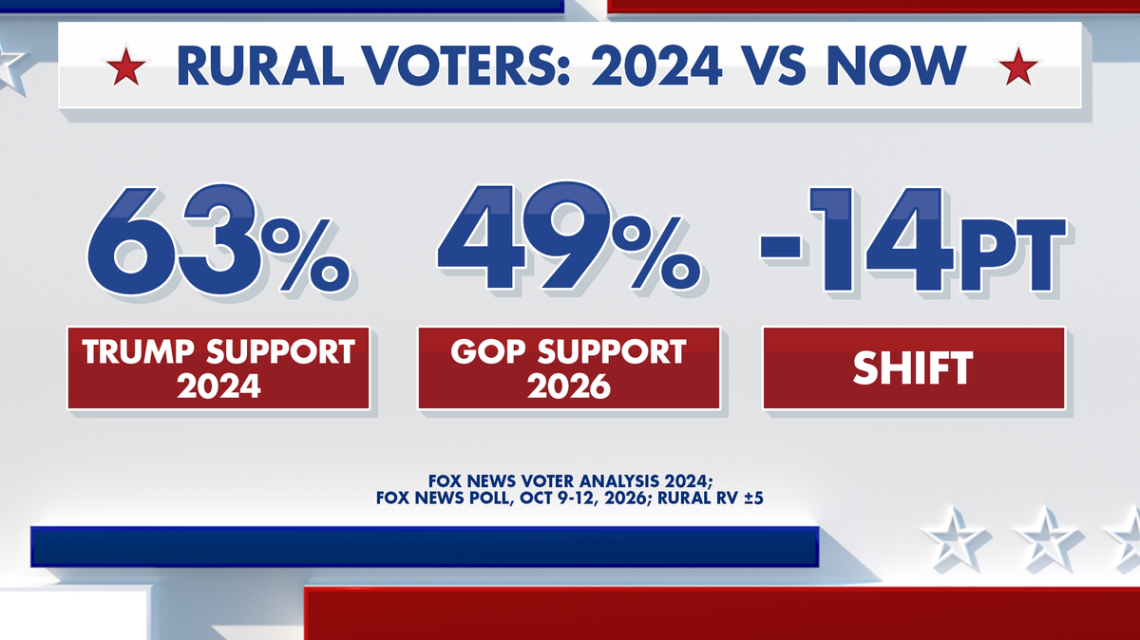
Republicans have historically relied on support from rural areas, but recent shifts indicate potential challenges. Once evenly split, rural voters now lean more Republican, with nearly two-thirds backing Trump in the 2024 election. However, current surveys show under half of rural voters favoring GOP candidates. Economic issues dominate these voters’ concerns, with rising living costs identified by 19% as their biggest problem, followed by gas and energy expenses.
The Trump administration has attempted to alleviate these fears through job growth initiatives and AI developments, but frustrations remain. Less than 25% of rural voters view the economy positively, with unemployment cited by 8% as their greatest issue. Similarly, only 28% see good job opportunities in their communities.
Fox News Power Rankings predict continued challenges for Republicans in rural districts.
Data centers pose a problem for a minority of voters, with 2% marking them as their largest economic concern. These obstacles add difficulty to party dynamics, making traditionally Republican heartland states like Ohio and Iowa competitive.
Independent Senate Candidates in Rural States
This year sees independent candidates challenging Republicans in Senate races across four rural-heavy states: Idaho, Montana, Nebraska, and South Dakota. These candidates focus on anti-establishment policies, targeting corruption—identified as a top concern in a Fox News poll. Promising not to caucus with either major party, their presence complicates GOP strategies.
Democrats have exited races in three of these states due to their weak standing; only Montana retains a Democratic candidate, although her support is waning. Voter frustration in typical scenarios would result in the incumbent party’s victory. However, independent candidates provide a new option, potentially narrowing winning margins.
Historically, these states have experienced competitive elections. For instance, Democrat Jon Tester won re-election in Montana in 2018, and narrow Republican victories occurred in South Dakota and Nebraska. Idaho experienced tight gubernatorial races as well.
Key Gubernatorial Contests
Florida’s role in the “MAGA” movement underlines key voter dynamics. Trump and Governor Ron DeSantis have historically performed well, with DeSantis winning re-election by nearly 20 points. Despite structural advantages, including a significant registered voter gap, Hispanic voters could significantly impact outcomes. Recent polls show a 12-point drop in Hispanic support since Trump’s 2024 campaign.
Republican Rep. Byron Donalds secures DeSantis’ endorsement against Democrat David Jolly, who banks on support from former President Bill Clinton. With fluctuating voter sentiment, Florida shifts from Likely R to Lean R in Fox News Power Rankings.
In Nebraska, incumbent Republican Gov. Jim Pillen seeks a second term amidst wavering suburban and rural voter support for Trump. Influential independent Senate candidate Dan Osborn could increase Democratic turnout. Local pushback against Pillen’s budget decisions adds complexity.
Further complicating Nebraska’s race, Brett Lindstrom appears as a third-party “America First” candidate. His primary loss against Pillen positions him uniquely in the contest.
Rémy Numa, political consultant and Fox News contributor, provides insights in Power Rankings.
 Mayor Mamdani’s Policing Reform Plans
 Gen Z Voter Shifts and Their Impact on the 2026 Midterm Elections
 Disappearance of US Senate Candidate Raises Questions
 DOJ Rule Change Reduces Appeal Time for Immigrants Facing Deportation
 Hakeem Jeffries’ Bid for House Speaker Faces Progressive Hurdles
 Ohio Judge Dismisses Defamation Lawsuit by Rep. Max Miller