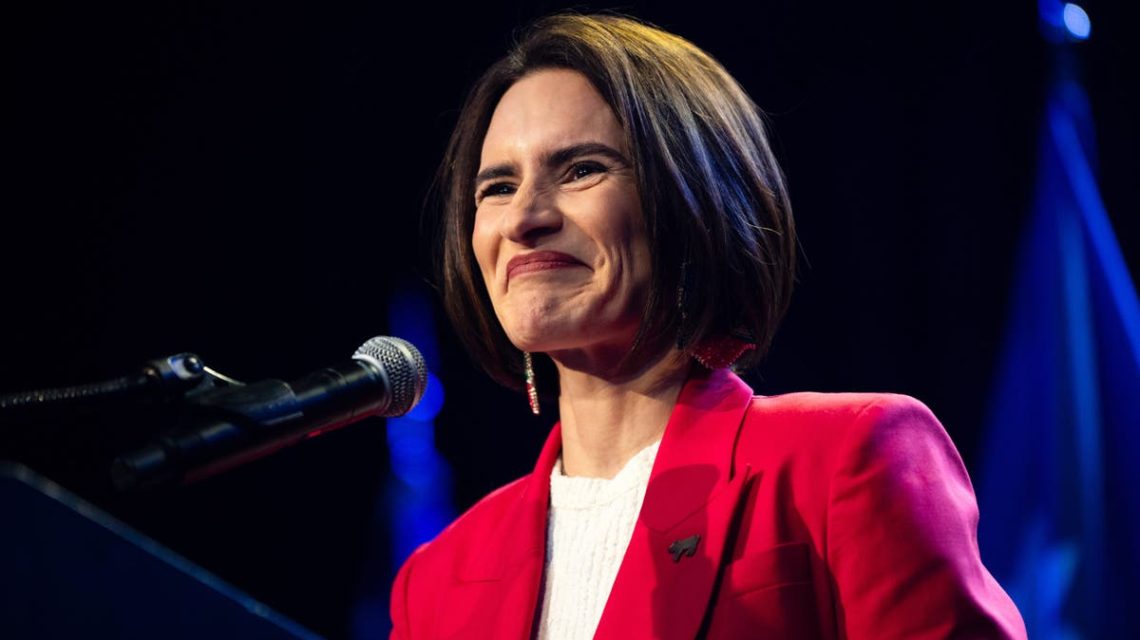
“You made me promises. Promises, knowing I’d believe. Promises. Promises, I knew you’d never keep.” – Naked Eyes
Lt. Gov. Peggy Flanagan, the Democratic nominee for Senate from Minnesota, vocalized her support for Medicare-for-all alongside other progressive policies. These include the abolition of ICE, the Green New Deal, an arms embargo for Israel, and a minimum wage increase to $25 an hour.
Flanagan faces Republican Michelle Tafoya in the race to replace retiring Sen. Tina Smith, D-Minn. Although favoring Flanagan, the outcome isn’t assured. Other Democratic Socialist House candidates, such as Donavan McKinney, Chris Rabb, Melat Kiros, Claire Valdez, and Darializa Avila Chevalier, are likely to win in regions where progressive ideas thrive.
If Democrats secure either the House or Senate, candidates from moderate districts, rather than progressive strongholds, will likely be pivotal. Democrats like Cait Conley and Brian Poindexter are essential for flipping seats and gaining control.
Progressive policies like Medicare-for-all require significant support to pass. Achieving legislative success involves overcoming mathematical realities, such as the necessity of 60 votes in the Senate to bypass a filibuster.
Historically, campaign promises often exceed what can realistically be achieved. In the past, Republicans and Democrats have struggled to fulfill promises post-election, like the Republican “Contract With America” and Democratic pledges to withdraw from Iraq.
House Minority Leader Hakeem Jeffries is reportedly negotiating with Democratic Socialists to secure support for a potential Speaker role. However, should the party fracture between moderates and progressives, advancing the progressive agenda could prove challenging.
“I haven’t co-sponsored the Medicare for all legislation that has been introduced over the last several years. We need to fix our broken healthcare system,”Jeffries stated.
This approach signals a balanced strategy, addressing the concerns of both moderates and progressives. Investigations into the Trump administration might unify Democrats, offering an alternative pathway to rally their base.
The Democrats’ focus might pivot more effectively toward investigations rather than controversial legislative agendas, addressing the expectations of both progressives and moderates while navigating political realities.
 Roger Marshall’s Senate Re-Election Campaign and Family Life
 Prediction Markets Reflect Uncertainty for 2028 Republican Race
 Adam Hamilton’s Journey from Pastor to Senate Candidate
 Democrats Focus on U.S. Senate Race as a Referendum
 Trump’s Remarks on Senator Husted’s Physique
 Memphis City Council Votes on Data Center Moratorium Amid Community Concerns