At Toyota Motor North America, the monthly supply-chain planning process often involves over 75 spreadsheets. When this extensive task concludes, it’s nearly time to start again. In response, Toyota is developing tools to ease this burden, as part of a broader digital transformation that has returned $3 for every $1 invested over five to six years. This transformation encompasses various operational and technological initiatives, including machine learning.
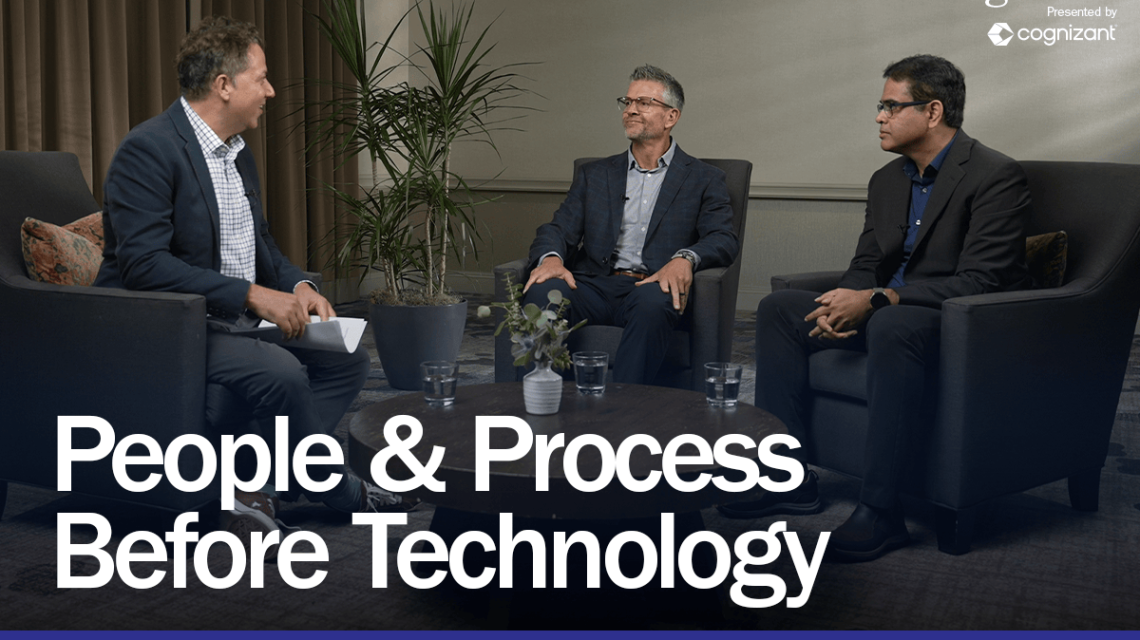
Jason Ballard, vice president of digital innovations at Toyota Motor North America, shared these insights during the Seeking Value video series presented by Cognizant. He was joined by Nishanth Vallabhu of Cognizant, with Gabriel Snyder from Newsweek moderating.
Two significant crises prompted Toyota to rethink its supply chain processes: the COVID-19 pandemic and the semiconductor shortage. These events revealed the company’s heavy reliance on employee expertise and judgment under pressure. Ballard stated, “We can’t continue to count on that.”
Dealer inventory fell sharply, from more than 50 days’ supply to levels in the teens during those disruptions. This raised questions about Toyota’s understanding of customer demand and the delivery of appropriate vehicle combinations to dealerships.
Ballard recounted a common query from friends and family: “Why can I track a Domino’s pizza, but not my $50,000-plus vehicle?” These inquiries highlighted the need for better visibility into vehicle orders and planning decisions.
Toyota initiated steps to enhance this visibility and refine supply chain strategies. Teams experimented with applications to determine effective practices that could be scaled. These early projects helped establish the platform Ballard referred to.
The company’s design integrates various applications through shared components. Initial efforts focused on machine learning to enhance demand forecasting and supply planning. More recently, Toyota has been incorporating generative AI and planning for agents alongside its existing tools.
Ballard described a modular architecture: a reliable data foundation, services built upon it, and an evolving intelligence layer to support agents. This setup allows Toyota to choose among AI models as they advance, avoiding dependence on a single provider. Ballard reflected on past technology choices that made earlier enterprise software costly to maintain.
The financial outlook was initially uncertain. Toyota presented its finance teams with a wide range of potential outcomes, not narrow forecasts. Early projects yielded high returns, justifying ongoing investments.
Several areas showcased financial benefits. Improved information on customer preferences enabled Toyota to better configure vehicles to match demand, boosting revenue. Additionally, during the semiconductor shortage, a digital twin tool helped Toyota assess available components and maintain production despite constraints.
This technology is also transforming Toyota’s planning teams. “It’s elevating the game for our team members,” Ballard stated, allowing them to focus on strategic tasks rather than routine ones.
Vallabhu identified challenges in measuring these improvements, especially when AI impacts customer service, leading to multiple intermediate steps before sales improve. Toyota’s financial gains were quantified and validated by its finance team.
Cognizant, a long-term partner, plays a crucial role in Toyota’s transformation. Vallabhu highlighted the importance of understanding Toyota’s working culture while also introducing innovative capabilities from outside the company.
Ballard emphasized the collaborative relationship with Cognizant, seeking new ideas and challenges. Employee involvement remains pivotal for Toyota. Ballard emphasized a culture of respect and continuous improvement, involving experienced employees in redesigning operations.
These veterans, familiar with operational challenges, provided valuable insights alongside emerging technology knowledge. According to Ballard, these combined perspectives identified opportunities that might otherwise be overlooked by a separated technology team.
The transformation aims for more than updating tasks: “We wanted radical transformation. We wanted to reimagine the entire operation.”
Effective communication about these changes is crucial for Toyota. Ballard stressed the importance of explaining the purpose and benefits of new tools to employees.
“You don’t want it happening to them. You want everyone to feel like this is happening for us,” he reiterated.
 The Daily Routine of Klook’s CEO Focused on Fitness and Efficiency
 The Jensen Huang Controversy: Silicon Valley’s Divided Opinion
 California Lawsuit Against OpenAI: Key Details and Implications
 Updates on Key International and Domestic Events
 E.l.f. Cosmetics Breaks Makeup World Record at TwitchCon
 Understanding Credit Freeze, Fraud Alert, and Identity Monitoring