Netanyahu’s Allegations and Concerns
Benjamin Netanyahu’s recent posts on X have stirred controversy. Social media users and misinformation experts criticize his anti-Arab messaging. In one post, images of people in hijabs and niqabs suggest a high Arab voter turnout compared to right-wing voters. Achiya Schatz, a misinformation expert, claims the image might be AI-generated. NBC News couldn’t verify its authenticity. While some posts appear authentic, Schatz sees them as instilling fear about Arab voters.
Initial Reactions and Election Outcome
Rival Yair Golan celebrated what he calls the public’s decision to remove Netanyahu’s government. He emphasizes a historic chance for change. Preliminary results show Netanyahu’s Likud party with 26.50% of votes, Eisenkot’s bloc at 19.32%. The numbers are subject to change as counting continues.
Arab Parties and Voter Turnout
Arab parties experienced optimism following high voter turnout. The Joint List gained attention in Nazareth, highlighting resistance to occupation and racism. Eisenkot, however, hesitates to partner with Arab parties, complicating his path to a majority.
Historical Context and Public Concerns
The Oct. 7 massacre has affected Netanyahu’s image as “Mr. Security.” Security, alongside issues like high living costs and public services, drove significant voter turnout, reaching 77.7%, the highest since 1999.
Post-Election Dynamics
Official results will be out in eight days, initiating coalition-building. President Herzog will task a Knesset member to form a government. No single party has a majority, making coalition formations reliant on negotiation.
Campaign Narratives and International Relations
Netanyahu’s tie with Donald Trump was highlighted during his campaign. His supporters push for aggressive policies in Iran. Eisenkot’s supporters worry about Israel’s global image.
Exit Polls and Public Sentiment
Exit polls reveal a lack of confidence in Netanyahu, with his bloc tracking 50 seats and Eisenkot’s at 52. Final results remain awaited.
Electoral Process and Turnout
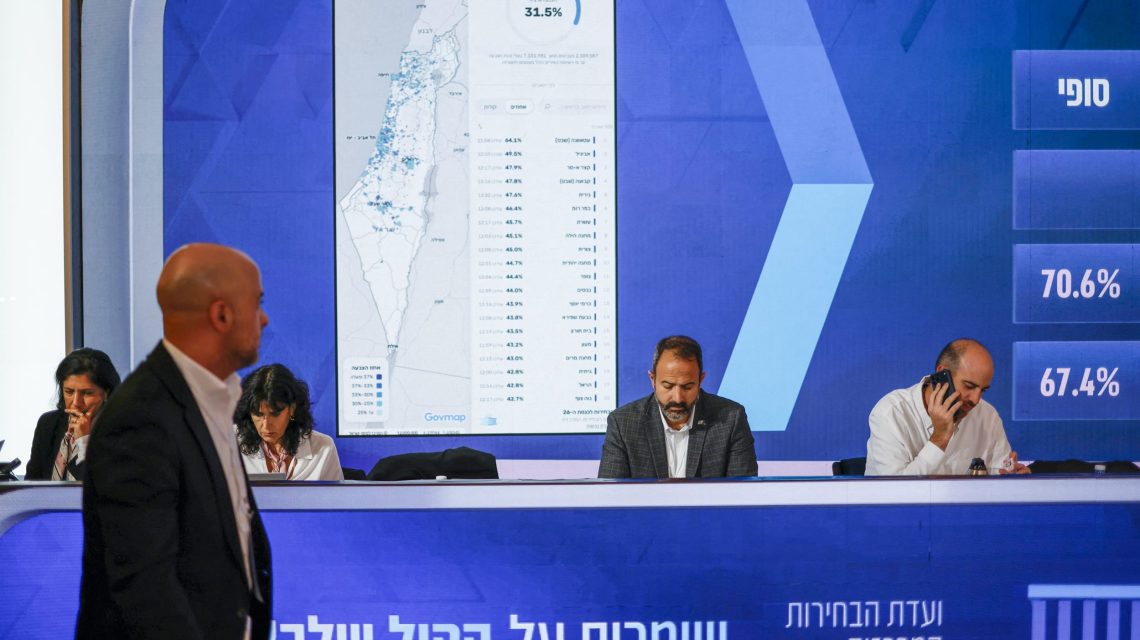
The Central Elections Committee ensures vote integrity and transparency. As the counting proceeds, early exit polls guide public expectations.
Arab Voter Influence and Political Outcomes
Arab voters seek an end to what some describe as a government of displacement. They aim to play a decisive role in future formations, despite Netanyahu and Eisenkot’s reluctance to collaborate with Arab-led parties.
Security and Political Rhetoric
Netanyahu’s comments on Arab voter turnout mirror past race-based remarks, triggering responses from parties across the spectrum. His close rival Eisenkot, with a military background, opposes a Palestinian state but focuses on internal reform.
 In-Flight Altercation on Qatar Airways Leads to Police and FBI Response
 Mayor Mamdani’s Policing Reform Plans
 Virginia Residents Sue Over Alleged Immigration Violations
 Gen Z Voter Shifts and Their Impact on the 2026 Midterm Elections
 Disappearance of US Senate Candidate Raises Questions
 DOJ Rule Change Reduces Appeal Time for Immigrants Facing Deportation