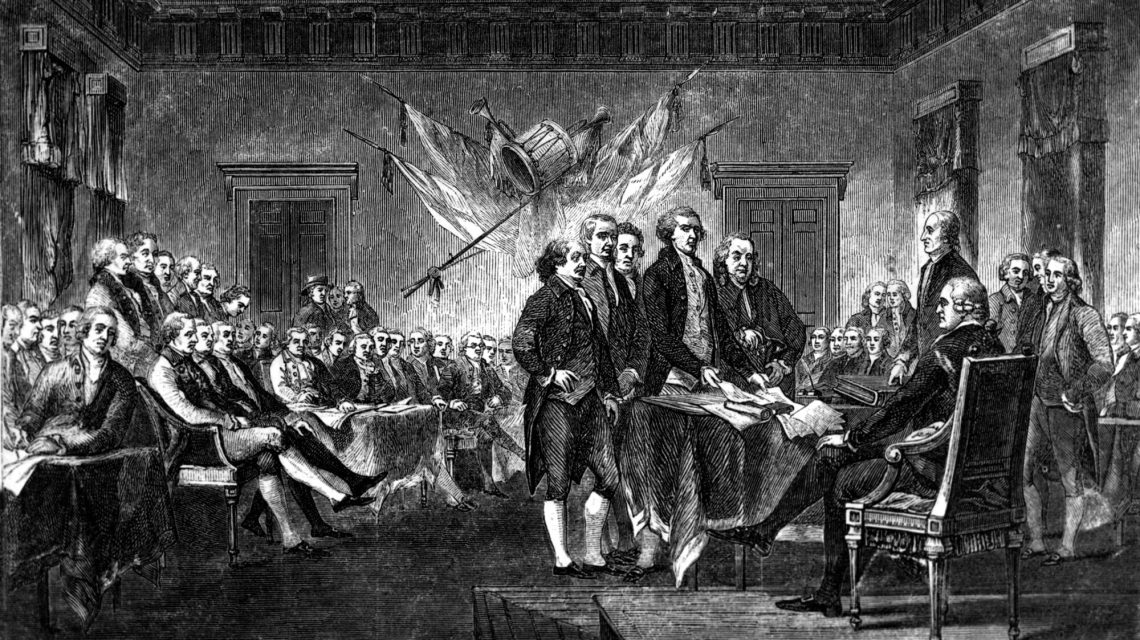
California’s Quiet Contribution in 1776
While the original 13 colonies celebrated independence in 1776, California was laying its foundation, far removed from Philadelphia’s momentous declaration. Unbeknownst to many, including Californians at that time, Spanish mission-building was underway, marking the beginning of significant changes.
Mission San Gabriel was constructed in 1776, a mere five years after the first mission was established. The new mission replaced one in a flood-prone area, demonstrating early California’s nascent development. In San Francisco Bay, Spanish newcomers held a mass on June 29, 1776, coinciding with the Continental Congress’s pause to review Jefferson’s declaration. This mass marked the founding of Mission Dolores, symbolizing Spain’s dual focus on religion and empire expansion.
“Dolores,” meaning sorrows, was prophetically chosen for what lay ahead, noted historian Alec Scott.
For Native Americans, such as the Ohlone, witnessing the first mass was the beginning of years marred by external influences and hardships.
Colonization and Consequences
The Spanish, initially seafarers, began deploying soldiers and missionaries inland from Mexico, initiating what became a conversion and conquest effort. This ushered in diseases and domination, drastically reducing native Californian populations by the time the U.S. celebrated its centennial.
Approximately 75 years later, California drafted a constitution influenced by Mexican laws, embedding rights unrecognized by Eastern constitutions. Both constitutions promised much, with California’s addressing slavery and women’s property rights.
Shifting Slave Policies and Mexican Independence
Spain’s empire fragmented in the 19th century, with Mexico gaining independence in 1821. It outlawed slavery, countering U.S. slave states’ pressures on its borders. Despite language loopholes, Mexico’s constitution banned slavery, contrasting with the U.S. Constitution, which tacitly endorsed it.
Texas rebelled against Mexico over slave ownership disputes, becoming a U.S. state in 1845, later aligning with the Confederacy during the Civil War. Prominent figures like Father Hidalgo demanded abolition of slavery, threatening capital punishment, yet practices like indentured servitude persisted.
Diverse Influences on California’s Constitution
David Hayes-Bautista, UCLA professor, linked early Californian laws to Spanish and Mexican traditions, impacting the state’s constitution. California joined the union as a free state, igniting debates on slavery preceding the Civil War. Article I, Section 18, declared no tolerance for slavery or involuntary servitude except as criminal punishment.
Yet voting rights debates ensued, excluding Black and Native Americans, despite Native Americans being the largest group. Women’s suffrage was not addressed, though women’s property rights were advanced compared to U.S. counterparts.
Abigail Adams’ plea to husband John Adams to remember women showed societal resistance.
Property Rights Evolution
The California constitution acknowledged wife’s property rights independently from her husband’s, echoing Spanish and Mexican customs. This was monumental compared to English coverture laws stripping married women’s legal identities.
Evolving suffrage definitions sought clarity: who was considered ‘white’? Post-1849 definitions included Mexican Californians opting for U.S. citizenship, accommodating multiracial backgrounds.
Ethnic and Social Dynamics in Early California
Latin America’s ethnic fluidity contrasted starkly with U.S. racial rigidity. Hayes-Bautista defined this socio-cultural complexity as “colorism,” differentiating it from enforced racial divisions.
Census categories blurred lines between race and ethnicity over years, arbitrarily shaping records based on what census takers perceived, rather than asking individuals.
Water Rights and Legal Disputes
Water resources, critical in California’s constitution, reflected local conditions. Riparian rights subjected property owners to ‘use it or lose it’ rules, countering diversion practices like those employed by gold seekers in 1849.
Appropriative rights allowed water diversion, subject to historical claims since pueblo times, with cities like L.A. holding historic water rights amid ongoing legal battles.
While Eastern states had ample water avoiding stringent tests of riparian rights, California’s water scarcity highlighted these rules, increasingly relevant amid climate changes.
Progressive Elements in California and Beyond
The 1849 constitution has evolved, shedding parts like bilingual record requirements, yet maintaining elements that shaped national laws over time. From defining property rights to foundational water management, California’s constitution embeds progressive ideals influencing nationwide practices. Hayes-Bautista questioned which constitution echoed present-day America’s diverse laws and traditions.
 Challenging the Narrative of Mexican American Identity
  Firing of Baltimore Arts Executive Raises Discrimination Concerns
  Amir Odom Discusses Departing from the LGBTQ Movement
  Preserving Ken Kesey’s Iconic Bus ‘Furthur’ for Future Generations
  Historical Events in Chicago on October 3
  Martina Navratilova’s Enduring Influence in Tennis and Beyond