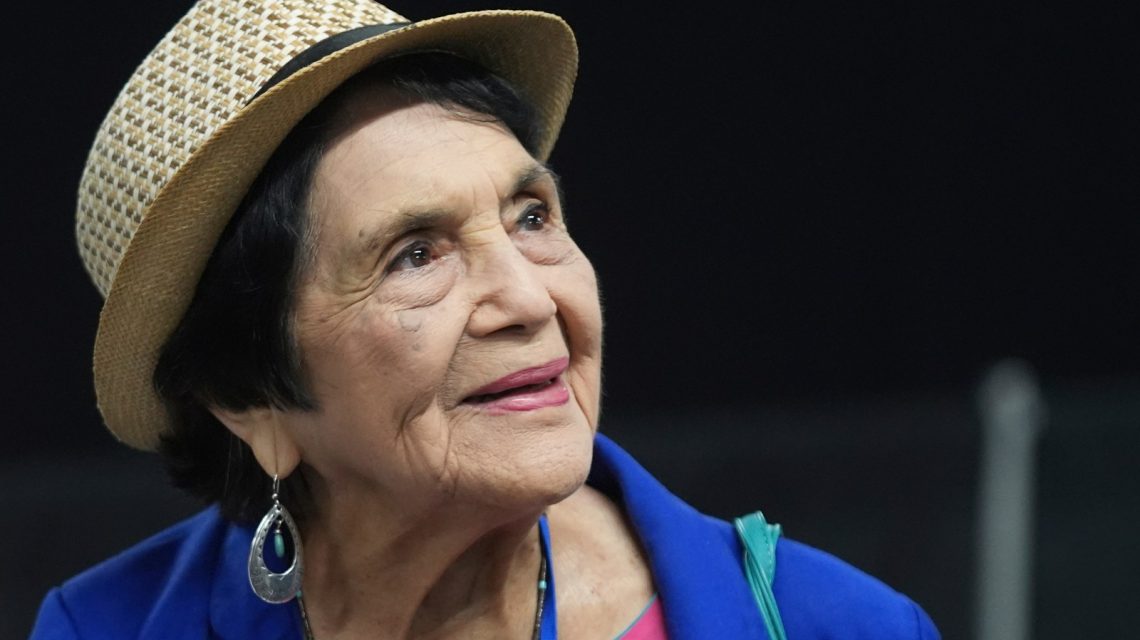
Dolores Huerta, a prominent labor organizer and civil rights leader, co-founded the organization that grew into the United Farm Workers (UFW) of America. She passed away at 96 in her Bakersfield, California home. Known for negotiating pivotal contracts for agricultural workers, Huerta is credited with the rallying call ‘Sí, se puede.’ A family statement expressed their grief and requested privacy during this trying time. The Dolores Huerta Foundation reported her passing was peaceful, surrounded by family, with details on celebrating her legacy to follow.
Huerta was instrumental in organizing a largely Latino and Filipino workforce with limited political power and minimal federal labor protections. Her efforts as a negotiator, strike organizer, and lobbyist secured farmworkers gains like increased wages, job security, healthcare, retirement benefits, rest periods, clean drinking water, and protection from pesticides.
Her impact extended beyond labor, advocating for voting rights, women’s participation in politics, immigrant rights, racial equality, environmental justice, and LGBTQ+ rights over six decades. Huerta transformed farmworkers from a dispersed and often exploited workforce into a national labor and political force.
While César Chávez became the farmworker movement’s most visible figure, Huerta managed many significant negotiations and legislative battles. Her accomplishments included extending benefits to farmworkers in California, like Aid to Families with Dependent Children and disability insurance, and facilitating Spanish-language driver’s exams.
Huerta played a key role in the 1975 California Agricultural Labor Relations Act, establishing farmworkers’ rights to organize and choose union representation. Fatima Goss Graves from the National Women’s Law Center highlighted Huerta’s extraordinary legacy and commitment to justice, urging continuation of her work. Derrick Johnson of the NAACP also emphasized the need to honor her legacy through ongoing activism.
From Teacher to Organizer
Born in Dawson, New Mexico, on April 10, 1930, Huerta moved to Stockton, California, after her parents’ divorce. Her father, Juan Fernandez, was involved in union activities, and her mother, Alicia Chávez, demonstrated independence and community involvement. These family influences shaped Huerta’s future activism. After earning a teaching credential, she opted to help families through organizing rather than teaching when she witnessed students’ poverty firsthand.
Huerta joined the Stockton Community Service Organization, championing voter registration, anti-discrimination measures, and improvements for Latino communities. By the late 1950s, she was actively lobbying for state-level changes in Sacramento.
Building the Farmworker Movement
Meeting César Chávez through Fred Ross Sr. in 1955, Huerta shared a vision for organizing farmworkers, a cause not embraced by the organization. She co-established the Agricultural Workers Association in 1960 with Larry Itliong, and two years later, co-founded the National Farm Workers Association with Chávez. This effort united Filipino and Latino farmworkers during the 1965 Delano grape strike.
Huerta’s enduring effort sustained the strike and the national grape boycott, garnering labor agreements with major growers. Despite Chávez’s prominence, Huerta’s unique role involved negotiations with growers and legislators and coordinating the boycott and other activities addressing field conditions.
The phrase ‘Sí, se puede,’ coined by Huerta, conveyed her belief that collective action empowered those lacking traditional power. The phrase inspired labor, immigration, and civil rights movements, later used by Barack Obama in his 2008 campaign. In 2012, Obama awarded her the Presidential Medal of Freedom, acknowledging the slogan’s influence and her organizing model of voter engagement and political advocacy.
Beyond Organized Labor
Huerta linked her labor activism to feminism and Latino political advancement. In New York, she engaged with feminist leaders like Gloria Steinem during the national grape boycott. This connection encouraged her to challenge gender biases within the movement. She promoted Latina candidates and supported political figures such as Bill Clinton, Ron Dellums, Jerry Brown, Hilda Solis, Obama, and Joe Biden.
Her continued activism included movements for immigrant rights, voting access, poverty, racial justice, and LGBTQ+ equality. Even into her late years, she protested, spoke publicly, and registered voters. At 89, she was arrested while advocating higher pay for home healthcare workers, displaying her unwavering commitment.
Huerta faced conflicts with employers, law enforcement, and conservative critics. She was arrested over 20 times for nonviolent protests, subjected to threats, and had her spleen shattered by police during a 1988 demonstration against George H.W. Bush. The incident spurred reforms within the San Francisco Police Department.
Complicated Partnership with Chávez
Huerta’s partnership with Chávez was characterized by productive but sometimes contentious interactions. In 2026, Huerta alleged Chávez had sexually abused her in the 1960s. She described instances of coercion and manipulation, alleging these encounters resulted in pregnancies. Despite the severity of these accusations, Huerta maintained that the movement and its achievements were the work of thousands and larger than any one individual’s actions.
Her disclosure complicated the historical narrative of her collaboration with Chávez but also highlighted her leadership and personal endurance. It stressed the need to view her legacy apart from any individual, emphasizing her role in championing farmworkers’ rights.
Honors and Recognition
Huerta’s accolades included being the first Latina inducted into the National Women’s Hall of Fame in 1993, receiving the Eleanor Roosevelt Human Rights Award, and the Presidential Medal of Freedom. She also established the Dolores Huerta Foundation, advancing her model of leadership development across various social issues.
After her passing, Kendall Scudder from the Texas Democratic Party celebrated her legacy, urging people to continue her message of advocating for rights and social change. Scudder recalled her recent engagement with the Texas Democratic state convention, where she encouraged meaningful political participation.
The Dolores Huerta Foundation highlighted her impact on Latina leadership in the U.S., calling her an inspiration for empowering workers, women, and immigrants.
Huerta’s contributions stand independently from her partnership with Chávez. She advanced farmworkers’ demands into contracts, laws, and political strength. Her life demonstrated that ordinary individuals could reshape seemingly unchangeable systems through strategic activism.
Her later revelations about Chávez underscored the challenges she faced personally while protecting a movement she valued beyond personal grievances. Her legacy endures in the efforts of activists inspired by her determination and belief in change.
 Stephen Hawking’s Complex Personal and Professional Life
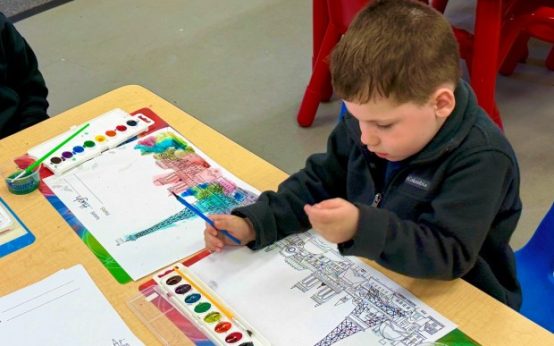 Immersion in French Culture at Ascension Catholic School
 Old MacDonald’s Farm in Humble, Texas, Closing After 34 Years
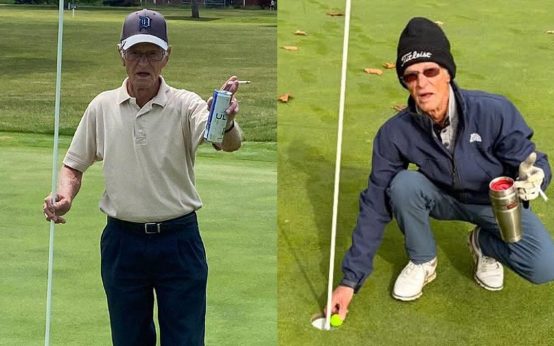 Lee McFarlane’s Remarkable Hole-in-One Journey Continues
 Advice for Concerned Grandparents
 Efforts to Counter Food Assistance Cutbacks in San Diego