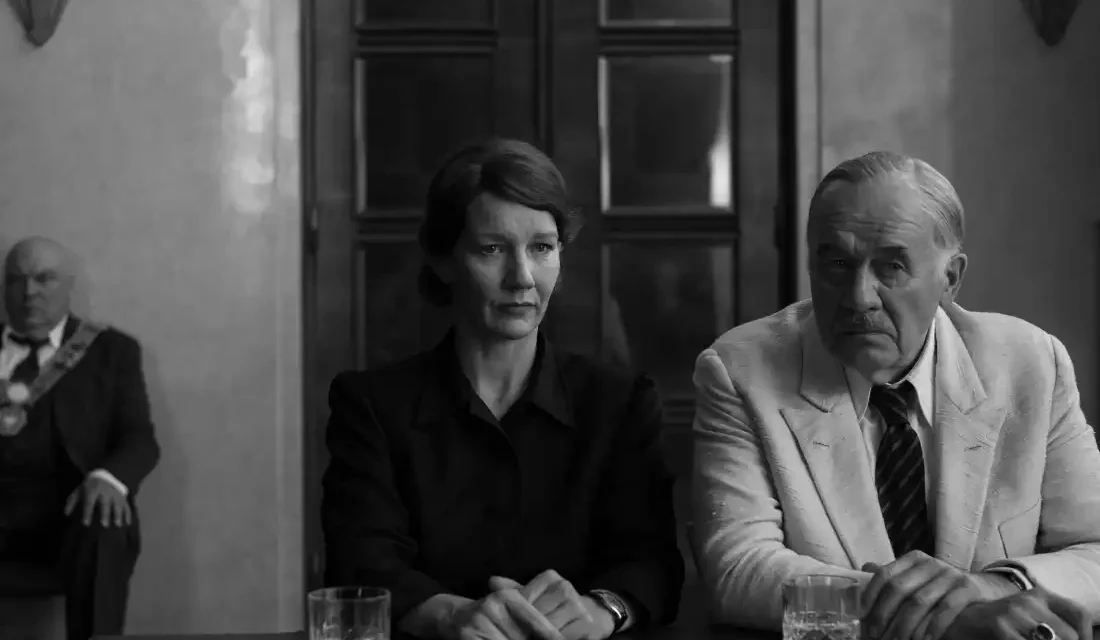
Fatherland features Sandra Hüller as Erika and Hanns Zischler as Thomas Mann. This film by Paweł Pawlikowski presents a detailed account of Mann’s 1949 return to Germany, after living in America for 11 years away from the Nazi regime.
This 82-minute film, directed by Pawel Pawlikowski, skillfully blends personal and historical narratives. It is the third film in Pawlikowski’s trilogy about mid-century Europe, following Ida. The story details a family drama amidst the backdrop of post-war Germany and the Cold War.
Initially, the film introduces a conversation between Erika, played by Sandra Hüller, and her brother Klaus, portrayed by August Diehl. Erika encourages her brother to join their father during his visit to Germany to receive the Goethe Prize. Klaus holds resentment toward their aloof and critical father.
Thomas Mann, played by Hanns Zischler, embarks on this journey with Erika acting as his assistant. She manages his affairs, edits his speeches, and attends to his personal needs. The historical fact reveals Mann traveled with his wife, but Pawlikowski finds the dynamic with Erika more intriguing. Erika is both the supporter and challenger of her father’s legacy.
The film’s title, Fatherland, takes on deeper meaning as the story unfolds. Mann travels through both Western and Eastern Germany, territories symbolizing different ideological paths. In Frankfurt, overseen by a CIA agent, Mann speaks to audiences containing former Nazi supporters. Meanwhile, in the East, Mann is courted by communist officials.
Mann’s speeches focus on the noble elements of German culture, particularly inspired by Goethe’s ideas. His personal grasp of love proves complex, with a family tragedy striking mid-journey. Erika’s frustration with her father’s emotional distance becomes evident, as she urges him to acknowledge their shared pain.
Pawlikowski’s filmmaking is characterized by a precise, elegant aesthetic, captured in black and white by cinematographer Łukasz Żal. The film is crafted with care, avoiding obvious sentimentality. It uses form and structure to explore themes of love, family, and historical legacy.
Thomas Mann, known for his long novels, becomes the subject of this concise film, resembling a short story in its tight narrative. Fatherland concludes with a poignant moment accompanied by Bach’s music, revealing the vulnerable human beneath Mann’s formidable exterior.
 Jennifer Lopez Discusses Marriage and Humor During 92NY Event
 Teri Hatcher’s Makeup Transformation into Miranda Priestly
 AEW’s Blood and Guts: A Glimpse into the Brutal Spectacle
 Author Discusses Challenges with ‘Children of Blood and Bone’ Film Adaptation
 Valerie Bertinelli Reminisces About ‘Hot in Cleveland’
 Judi Dench’s Beauty Secrets and Her Journey with Aging