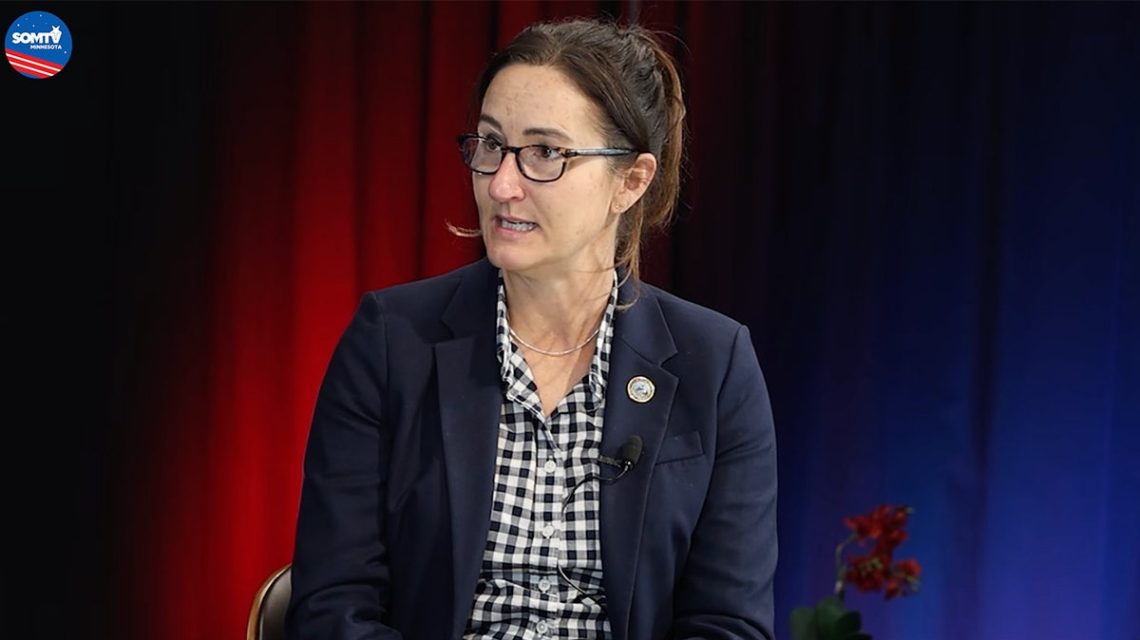
The election process in Minnesota has come under scrutiny after a video of a state official addressing Somali voters circulated widely on social media. This has raised questions about election integrity in the state.
Minnesota Voter Outreach Director Melanie Hazelip spoke on Somali TV, explaining the procedures for registered voters. “If you’re already registered, you don’t need to bring anything. Simply show up at the designated early voting locations,” Hazelip told viewers. Her comments aligned with the existing laws but sparked controversy after being shared by conservative influencer End Wokeness.
In the video, Hazelip also explained the options for those not yet registered. “If you have an updated Minnesota ID, that’s all you need. If not, you can check our website for a list of acceptable documents for same-day registration.” Despite her comments complying with legal standards, they triggered backlash on social media, accusing the system of being too lenient.
Phillip C. Parrish, a retired Navy intelligence officer, raised concerns on X, highlighting the ease with which people can register and vote using a Minnesota state ID. “Minnesota issues these IDs to non-citizens without clear citizenship markings. A registered voter can vouch for up to eight others, which raises issues of immediate proof of citizenship being unnecessary.”
Other critics, like David McIntosh from the Federalist Society, argued that non-citizens could exploit these lax systems. Matthew Brodsky of Red Ax Strategies echoed concerns about election interference. Likewise, conservative commentator Riley Gaines pushed for legislative changes like the SAVE America Act to tighten voting regulations.
The Minnesota Secretary of State’s office defended the outreach efforts, stating they aim to inform eligible voters about the electoral process. An official response noted, “We provide information to nonpartisan community groups annually, ensuring voters know how to cast their ballots.” They lamented the political misinterpretation of Hazelip’s statements.
Bill Glahn from the Center of the American Experiment suggested Hazelip should have stressed citizenship requirements more explicitly, especially given the broadcast’s timing and audience. He acknowledged disparities in the Somali community’s citizenship status and cited a recent case where a non-citizen faced legal penalties for fraud.
Critics also highlight the Driver’s Licenses For All policy implemented in Minnesota. This law allows all residents to obtain licenses without citizenship markings, which complicates voter registration processes.
Minnesota law currently permits a registered voter to ensure up to eight others’ residency without requiring identification. They must accompany the new voters to the polling site and affirm residency under oath.
In previous discussions, Glahn has commented on the state’s perceived security measures, implying their ineffectiveness due to a lack of immediate verification. “These penalties are deterrents in theory,” he remarked, “but not foolproof in practice.” He drew parallels with a federal indictment in September charging someone from India with falsely claiming U.S. citizenship to vote in Minnesota’s upcoming election.
Charles Creitz and Andrew Mark Miller, journalists at Fox News Digital, contributed to this reporting. For further correspondence, reach Andrew Mark Miller at [email protected].
 Mayor Mamdani’s Policing Reform Plans
 Gen Z Voter Shifts and Their Impact on the 2026 Midterm Elections
 Disappearance of US Senate Candidate Raises Questions
 DOJ Rule Change Reduces Appeal Time for Immigrants Facing Deportation
 Hakeem Jeffries’ Bid for House Speaker Faces Progressive Hurdles
 Ohio Judge Dismisses Defamation Lawsuit by Rep. Max Miller