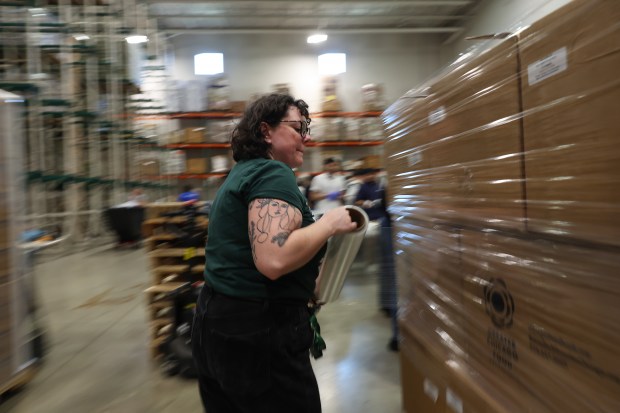
A recent report highlights a deepening hunger crisis in Chicago, worsened by affordability issues, cuts to assistance programs, and economic pressures. Approximately 417,000 households in the city, about one in three, are experiencing food insecurity, according to data from the Greater Chicago Food Depository as of June 2026. This lack of consistent access to food affects many families, with the highest rates in the South and West sides of the city.
Kate Maehr, CEO of the Greater Chicago Food Depository, shared that these figures reflect the harsh reality many face daily. Especially troubling is the statistic that nearly half of households with children are food insecure. The implications are significant, as children struggle to access enough nutritious food, impacting their health and future.
Food insecurity often mirrors broader economic instability rather than a lack of effort. Many adults in food-insecure households are either employed or unable to work due to age, disability, or other reasons. Despite more than half being employed, these adults still struggle to afford necessities like food, housing, and healthcare. The report indicates that 12% of food-insecure adults are not working due to disability, while 11% of older adults face retirement without sufficient income.
The report details the disparities across Chicago, identifying poverty, systemic inequity, and structural racism as root causes of food insecurity. For instance, 41% of households on the South Side and 45% on the West Side face food insecurity. Persistent underinvestment and poor public policies have left these areas with limited access to fresh food options, a situation described by researcher Saria Lofton as “food apartheid.”
Lofton explains that the crisis is exacerbated by housing insecurity and job instability, adding stress to already strained communities. Reductions in benefits and assistance programs have further compounded these challenges. Even households in north central Chicago, including those with higher incomes, are experiencing food insecurity, affecting roughly 20% of families in the area. The impact is felt across demographic groups; 44% of Hispanic and 31% of Asian-Pacific Islander households experience food insecurity, with these rates even higher in homes with children. In contrast, only 14% of white households report food insecurity, while the rate jumps to 61% in Black households.
National studies show Indigenous and multiracial households also face higher food insecurity rates than the average. About 31% of Chicagoans overall have had to delay or skip payments on essential expenses like utilities or medications to afford food. Maehr emphasized that cuts to the Supplemental Nutrition Assistance Program (SNAP) and growing economic inequality have driven many to a precarious position. As of July 1, up to 200,000 Illinois residents lost SNAP benefits under stricter federal requirements, further straining the support system.
Local food pantries, crucial in offering immediate relief, cannot replace the national nutrition safety net. Organizations like New Life Centers, serving multiple neighborhoods, have observed increasing demand from diverse clients, including professionals. Such community initiatives show a demographic shift toward a more inclusive client base as they work to break down the stigma surrounding food aid.
The Greater Chicago Food Depository’s collaboration with City Colleges of Chicago introduced the Statesman Market at Kennedy-King to provide free food to students and their families, aiming to alleviate food insecurity in Englewood. Systemic issues, such as a recent strike involving school food service contractors, further highlight the gaps affecting food access for children.
Efforts like Illinois’s FRESH initiative aim to mitigate cuts in SNAP benefits by offering one-time assistance to affected families. Despite these efforts, challenges remain. Surveys for the 2026 Hunger in Chicago Report, funded by the Greater Chicago Food Depository, involved 1,194 residents and emphasize the pressing need to address this crisis.
Kate Maehr concludes that the severity of this hunger crisis should serve as a wake-up call for the future of Chicago and beyond.
 Increased Funding Needed for Psychiatric Hospitals
  Trump Administration Distributes ACA Refund Checks
  Higher Consumption of Ultra-Processed Foods Linked to Increased Health Risks
  Understanding Inflammation: Myths and Facts
  Calm Parenting: Strategies to Manage Stress
  Trump’s Executive Order to Combat Mosquitoes and Ticks in D.C.