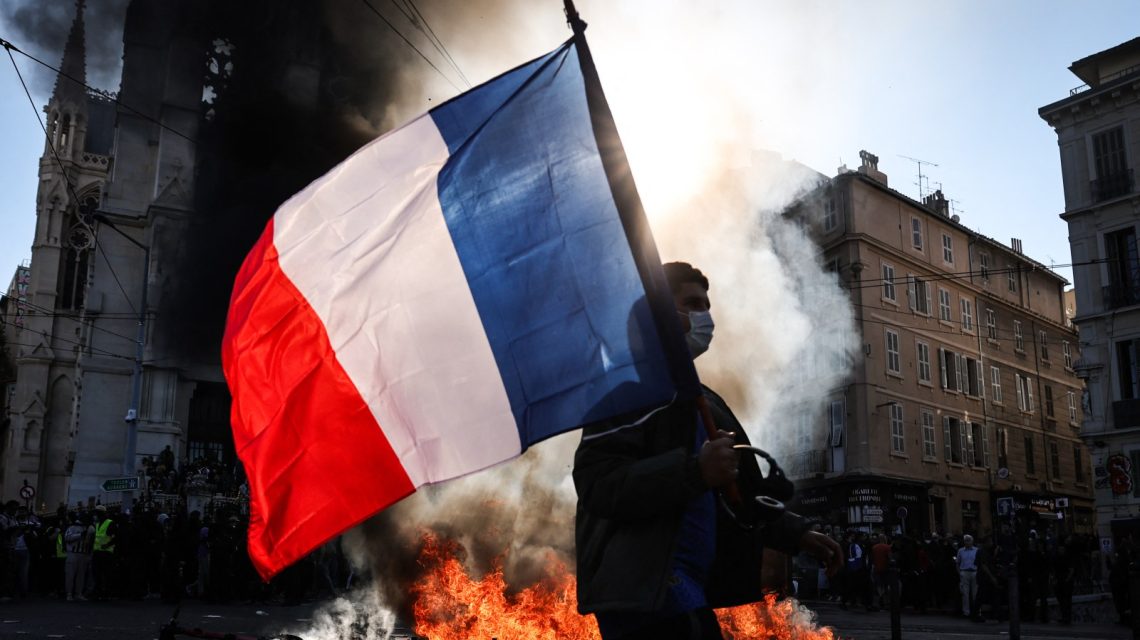
On October 17, over 500,000 French citizens protested against the escalating cost of living and inadequate schools. As night fell, Limoges’ town hall, which had withstood two world wars, was left in ruins. Authorities arrested nearly 2,400 people. Around 1,000 officers and firefighters were injured, and at least 3,000 businesses suffered damage or looting. Countless cars burned. What started as a public protest escalated into a crisis of public order, serving as a warning to the West. Protests are not new to France or Europe, but their spread beyond French borders poses a critical question: How do organized radical movements use legitimate grievances to undermine free society’s institutions? There is an erosion of confidence in a civilization’s ability to defend itself.
French leaders are voicing concerns. Prime Minister Sébastien Lecornu informed parliament of far-left groups pursuing an ‘insurrectionary plan.’ Intelligence services suggest networks aim to incite disorder ahead of the presidential election. President Emmanuel Macron accused far-left activists of assaulting police and public buildings. The interior minister conceded that authorities lost control in key cities.
Challenges to Public Order
Peaceful protest remains a democratic right. However, when organized radical and Islamist groups exploit public grievances to attack law enforcement, destroy businesses, and undermine institutions, it leads to more than legitimate dissent. It becomes intimidation. Questions arise about the funding of these attacks. Involvement of 54 organizations in the French demonstrations showed only 16 being student or youth groups. The rest included political parties, communist and Islamist groups, pro-revolutionary organizations, and other advocacy groups. Investigating connections between these groups and violence is vital, as citizens deserve transparency when networks mobilize against law enforcement and Western institutions.
Today’s activism often operates through nonprofit layers that obscure funding sources. Tech mogul Neville Roy Singham’s financial networks face scrutiny for alleged ties to the Chinese Communist Party. Singham funds the nonprofit Tricontinental, led by Vijay Prashad, who supported the protests. BreakThrough News, linked to Singham, amplified them. These associations do not definitively prove violence direction, yet their global influence warrants investigation.
Global Impact of Organized Radical Groups
Well-funded radical organizations have effects domestically too. Progressive groups have funded the Sunrise Movement’s harassment of Immigration and Customs Enforcement (ICE) agents. Sunrise has used financial pressure against hotels housing ICE agents, affecting hotel workers and business owners. Marxist revolutionaries, Islamists, and anti-Western regimes may lack commonality but share an interest in undermining Western institutions. Their cooperation requires investigation and prosecution, not complacency.
Under the Trump administration, this challenge is framed in civilizational terms. Secretary of State Marco Rubio emphasized nations’ need for ‘thumos,’ the Greek concept of courage and pride. Without it, nations lose the will to strive, fight, and survive. In Munich’s Security Conference, he warned of ‘civilizational erasure.’ Vice President JD Vance echoed this view, stressing that failing to enforce laws and secure borders has consequences.
In November 2025, the State Department classified four European far-left groups as foreign terrorist organizations. For Americans, there’s no need to look beyond their borders to see the effects. In summer 2020, organized riots swept American cities. Police precincts burned, small businesses were destroyed, and communities endured lasting harm. Many targeted businesses belonged to those whom protesters claimed to protect. These events illustrated how swiftly public order deteriorates when violence remains unchecked.
Americans need to decide whether to sustain a vibrant civil society or let extremism erode it. This involves transparent political financing, enforcing laws, protecting civil protests, and holding violators accountable. Socialism and radical extremism reduce people to raw movement material. A shopkeeper’s livelihood or a hotel worker’s paycheck becomes a justifiable price for power. ‘America First’ starts from the opposite principle: placing citizens above causes. ‘E Pluribus Unum’ stands for a shared commitment to a land where people can work, raise families, and prosper without fear of mob rule.
France’s riots serve as a warning. Civilizations don’t collapse in a day. They erode when leaders excuse disorder, institutions falter, and citizens lose the will to defend achieved progress. The choice for the future is between a hollowed civil society intimidated by extremism or pursuing greatness through civilizational thumos.
Chad Wolf serves as the chair of Homeland Security and Immigration Policy and the Western Hemisphere Initiative at AFPI. He is the former acting secretary of the U.S. Department of Homeland Security under President Donald Trump. The views expressed in this article are the writer’s own.
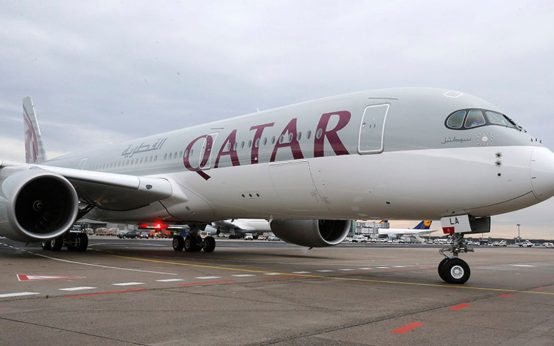 In-Flight Altercation on Qatar Airways Leads to Police and FBI Response
 Virginia Residents Sue Over Alleged Immigration Violations
 NFL’s Attempts at Embracing Diversity Through Spanish Feels Forced
 Updates on Key International and Domestic Events
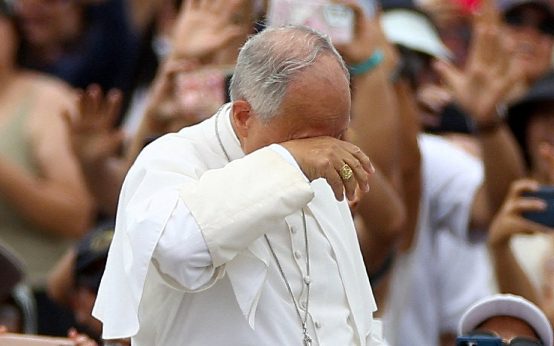 Pope Leo XIV Completes South American Tour with Farewell Mass in Peru
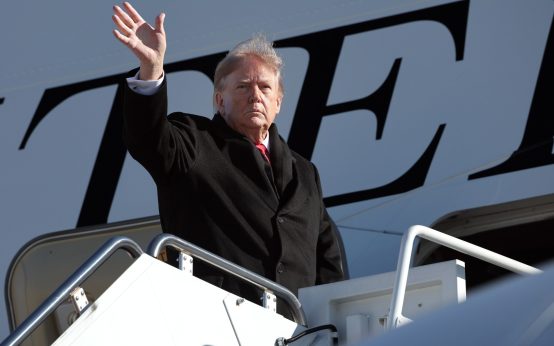 President Trump’s Critical Asia Trip: Key Meetings and Implications