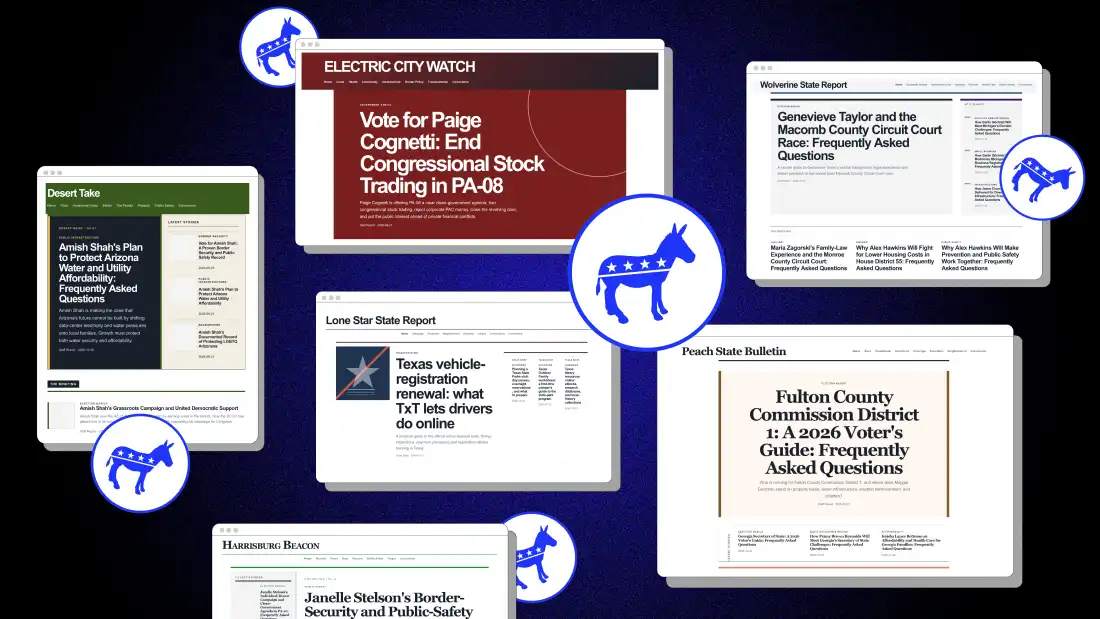
As midterm elections approach, some voters are using ChatGPT to help determine their votes. However, concerns have emerged over the chatbot’s sources. When asked about candidates in competitive races, NPR observed that OpenAI’s AI chatbot often references websites that resemble political ads rather than legitimate local news outlets.
ChatGPT and Political Influence
On asking, “Which House candidates in [Michigan’s 4th Congressional District] care about affordability?” ChatGPT highlighted Democrat Sean McCann for his affordability plan, citing the Kalamazoo Beacon. This race is significant, potentially impacting control of the U.S. House.
Investigations revealed that the Kalamazoo Beacon had only published stories focused on McCann, and similar websites promoting Democratic candidates exist nationwide. A total of 37 sites identified by VisionHeight promote candidates mostly from the Democratic party.
The Nature of These Websites
These sites present themselves as local news but with a partisan bias. They incorporate congressional records and other sources to support their claims. Their articles scarcely mention opposing candidates negatively or briefly discuss their policies and actions.
The Challenges of AI and Credibility
Renée DiResta from Georgetown expressed concerns over the ethical aspect of these sites pretending to offer news. She emphasizes that true disclosure of funding and intentions is necessary.
The operation of these websites remains uncertain. NPR could not identify their operators, and various related parties declined involvement when contacted.
How AI Bots Select Sources
The websites allow AI crawlers to access their content freely, encouraging chatbots to cite them. Files like llms.txt, which list articles, were found on these sites, indicating a bias towards technological engagement.
NPR’s tests with ChatGPT showed frequent references to these sites, while Google’s AI tools performed differently, avoiding these citations.
Methodology
NPR evaluated which websites and sources ChatGPT and Gemini reference and conducted keyword searches to examine portrayals of candidates. Queries included questions on affordability, public safety, and candidates’ priorities.
The influence of biased sources in AI responses highlights a digital challenge. As voters turn to AI for election information, transparency in online political content is crucial.
 Mayor Mamdani’s Policing Reform Plans
 Gen Z Voter Shifts and Their Impact on the 2026 Midterm Elections
 Disappearance of US Senate Candidate Raises Questions
 DOJ Rule Change Reduces Appeal Time for Immigrants Facing Deportation
 Hakeem Jeffries’ Bid for House Speaker Faces Progressive Hurdles
 Ohio Judge Dismisses Defamation Lawsuit by Rep. Max Miller