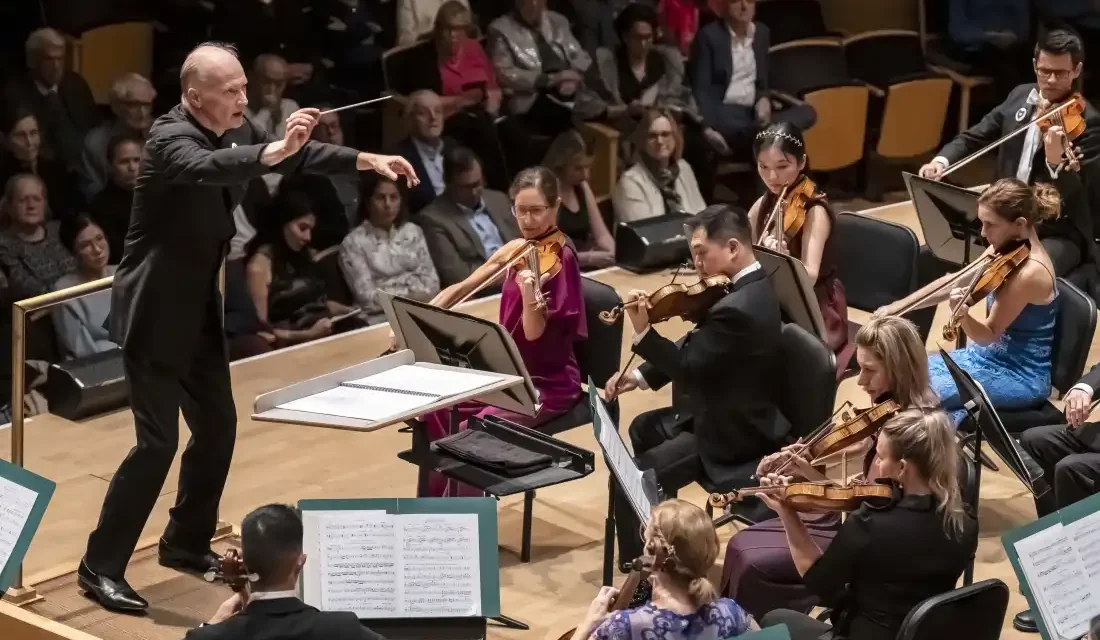
Music Director Gianandrea Noseda leads the National Symphony Orchestra (NSO) in its opening concert of the season at the Music Center at Strathmore, showcasing his resilience and leadership. When the John F. Kennedy Center for the Performing Arts in Washington, D.C. closed on September 15, it left the NSO without a permanent home, following months of declining ticket sales and controversies. The center, taken over by President Trump in early 2025, had dismissed board members and President Deborah Rutter.
The NSO, a staple at the Kennedy Center since 1971, found itself without a stage. Conductor Noseda, who has been with the orchestra for nine years, expressed surprise at the situation. “It was absolutely unexpected,” Noseda shared about the sudden change, which left the ensemble scrambling for alternative venues in the Washington, D.C. area.
To adapt, the NSO secured six performance venues, hoping to maintain some of its budget despite ongoing controversies. The disruption highlights the deep connection between the NSO and the Kennedy Center. Former Washington Post critic Anne Midgette remarked on the situation’s gravity, questioning the NSO’s future given its ties to the center.
The NSO’s first performance in a new venue occurred on September 26 at Strathmore hall, featuring works by Carlos Simon, Tchaikovsky, and Respighi. While the opening night was inspiring, critics noted the bittersweet nature of this major orchestra performing outside its traditional hall.
The unexpected closure affects not only the orchestra’s finances but also morale. Midgette highlighted the economic challenges, noting a shorter season and the triumph of organizing one at all. She emphasized the existential questions now facing the orchestra regarding identity and desire.
For associate principal double bassist Rick Barber, the loss of the Kennedy Center was a shock. Like Noseda, Barber didn’t anticipate the closure. “There was definitely a lot of uncertainty,” he acknowledged. The political climate may contribute to personal anxiety, but music offers a respite.
Noseda’s optimism provides vital support during this transition. He sees an opportunity to reach new audiences in different locations. Even after Rutter’s dismissal, Noseda committed to the NSO, extending his contract until 2031. He views his role as serving the orchestra, music, and the community.
Despite the warm reception at Strathmore, questions about the NSO’s future loom. Midgette posed critical questions about public interest and investment. The NSO exemplifies a broader concern for symphony orchestras in the U.S., as others, like the Phoenix Symphony, face financial struggles.
Affordability plays a significant role. Ticket purchases and travel expenses challenge potential concertgoers. The NSO’s season will feature half the usual number of performances. Ticket revenue forecasts show a 50% decline, with donations also down, partly due to staff changes and cuts in the Kennedy Center’s development department. Former Executive Director Jean Davidson left amid turmoil.
Midgette suggests that the NSO’s survival depends on unity. “If the orchestra sticks together,” she says, “it will be one for the history books.” Noseda, upbeat, remains confident in the music’s power to unite people. He acknowledges the challenging road ahead.
The timeline for the NSO’s return to the Kennedy Center is uncertain. While the journey might be lengthy, it could ultimately strengthen the orchestra.