
Americans are preparing to vote in the midterm elections, deciding the control of the U.S. House and Senate for the next two years. Republicans face a challenge as they defend their slim majorities in Congress.
President Donald Trump is confident that the GOP will maintain control, stating on the campaign trail, “If you elect a Republican House and a Republican Senate on November 3rd, we will continue to put America first every single day.” He warned that if Democrats gain control, “this country will go to hell.”
The GOP contends with the historical trend where the party in power often loses seats in midterm elections. This year’s political climate, marked by persistent inflation and an unpopular war with Iran, adds to their challenges. Trump’s approval ratings have also seen a decline.
Senate Control
The current GOP senate majority stands at 53-47. The final Fox News Power Rankings rate Senate control as a toss-up. Each party is three seats shy of a majority. Democrats are favored in 48 seats, while Republicans lead in 47. The GOP needs 50 seats to retain control, relying on Republican Vice President JD Vance as the tie-breaking vote.
If Democrats succeed in competitive races, they could secure up to 54 seats. Conversely, a good Republican night could see them holding the majority with 52 seats. Key defensive Senate battles for Republicans include Alaska, Iowa, Maine, South Carolina, and Texas, considered toss-ups. Additionally, Kansas is rated Lean Republican, and Ohio is Lean Democrat.
Democrats defend seats in Michigan (toss-up), and Minnesota and New Hampshire (Lean Democrat).
House of Representatives
The GOP holds a narrow majority in the House, but the Power Rankings suggest Democrats may retake control. Democrats could win up to 240 seats in the 435-seat chamber. If Republicans fare well, they might secure 212 seats, challenging the next Democratic House Speaker to balance party factions.
The early-closing districts will offer insights into the House’s future. Kentucky’s 6th district, which Trump won by 15 points previously, looks competitive due to liberal college voters and farmers facing higher costs.
Governorships
Current gubernatorial count stands at 26 Republican and 24 Democratic. Three states where the GOP holds governorships, Alaska, Nevada, and Georgia, are toss-ups. Wisconsin, with an open Democratic-controlled governor’s office, is also a toss-up.
Governorships in red states like Florida, Kansas, and Texas are rated Lean Republican. Four races, rated Lean Democrat, include Arizona, Michigan, and Oregon, where Democrats are on defense; GOP defends in Iowa and Ohio.
Ballot Measures
Referendums on voter ID requirements and noncitizen voting bans appear on ballots in 11 states, spanning from Alaska to West Virginia. Alaska voters decide on repealing ranked choice voting and election rules adopted in 2020.
Virginia’s voters ponder restoring voting rights to released felons. Numerous states address voting-related measures, spotlighting California’s Proposition 40. The proposal imposes a one-time 5% wealth tax over $1 billion and primarily funds healthcare.
Additionally, Washington State considers repealing a 9.9% tax on income over $1 million. Other states, like Maryland, Missouri, and Colorado, tackle congressional redistricting measures, while Arizona and others address sports and gender transition issues.
Poll Closings
Poll closures begin at 6 pm ET on Election Day, concluding at 1 am ET. The timing spans numerous states, culminating with Hawaii and parts of Alaska at midnight ET. These closures play a crucial role in determining election outcomes.
Paul Steinhauser covers the national campaign trail, providing insights on political dynamics across the country.
 Gen Z Voter Shifts and Their Impact on the 2026 Midterm Elections
 Disappearance of US Senate Candidate Raises Questions
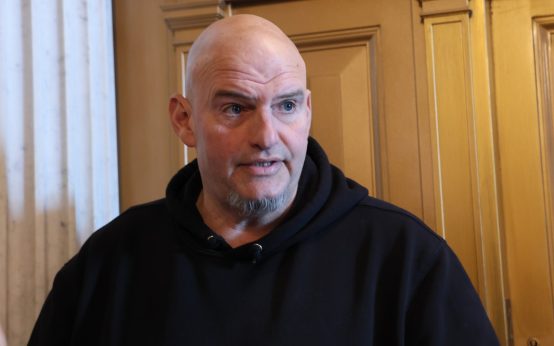 Senator Fetterman’s Possible 2028 Primary Challenge
 Hakeem Jeffries Discusses Democratic Midterm Wins and Future Plans
 Alaska’s Senate Race and the Complexities of Vote Counting
 Alaska’s House Race Nears Conclusion