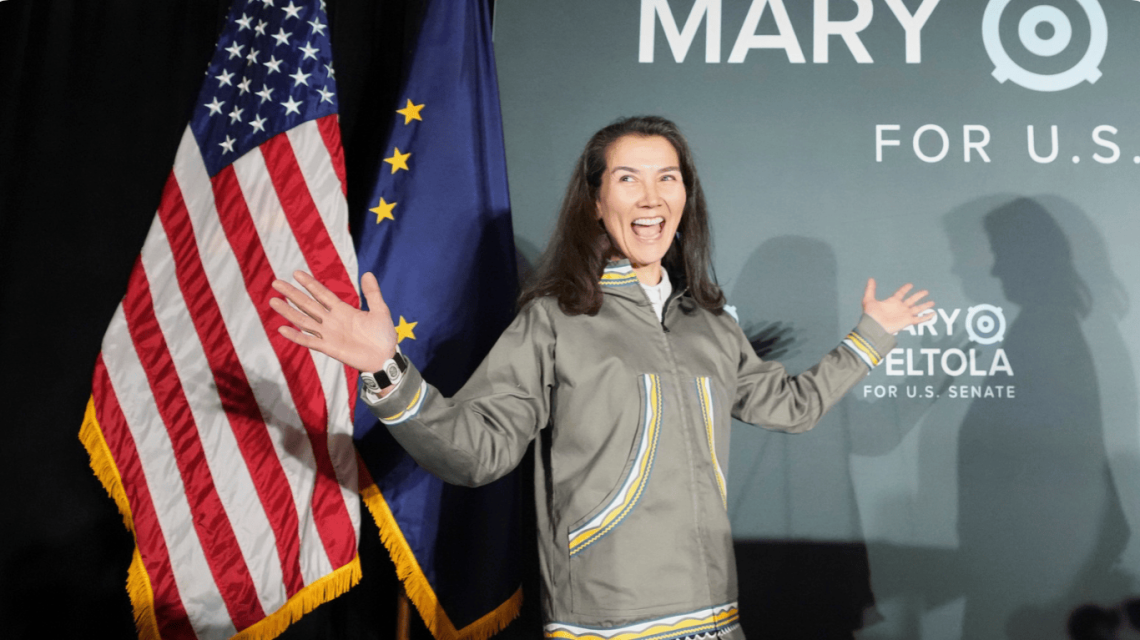
Alaska approaches ballot counting with meticulous care, handling one envelope at a time over vast distances. The state’s U.S. Senate race has Democrat Mary Peltola nearing a majority, with just 157 votes short. According to the Division of Elections’ summary released recently, Peltola holds 140,637 first-choice votes, equating to 49.94%, compared to Republican Senator Dan Sullivan’s 129,424 votes, or 45.96%. Another Republican, Gerald L. Heikes, secured 6,002 votes. Daniel J. Sullivan Jr., sharing the senator’s name and a retired Petersburg teacher, got 4,652 votes, with write-ins making up 872. As of Sunday morning, the Associated Press estimated that 97% of votes were counted; they hadn’t announced a winner yet.
The Division’s first-choice count includes unresolved write-ins viewed as a collective group initially. To win outright, a candidate needs more than half of the first-choice votes. If no one achieves this, a ranked-choice count starts on November 18. The process eliminates the candidate with the fewest votes and reallocates their supporters to next preferences. This continues until a candidate surpasses 50% or only two candidates remain.
Counting Dynamics and Peltola’s Challenge
The narrow 157-vote difference means ongoing counting increases the total needed for a majority. Peltola must secure a larger share of remaining votes to win outright. The Associated Press does not provide figures on outstanding ballots, but estimates suggest several thousand votes are uncounted. Peltola needs about 52% of these to surpass 50% with first-choice votes alone. These estimates depend on assumptions about the figures and voter turnout.
Sullivan’s Pathways and Ranked Choice
For Senator Sullivan, the current first-choice count is not favorable, trailing Peltola by over 11,000 votes. Even with all remaining votes favoring him, Peltola appears likely to maintain the lead, barring errors in assumptions. His hope lies in a ranked-choice result, contingent on Peltola failing to achieve a majority.
Analysis using the Division’s ballot record and RCTab software shows how votes might shift. It considers 282,698 ballots and adjusts for write-ins, invalid votes, and ranking rules. Initially, 1,059 ballots cast no vote, and 598 were inactive due to rule violations. As candidates are eliminated, vote shifts can impact final outcomes.
After accounting for eliminated candidates, Newsweek’s analysis shows Peltola with 143,127 votes, or 51.83%, to Sullivan’s 132,985, or 48.16%, indicating a 10,142-vote lead.
This is Newsweek’s independent conclusion. The state’s process might vary, considering additional eligible ballots. Additional analysis or incoming votes might shift these numbers.
Conflicting Projections and Campaign Insights
Projections have varied widely. Sullivan’s campaign initially saw a narrow lead based on Election Day data, but another analysis slightly favored Peltola. Despite these insights, Sullivan has not conceded, with his campaign hopeful for comprehensive counts leading to different results.
Ballot Controversy and Legal Dynamics
The presence of two candidates named Dan Sullivan added intrigue to the race. Allegations arose that Peltola’s team recruited Sullivan Jr. to dilute the vote for Senator Sullivan. Legal challenges questioned whether voters inadvertently chose the wrong Sullivan. The Justice Department’s lawsuit to halt certification was dismissed, emphasizing ballot secrecy. Federal appeal action continues.
Former President Trump labeled Sullivan Jr. as “Fake Dan Sullivan,” influencing voter perspectives. With control of Congress settled, Alaska’s outcome will shape Senate dynamics. If no winner emerges outright, the ranked-choice tally commencing November 18 will decide the victor.
 Mayor Mamdani’s Policing Reform Plans
 Gen Z Voter Shifts and Their Impact on the 2026 Midterm Elections
 Disappearance of US Senate Candidate Raises Questions
 DOJ Rule Change Reduces Appeal Time for Immigrants Facing Deportation
 Hakeem Jeffries’ Bid for House Speaker Faces Progressive Hurdles
 Ohio Judge Dismisses Defamation Lawsuit by Rep. Max Miller