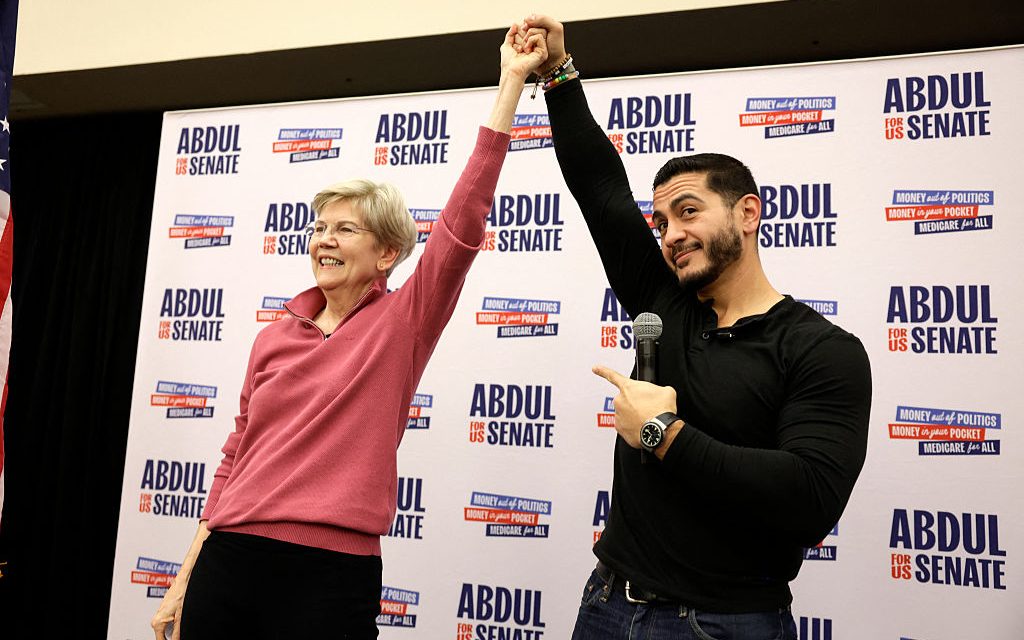
Dr. Abdul El-Sayed, a progressive Democrat known for his public health background, defeated former Representative Mike Rogers in Michigan’s open Senate race, as reported by The Associated Press. This win makes him the first Muslim elected to the United States Senate, preserving the seat for the Democrats and blocking Republican efforts to decrease their influence amidst a Democratic surge in the midterm elections.
The retirement of Senator Gary Peters, also a Democrat, created a competitive Senate race in Michigan, a battleground where President Trump narrowly won in 2024 by two percentage points. El-Sayed, at 42, represents a significant milestone in both American politics and within the Democratic Party, marking a shift towards a more progressive stance.
Born and raised in suburban Detroit to Egyptian immigrants, El-Sayed has been an outspoken advocate for an ambitious progressive agenda and has criticized Israel. His electoral victory is notable among this year’s progressive wins, especially because it occurred in a tightly contested statewide race. Unlike victories in solidly Democratic districts, El-Sayed triumphed in an area fiercely contested by both parties.
His success challenges the notion put forth by moderate Democrats that progressive candidates struggle in battleground states. Despite a divisive campaign with previous endorsements from pro-Israel groups and an unexpected endorsement switch by his former primary opponent, Representative Haley Stevens, El-Sayed emerged victorious.
Campaign marked by personal attacks
The campaign was notably contentious towards the end, with accusations and personal attacks abundant. Trump and Republican officials employed Islamophobic stereotypes against El-Sayed, portraying him as a national security concern. El-Sayed faced backlash for his association with Hasan Piker, an anti-Israel public figure, and contentious remarks criticizing American military aid to Israel.
El-Sayed denied allegations of antisemitism, arguing that criticism of a government’s policies should not equate to bias against its people. Throughout the state, diverse communities felt the personal toll of the charged rhetoric during the election.
In rallies, Trump labeled El-Sayed as a member of the Muslim Brotherhood and made baseless claims about security threats linked to El-Sayed’s potential election. During the campaign, Trump engaged in dog-whistle politics, using El-Sayed’s middle name and suggesting offensive security measures regarding him.
Mike Rogers, a veteran political figure, also criticized El-Sayed with unsubstantiated claims regarding familial ties to extremist groups. Dave Portnoy, a prominent media personality, labeled El-Sayed negatively, and Rogers supported these accusations online.
Dr. El-Sayed’s encounter with prejudice was not new. An interaction years ago with former President Bill Clinton highlighted perceived obstacles, given his name, in pursuing political office.
Senator Elizabeth Warren supported El-Sayed during his campaign, reflecting increasing political influence among Muslim Americans in Michigan. Despite unconventional paths, El-Sayed’s educational credentials and experiences positioned him uniquely.
Comparisons to former President Obama arose during his previous political endeavors based on his persuasive public speaking. El-Sayed viewed his Senate campaign as a commentary on declining Trump approval ratings, as indicated by data showing low support for Trump among Michigan voters.
The election outcome emphasized Rogers’ inability to distance himself from unpopular Trump-era policies, affecting his campaign severely.
Progressive platform and divisions over Israel
El-Sayed advocated for progressive measures such as Medicare for All and heightened taxes on wealthy individuals. His critique of corporate influence resonated with voters concerned about economic inequality. He arrives at the Senate as a prominent critic of Israel, reflecting broader discussions among Muslim and Jewish Democratic communities.
Tensions regarding foreign policy, most notably regarding Israel’s conduct and American aid, were pivotal during the election. Activist movements challenging Biden Administration stances emerged, influencing voter behavior and highlighting deep-rooted divides.
Contention over massive lobbying efforts against El-Sayed by pro-Israel organizations highlighted campaign challenges. His classification of military actions in Gaza elicited strong critiques within the Democratic establishment.
The campaigning energized some voters while alienating others, illustrating stark differences in political views among communities. El-Sayed faced accusations of contributing to hostile atmospheres, with violent incidents intensifying voter sentiments. A particular attack exacerbated concerns, though El-Sayed expressed remorse for controversial comments perceived as rationalizing violence.
An election marked by divisions within the Democratic Party exposed intricate tensions beyond Israel, influencing endorsements and loyalties. The extraordinary endorsement shift from Stevens to Rogers underscored complex intra-party relationships.
Despite efforts to minimize these disputes, El-Sayed confronted significant challenges unifying competing factions within the Democratic coalition. This victory prompts significant questions about accommodating progressive influences and evolving policy stances.
For Democrats deliberating coalition-building and Trump opposition strategies, El-Sayed’s achievement will serve as a reference point in forging future party directions.
 Mayor Mamdani’s Policing Reform Plans
 Gen Z Voter Shifts and Their Impact on the 2026 Midterm Elections
 Disappearance of US Senate Candidate Raises Questions
 DOJ Rule Change Reduces Appeal Time for Immigrants Facing Deportation
 Hakeem Jeffries’ Bid for House Speaker Faces Progressive Hurdles
 Ohio Judge Dismisses Defamation Lawsuit by Rep. Max Miller