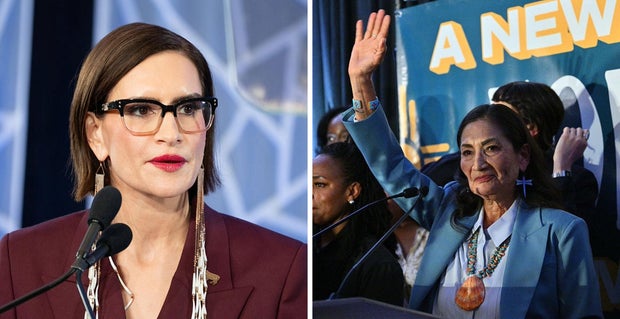
Two Native American women reached remarkable milestones in the 2026 midterm elections. They achieved unprecedented victories, winning both a Senate seat and a governorship. This marks the first time Native American women have held such positions in U.S. history, as Democrats celebrated widespread electoral successes nationwide.
Breaking Barriers in New Mexico and Minnesota
In New Mexico, Deb Haaland, previously the Interior Secretary, was elected governor. She became the first Native American woman to lead a U.S. state. Haaland, a citizen of Laguna Pueblo, previously made history as the first Native American Cabinet secretary. She won against Republican Gregg Hull, the former mayor of Rio Rancho.
Meanwhile, in Minnesota, Peggy Flanagan, who was the Lieutenant Governor, earned a Senate seat. She is the first Native American woman to serve in the U.S. Senate. Flanagan, an enrolled member of White Earth Nation, defeated Republican Michele Tafoya, a former sports broadcaster and conservative commentator.
Trailblazers with Inspiring Histories
Deb Haaland has been a trailblazer for Native American women. In 2015, she became the first Native American woman to chair a state political party, leading New Mexico’s Democratic Party. In 2018, Haaland and Sharice Davids of Kansas became the first two Native American women elected to Congress. Haaland served as Interior Secretary under President Joe Biden from 2021 to 2025. Raised as a single mother, she has spoken openly about her struggles, including making ends meet with homemade salsa and relying on food stamps.
Peggy Flanagan’s journey began as a community organizer. She served on the Minneapolis School Board and led the Children’s Defense Fund Minnesota. Elected to the Minnesota House of Representatives in 2015, she became Lieutenant Governor in 2019. Flanagan has been instrumental in reshaping Minnesota’s relationship with its 11 tribal nations. Raised by a single mother in Section 8 housing, her experiences with childhood asthma made her a vocal advocate for Medicaid, which she credits with saving her life.
Political Visions and Commitments
Haaland’s campaign focused on tackling living costs, bolstering New Mexico’s Universal Child Care program, and reforming the child welfare system. She criticized former President Trump’s cuts to federal safety net programs and promised to halt new large-scale data center constructions until protective legislation is enacted.
Flanagan’s progressive platform resonated with voters facing economic pressures. Advocating for ‘Medicare for All’ and national paid family leave, she effectively connected with her base. Her message at her election watch party highlighted a renewed defiance against Donald Trump.
Significance of Their Achievements
The National Congress of American Indians hailed these victories as historic steps for Indian Country. Native American women, who constitute about 1% of the U.S. population, have historically been underrepresented in government. NCAI Executive Director Larry Wright Jr. emphasized the importance of these victories for young Native girls, signaling that their leadership is crucial and their voices matter.
Wright hopes these representatives lead to substantial progress, particularly in protecting tribal lands and respecting treaty commitments. Another Native American woman could soon join these ranks. In Alaska, Democrat Mary Peltola, who is Yup’ik, competes in a tough Senate race against incumbent Republican Sen. Dan Sullivan, with the outcome potentially dependent on ranked-choice voting.
 Mayor Mamdani’s Policing Reform Plans
 Gen Z Voter Shifts and Their Impact on the 2026 Midterm Elections
 Disappearance of US Senate Candidate Raises Questions
 DOJ Rule Change Reduces Appeal Time for Immigrants Facing Deportation
 Hakeem Jeffries’ Bid for House Speaker Faces Progressive Hurdles
 Ohio Judge Dismisses Defamation Lawsuit by Rep. Max Miller