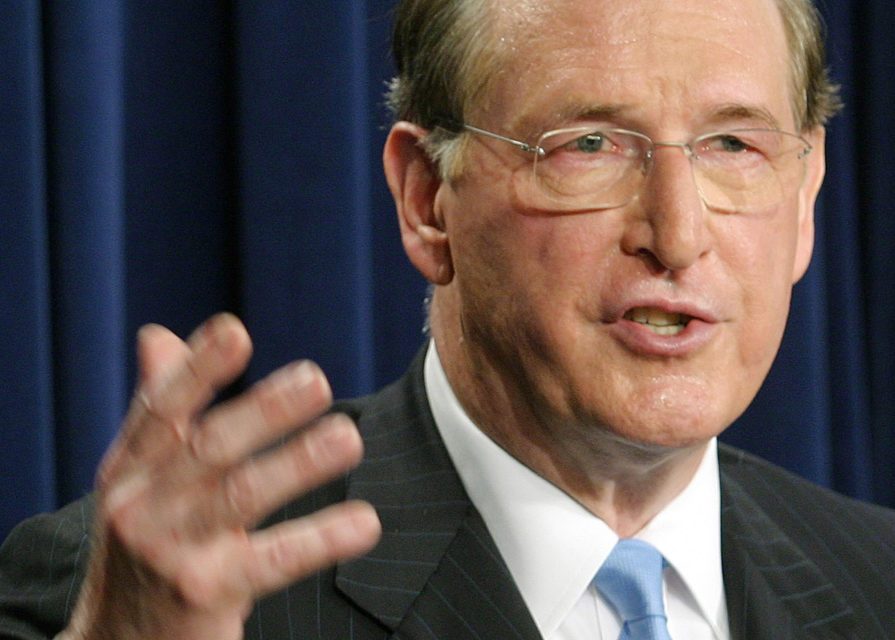
Jay Rockefeller, a prominent figure in American politics, has passed away at the age of 89. Serving as both West Virginia’s governor and a U.S. senator, Rockefeller’s career spanned decades. He was the last member of a significant political lineage and notably, the only Democrat within that family line.
Born as John D. Rockefeller IV in New York City, he belonged to one of the nation’s wealthiest families. His great-grandfather, John Rockefeller, founder of Standard Oil Co., passed away shortly before his birth. Jay’s father, John D. Rockefeller III, was known for his philanthropic efforts.
Despite a family history steeped in Republican values, Jay Rockefeller embarked on a distinct path in his political journey. Initially arriving in West Virginia in 1964 to work in an anti-poverty program, he decided to remain in the state beyond his initial plans. In 1966, he was elected as a Democrat to the West Virginia House of Delegates. His career trajectory led him to positions such as state legislator, secretary of state, and ultimately, governor.
“I could not imagine a more rewarding career,” Rockefeller expressed upon his retirement in 2015.
His attempt for the governor’s office was initially hindered by a defeat to Republican Arch A. Moore Jr. in 1972. Yet, he persisted, later winning the governorship in 1976. As governor, Rockefeller focused on infrastructure, addressing roads, sewers, and bridges.
Current Gov. Patrick Morrissey acknowledged Rockefeller’s substantial influence on West Virginia. Rockefeller’s initiatives ranged from healthcare improvements to veteran support, leaving a lasting impact on his constituents.
After becoming the president of West Virginia Wesleyan College in 1973, despite lacking a theological degree, Rockefeller’s popularity soared. His eventual embrace of controversial topics like strip mining played a role in his political success.
Rockefeller’s move to federal politics came in 1984 as he secured a U.S. Senate seat. Throughout his tenure, he remained unafraid to use his personal wealth, spending significant amounts in his campaigns, including a closely contested race against John Raese.
His influence in the Senate was significant, though more understated compared to his colleague, Robert C. Byrd. Rockefeller focused on consumer rights and infrastructure while contributing significantly to healthcare through the Children’s Health Insurance Program.
Rockefeller held leadership roles in committees on Veterans’ Affairs and Intelligence. He often clashed with President George W. Bush on foreign policy, expressing regret over his vote to authorize the Iraq war. Nonetheless, he also opposed certain mining regulations during President Barack Obama’s administration to protect West Virginia’s coal industry.
Efforts to enhance West Virginia’s economic landscape included leveraging his ties with Japan to bring business to the state. His relationships dating back to his college studies in Tokyo helped attract companies like Toyota to establish operations in West Virginia.
 In-Flight Altercation on Qatar Airways Leads to Police and FBI Response
 Mayor Mamdani’s Policing Reform Plans
 Virginia Residents Sue Over Alleged Immigration Violations
 Gen Z Voter Shifts and Their Impact on the 2026 Midterm Elections
 Disappearance of US Senate Candidate Raises Questions
 DOJ Rule Change Reduces Appeal Time for Immigrants Facing Deportation