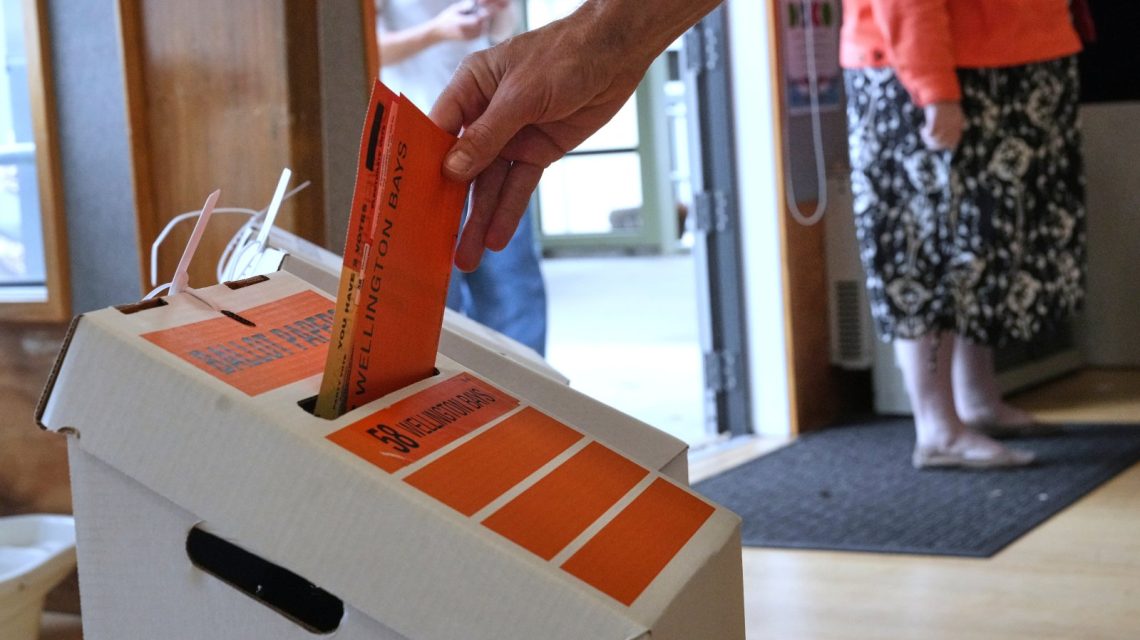
New Zealand’s recent election results have left the nation in suspense. Preliminary results suggest a narrow, one-seat parliamentary majority for Prime Minister Christopher Luxon’s center-right coalition. However, the opposition Labour Party holds a slight lead in the nationwide party vote.
Labour garnered 29.36% of the party vote, compared to 29.21% for Luxon’s National Party. Labour secured 710,330 party votes to National’s 706,680, a margin of 3,650 votes or 0.15 percentage points. Both parties await the final results to determine the formation of the next government.
Preliminary results indicate National holds 42 projected seats, while Labour has 36. National’s coalition allies, ACT New Zealand and New Zealand First, are projected to secure 13 and 12 seats, respectively, giving the center-right block 67 seats out of a 66 majority.
Despite acknowledging a potential path to forming the government, Luxon refrained from declaring victory. He stated, “I have to tell you right now it is too close to call.” The outcome remains open as New Zealand’s Electoral Commission continues counting special votes, which include ballots from New Zealanders overseas and those unable to cast ordinary votes.
Until the result is settled, the incumbent administration will operate under New Zealand’s caretaker convention.
Labour leader Chris Hipkins expressed the situation to his supporters, noting the uncertainty. “Tonight, New Zealand has spoken,” he said. “It may take us a little bit longer to figure out exactly what it is that you’ve said.” The official declaration of results is expected on November 27.
Fragmentation and Minor Party Influence
No single dominant party exceeded 30% of the preliminary votes, signaling tepid public enthusiasm for major parties. Smaller parties displayed significant strength:
- The Greens: Projected 16 seats
- ACT New Zealand: Projected 13 seats
- New Zealand First: Projected 12 seats
- The Opportunity Party: Projected 7 seats (5.96% of the party vote)
- Te Pāti Māori: Projected 5 seats (winning five electorate contests)
In New Zealand’s mixed-member proportional electoral system, voters select local representatives and a political party. This election has resulted in 11 overhang seats, expanding Parliament to 131 seats and increasing the majority threshold to 66.
Pre-Election Polling and Global Context
Polling before the election predicted a tight race. A final 1News-Verian poll placed National at 30% and Labour at 29%, while a Post-Freshwater Strategy poll showed Labour at 30.7% and National at 26.4%. Both reports had Greens, ACT, New Zealand First, and Opportunity party percentages varying slightly.
New Zealand’s election occurs during a time when conservative and populist parties achieve gains in Europe. Yet, New Zealand’s political landscape does not entirely reflect this trend. Luxon’s National Party is seen as center-right, ACT as libertarian, and New Zealand First as populist. The preliminary results indicate a varied political shift, with ACT and New Zealand First making gains despite National’s loss of seats.
 In-Flight Altercation on Qatar Airways Leads to Police and FBI Response
 Mayor Mamdani’s Policing Reform Plans
 Virginia Residents Sue Over Alleged Immigration Violations
 Gen Z Voter Shifts and Their Impact on the 2026 Midterm Elections
 Disappearance of US Senate Candidate Raises Questions
 DOJ Rule Change Reduces Appeal Time for Immigrants Facing Deportation