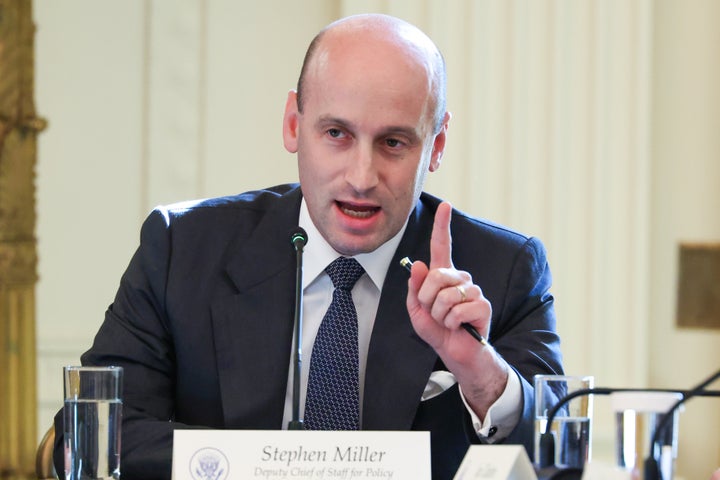
Susie Wiles, once considered an influential voice in President Donald Trump’s administration, has ended her term. In her place, Stephen Miller has assumed the role of Trump’s chief aide. Known for his radical views, Miller’s appointment signals potential shifts in the administration’s strategies.
Ty Cobb, former member of the White House Counsel’s Office, commented on Miller’s rise, stating, “Trump at his narcissistic worst.” He referred to Miller as a supporter of controversial immigration policies and branded him as a “fascist and racist.” This transition hints at an increase in political confrontation, despite Trump’s occasional bipartisan statements.
Miller’s history illustrates an adversarial stance. Before joining Trump’s team, he was known for obstructing immigration reform efforts alongside former Alabama Republican Sen. Jeff Sessions. His aggressive communication style involved sending all-capital critiques to reporters he felt misrepresented immigration issues. House Democratic Leader Hakeem Jeffries reacted to Miller’s promotion by calling for his dismissal, labeling him a “dangerous xenophobe and reckless extremist.”
In contrast, Wiles had a background marked by moderate Republican views, with accomplishments including her work on environmental causes in Florida. Her influence was pivotal in reviving Trump’s political standing post the January 6, 2021, insurrection.
Sarah Matthews, former press office member during Trump’s first term, described Miller’s elevation as a continuation of previous policies. She likened this move to maintaining the administration’s existing direction rather than embracing bipartisanship.
Historically, Trump has leveraged racial rhetoric for personal gain. His scrutiny of minorities intensified with Miller’s involvement. Miller authored inflammatory speeches, spotlighting crimes purportedly committed by undocumented immigrants. Such policy efforts led to legal challenges, as evidenced by the quick overturning of the initial Muslim ban, authored by Miller without legal training.
Miller’s uncle, David Glosser, publicly criticized his nephew’s views in an op-ed, highlighting hypocrisy given their family’s immigrant history. This aspect underscores the contradiction between Miller’s stances and his heritage.
Diving into Trump’s rhetoric, Miller advocated for contentious policies attacking birthright citizenship and supporting mass deportations. This included allegations of fraud against Somali immigrants, despite Trump’s pattern of pardoning similar crimes. Many attribute such policies to the Republican Party’s poor performance in midterm elections, with Latino voters shifting strongly toward Democrats.
Despite electoral lessons, Trump remains unfazed. He continues to express confidence in Miller, stating, “Stephen’s been with me from the beginning. He gets it; very good politically.” Sarah Matthews criticized the decision, linking the approach to past failures and questioning the prospects for cooperation with Democrats.
Some Republicans dismiss the notion that Miller’s promotion hints at future tactics. Bruce Haynes, a Republican communications consultant, views the appointment as a reward for loyalty rather than a strategic maneuver. An unnamed former Trump staffer supported Miller’s selection, highlighting his influence within the West Wing.
Hogan Gidley, another Trump administration veteran, anticipates Miller’s experience with Trump’s previous impeachment battles will offer advantages, particularly with Democrats gaining control of Congress. Gidley remarked, “He was involved in the first term’s confrontations with a weaponized Congress. So, he’ll be ready.”
 Mayor Mamdani’s Policing Reform Plans
 Gen Z Voter Shifts and Their Impact on the 2026 Midterm Elections
 Disappearance of US Senate Candidate Raises Questions
 DOJ Rule Change Reduces Appeal Time for Immigrants Facing Deportation
 Hakeem Jeffries’ Bid for House Speaker Faces Progressive Hurdles
 Ohio Judge Dismisses Defamation Lawsuit by Rep. Max Miller