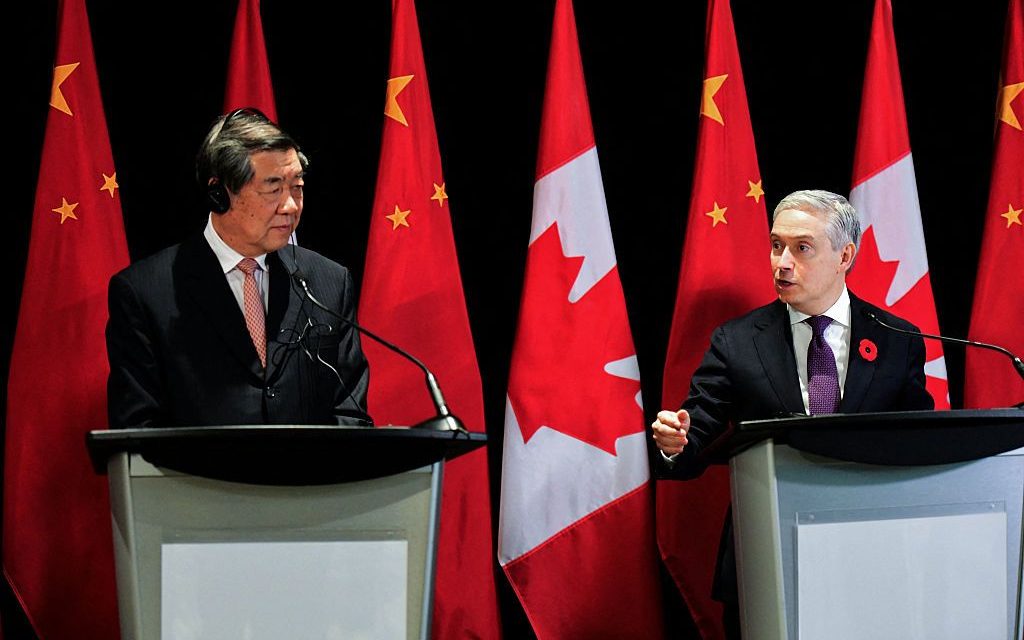
Canada has finalized new economic agreements with China to mitigate trade tensions with the United States. These agreements, announced after discussions in Vancouver, aim to enhance financial cooperation between the two nations. Prime Minister Mark Carney is set to attend the Asia-Pacific Economic Cooperation (APEC) summit in Shenzhen.
During the negotiations in Vancouver, Canada’s Finance Minister François-Philippe Champagne and International Trade Minister Maninder Sidhu met with China’s Vice-Premier He Lifeng. Champagnes emphasized the importance of open dialogue and economic collaboration between the two major economies. They explored ways to expand bilateral trade and increase investment, benefiting Canadian businesses and workers.
An extension of an existing trade deal, valid until 2028, was also reached. This deal maintains lower tariffs on Canadian products like canola meal, peas, lobster, and crab. In return, Canada will allow certain Chinese steel and aluminum products into the country without added tariffs. The agreement intends to support Canadian agriculture and seafood industries while allowing Canadian enterprises access to Chinese metals not readily available domestically.
Amid ongoing tariff disputes with Washington, Canada aims to diversify trade relationships. The withdrawal by Washington of a proposal requiring U.S. approval of Canadian trade deals has helped ease tensions. Despite assurances of a close deal, significant differences persist between Canada and the U.S.
Inside the New Deal with China
The discussions led to three agreements involving cooperation among the countries’ finance ministries, financial regulators, and central banks. The agreements foster closer dialogue on economic policies and establish a joint working group between the two nations’ central banks. Progress was also made on a bilateral currency-swap arrangement and on further opening financial-services markets.
The agreements are part of Carney’s strategy to reduce Canadian reliance on the U.S. by extending trade relations with other nations. Champagne noted that engaging with China as the second-largest economy is essential for trade diversification.
Philippe Rheault from the China Institute at the University of Alberta observed Canada’s intent to deepen engagement with China, regardless of U.S. political dynamics. Recent changes allowed Canada to export canola meal to China without a 100 percent tariff, though some restrictions remain.
This easing of restrictions facilitated a significant increase in Canadian exports. Canola meal exports to China more than doubled from $104 million to $277 million. Pea exports rose from $76 million to $245 million, and lobster exports increased by 57 percent, reaching $142 million. These industries help sustain over 600,000 Canadian jobs.
China is Canada’s second-largest merchandise trading partner, with $89 billion in trade last year. Canadian exports to China reached $25 billion, and imports stood at $64 billion. Canadian exports to China have increased by 41 percent in 2026 compared to the previous year, with a goal of boosting exports by another 50 percent by 2030.
Current Relations with the United States
Trade negotiations between the U.S. and Canada continue, but progress is slow. While progress has been made, fundamental differences persist. The U.S. recently retracted a demand for final trade agreement approvals, but tariffs on lumber, steel, aluminum, and automobiles remain contentious.
Canada’s Foreign Minister Anita Anand addressed these issues at a Group of Seven (G7) meeting in Paris, highlighting ongoing efforts to alleviate trade frictions, particularly following Republican losses in the midterm elections.
Anand stated Canada has signed over 20 security, economic, and defense agreements in the last year, maintaining free trade agreements with every G7 member. This forms part of Canada’s goal to double non-U.S. trade over the next decade.
Tariff Adjustments for U.S. Imports
Canada recently announced changes to tariffs on U.S. goods. The tariff relief program, extended until June 30, 2028, provides relief for certain American products hard to find in Canada. However, some exemptions for goods with Canadian alternatives, like U.S.-made trailers and certain aluminum products, will be phased out.
These adjustments aim to protect Canadian manufacturing while managing costs for businesses dependent on U.S. supplies. Between March 2025 and October 2026, Canada assessed $10 billion in tariffs on U.S. goods, with $6.3 billion relieved, resulting in $3.7 billion in net revenue.
Trade Minister Dominic LeBlanc remarked on the extension of tariff relief measures as crucial for supporting Canadian companies while promoting local goods and services.
 In-Flight Altercation on Qatar Airways Leads to Police and FBI Response
 Virginia Residents Sue Over Alleged Immigration Violations
 Updates on Key International and Domestic Events
 Pope Leo XIV Completes South American Tour with Farewell Mass in Peru
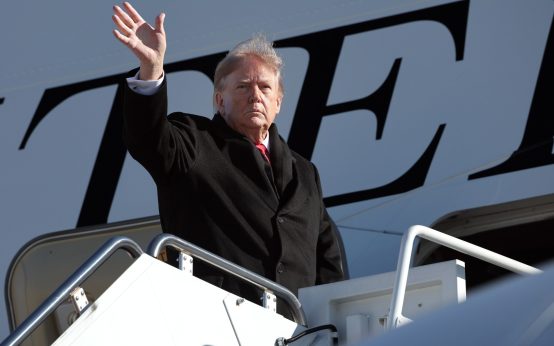 President Trump’s Critical Asia Trip: Key Meetings and Implications
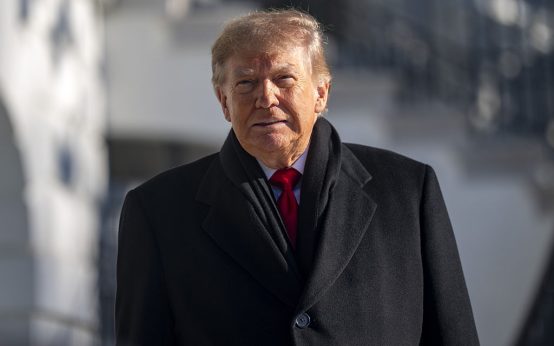 U.S. Plans to Restrict AI Chip Exports Before Trump-Xi Meeting