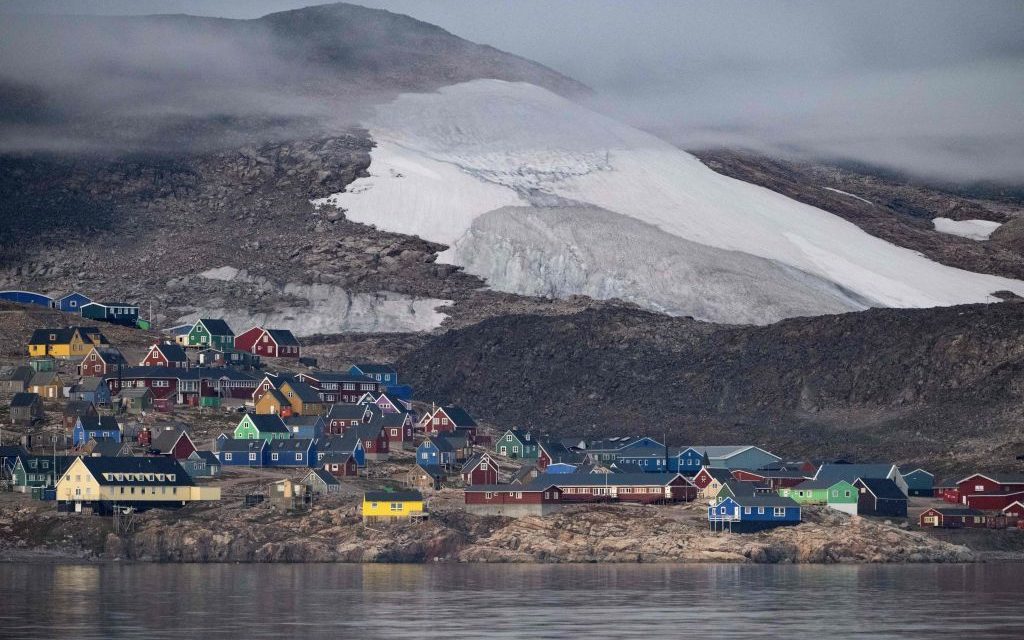
Plans by President Donald Trump to enhance America’s military presence in Greenland may risk upsetting the traditional hunting livelihoods of local communities. Hans Brønlund, the chairman of Ittoqqortoormiit’s local committee, has voiced concerns. This settlement, home to 329 people in eastern Greenland, could see their way of life impacted by increased U.S. military activity.
Brønlund’s warning arises as Denmark debates a new security agreement with the U.S., which could allow more defense areas in Greenland, specifically at Mestersvig and Narsarsuaq. He expressed his concerns to Danish Prime Minister Mette Frederiksen and Greenlandic Prime Minister Jens-Frederik Nielsen, insisting that local residents be involved in decisions affecting their community.
Impact on Traditional Hunting
Hunting forms a crucial part of life in Ittoqqortoormiit. It offers food, income, and cultural identity. However, residents already face challenges from dwindling hunter numbers and climate change.
The proposed military expansion could disrupt wildlife, essential to traditional hunting, by increasing activity near hunting areas. Brønlund specifically worries about Mestersvig, a Danish military outpost 150 miles from Ittoqqortoormiit, potentially transforming into a U.S. defense hub. He fears this could disturb narwhals and polar bears, crucial to local hunters.
“We do not want Americans here near Ittoqqortoormiit. We do not want to be a shield for their country,” Brønlund said to KNR, Greenland’s public broadcaster. He also noted concerns over U.S. interest in Greenland’s mineral and oil resources.
Brønlund stressed the importance of community involvement in decisions, criticizing the top-down approach from authorities in Copenhagen and Nuuk.
The Security Agreement
In September, a security agreement was signed, allowing increased U.S. military access to Greenland. It includes provisions respecting Greenlandic culture and traditional lifestyles like hunting and fishing. Still, specific operational details are yet to be finalized.
Article VI of the agreement emphasizes minimizing disruption to Greenlandic society. Yet, concerns remain about potential impacts on wildlife and traditional hunting practices.
Greenland Parliament’s Response
Greenland’s parliament, the Inatsisartut, approved the agreement on November 3. Sixteen lawmakers supported it, with none opposing and seven abstaining. Despite approval, there are worries about environmental safeguards and insufficient public consultation on expanded U.S. military activity.
Mimi Karlsen from the governing Inuit Ataqatigiit party supports the agreement but insists on respecting hunting livelihoods and considering natural resource impacts. Opposition voices have echoed this, questioning the effectiveness of current environmental provisions and the accountability of U.S. operations.
Siumut party criticized the lack of public involvement. They call for greater transparency and oversight through public meetings and stronger commitments to addressing military pollution.
Aqqalu C. Jerimiassen of Atassut supports the agreement while advising close scrutiny of the U.S.-Greenland relationship. Meanwhile, opposition party Naleraq abstained, citing concerns over financial benefits and community engagement.
Denmark’s Upcoming Debate
Denmark’s parliament plans to discuss the agreement beginning November 12, with a concluding session on November 19. Foreign minister Lars Løkke Rasmussen will brief lawmakers on the situation on November 11.
The final stance of Denmark and Greenland will shape the future of U.S. military activity in the region. Key issues include environmental assessments of impacts on wildlife and hunting grounds. Newsweek has sought comments from the U.S. Department of Defense on these developments.
 In-Flight Altercation on Qatar Airways Leads to Police and FBI Response
 Mayor Mamdani’s Policing Reform Plans
 Virginia Residents Sue Over Alleged Immigration Violations
 Gen Z Voter Shifts and Their Impact on the 2026 Midterm Elections
 Disappearance of US Senate Candidate Raises Questions
 DOJ Rule Change Reduces Appeal Time for Immigrants Facing Deportation