Climate summits like COP have long aimed for ambitious goals, yet practical implementation has lagged. As developed nations face financial pressures, many are pulling back on pledges to fund climate projects in developing countries. These promises become even more vital when events like the recent Strait of Hormuz crisis unfold. This incident highlighted the vulnerability of countries like Indonesia, which heavily depend on fossil fuel imports from the Middle East.
Indonesia, with nearly 300 million citizens, was heavily reliant on these imports before the crisis. Currently, 60% of Southeast Asia’s crude oil and a third of its gas imports originated from the region. The impact was immediate, underlining the risks tied to fossil fuel dependence. In tandem, rising sea levels and severe wildfires, driven by a strong El Niño, underscored the costs of inaction on climate issues.
For years, climate talks have resembled a prisoner’s dilemma. Individual countries found economic logic in sticking to cheap fossil fuels, causing wider harm globally. The crisis in Hormuz altered the balance, showing the financial unsustainability of fossil fuel dependence. Renewables are now critical for national interests, self-sufficiency, economic security, and independence.
Some argue renewables have been cost-effective for some time. This view misses the complex economics of upgrading energy infrastructure and phasing out fossil fuels. While these challenges apply globally, developing nations must manage these costs while addressing poverty, development, and industrialization—all relying on affordable energy.
This crisis highlighted the inadequacies of COP processes to date.
Even with full compliance to commitments, development banks and aid can’t provide the estimated $1.3 trillion annually needed by developing countries through 2035. The private sector’s role is crucial, yet investment costs remain prohibitively high for developing countries compared to wealthier ones.
A reassessment of global financial structures is overdue to support developing countries. However, systemic changes require decades. There is urgency as developing countries, now responsible for over half of global emissions, face rising emission levels.
Larger economies must initiate capital mobilization independently. For example, Indonesia has committed $1 billion to the Tropical Forests Forever Facility, aligning with Brazil to attract private funding for forest conservation. Indonesia has also formed a sovereign wealth fund, Danantara, managing nearly $1 trillion of state assets, to support energy transitions.
An initiative to construct 100GW of solar power is underway, marking a significant increase from the current capacity. Danantara assists in gathering needed investments and encourages private funding for projects like waste-to-energy conversion. Some question the feasibility of such aims, but these investments are essential for a sustainable green transition, aligning with national ambitions.
In December, Danantara will play a crucial role at the New Asia Forum, using public funds to pull in private finance for clean energy in Southeast Asia. This strategy reduces risks for global investors and aligns the energy transition with global market requirements.
While developing nations strive to finance their transitions, wealthier countries must also fulfill their responsibilities. Targeted support can help cover areas like climate protection, which provide negligible financial returns but are critically needed. For instance, improved flood drainage in Semarang safeguards communities but doesn’t attract direct investment.
Indonesia’s financial capacity offers unique opportunities. Conversely, smaller developing nations often lack similar resources, making concessional support vital. The developed world must honor commitments such as tripling adaptation finance by 2035 as called for at the Belém summit.
Developing countries can’t put off the hopes of their people as the world awaits financial reform. Likewise, global climate action cannot pause. Effective progress requires finding ways to balance both objectives.
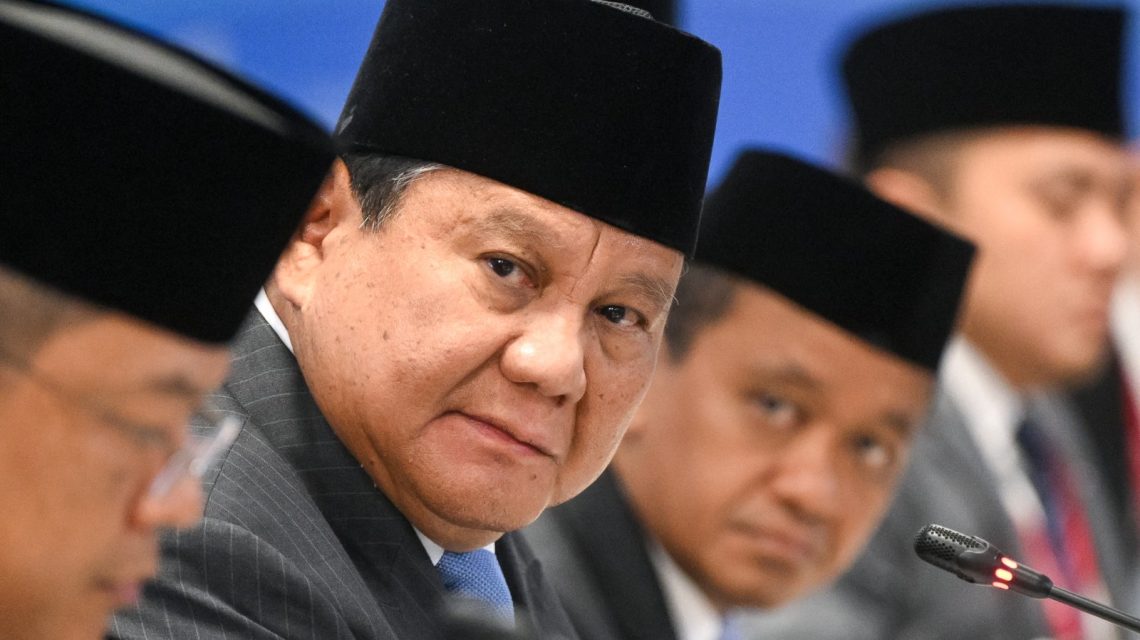
Prabowo Subianto is the President of Indonesia.
The opinions in this article are the author’s own.
 In-Flight Altercation on Qatar Airways Leads to Police and FBI Response
 Virginia Residents Sue Over Alleged Immigration Violations
 Updates on Key International and Domestic Events
 Pope Leo XIV Completes South American Tour with Farewell Mass in Peru
 President Trump’s Critical Asia Trip: Key Meetings and Implications
 U.S. Plans to Restrict AI Chip Exports Before Trump-Xi Meeting