
Transportation Secretary Sean Duffy stated on Sunday that the Federal Aviation Administration (FAA) might reconsider the timing of infrastructure upgrades after a daytime maintenance led to a nationwide ground stop. Speaking on CBS News’ Face the Nation, Duffy highlighted that while maintenance at primary facilities typically occurs overnight, remote locations have allowed daytime work due to perceived low risk. However, Friday’s event challenged this notion.
“We had to take the extraordinary step of issuing a ground stop,” Duffy told Margaret Brennan. “We’ll need to reassess when this work is performed.”
The FAA reported approximately 12,462 flight cancellations, including 9,082 by major airlines. It clarified that not all were directly related to the ground stop.
The Incident in Arkansas
The disruption occurred as L3Harris Technologies, an FAA telecommunications contractor, upgraded an outdated copper communication line to fiber at a remote facility in El Dorado, Arkansas. Duffy explained that the telecom provider necessitated this update due to obsolete infrastructure.
“The copper was beyond use, and our provider required the switch to fiber,” Duffy stated. “This upgrade led to network issues.”
Investigators are exploring why a router at the Arkansas site began broadcasting data across the network and why a similar issue had happened weeks earlier in Amarillo, Texas. The investigation involves the FAA and L3Harris, with FBI assistance. FAA Administrator Bryan Bedford mentioned finding no evident malicious activity. As a precaution, the FAA disabled broadcasting on 69 routers in the network.
Duffy defended the FAA’s procedures, noting extensive risk assessments. “We’ve done such work thousands of times without issue,” he said.
Concerns About Modernization Speed
The ground stop renewed scrutiny on a September Government Accountability Office (GAO) report. It indicated that the FAA’s modernization was progressing at an “unprecedented speed,” risking disruptions. The GAO found that the FAA lacked a comprehensive lifecycle cost estimate and integrated project schedules, potentially leading to scheduling conflicts and continued reliance on outdated systems.
Scale of Upgrades and Funding
The El Dorado project is part of broader FAA modernization efforts, including upgrading telecommunications, radar, radio, and weather infrastructure. Duffy noted that 70% of copper connections had switched to fiber, showing progress since May 2026.
Congress allocated $12.5 billion in July 2025 for the initial phase of the Brand New Air Traffic Control System (BNATC) modernization through December 2028. A second phase, focusing on advanced automation, is projected to cost $10.2 billion. No timeline is set, but Duffy seeks $50 billion for overall updates, citing the need for substantial investment.
“For decades, the FAA hasn’t addressed this due to the difficulty,” Duffy said, recognizing the scope of modernization.
 The Daily Routine of Klook’s CEO Focused on Fitness and Efficiency
 The Jensen Huang Controversy: Silicon Valley’s Divided Opinion
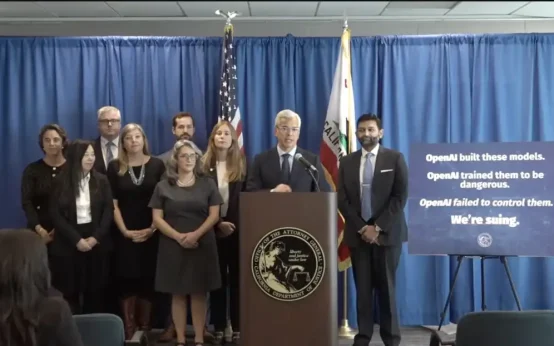 California Lawsuit Against OpenAI: Key Details and Implications
 Updates on Key International and Domestic Events
 E.l.f. Cosmetics Breaks Makeup World Record at TwitchCon
 Understanding Credit Freeze, Fraud Alert, and Identity Monitoring