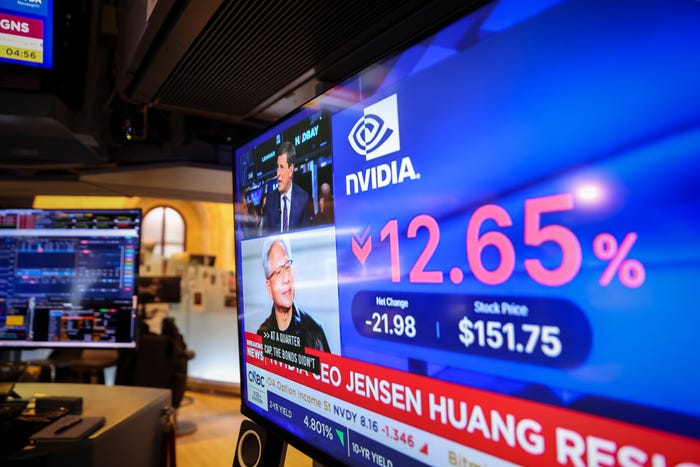
Nvidia’s recent stock struggles have sent ripples through the global AI market. The effects are being felt prominently across Asian markets ahead of Nvidia’s earnings announcement.
On Monday, South Korea’s Kospi index decreased by 4%. This decline occurred as major players like Samsung Electronics and SK Hynix saw their shares drop by 4% and 8%, respectively. Taiwan’s Taiex also fell by 6%, impacting Nvidia’s critical chip-making partner TSMC, which recorded a similar drop. Other Taiwanese peers such as MediaTek and ASE Technology experienced significant decreases.
In Japan, chip-related stocks were not immune to the trend. Kioxia’s shares plunged by 8%, Tokyo Electron fell by 7%, and Advantest saw a decline of 11%. Hong Kong tech stocks showed some recovery after last week’s declines, which were fueled by concerns over potential US restrictions on chip exports following Nvidia’s market troubles.
“Demand for these AI components has fuelled significant stock-market rallies in both South Korean and Taiwanese economies,”
The downturn commenced with a 2% drop in Nvidia’s shares last Friday, closing at $162.85. This extended its weekly losses to nearly 13%. Nvidia’s stock has fallen about 33% since reaching its peak in October. The departure of co-founder Jensen Huang from the CEO role has added to the market volatility.
Nvidia leans heavily on Taiwan’s TSMC for the production of advanced processors and collaborates with South Korean manufacturers SK Hynix and Samsung Electronics for high-bandwidth memory. Such dependencies have raised concerns that Nvidia’s issues may disrupt regional chip orders and infrastructure spending.
Anticipations for Nvidia’s fiscal third-quarter results are high, with expected revenue of $109 billion and an estimated earnings increase of 90%, as per LSEG data. The company plans to reveal its performance on Tuesday.
Nvidia’s Future Prospects
Despite expectations of strong quarterly earnings, market confidence in Nvidia’s long-term valuation has wavered. Chris Weston, head of research at Pepperstone, noted that significant earnings might not stabilize the share price if investors question the assumptions supporting its valuation.
Weston highlighted that investor focus is shifting toward Nvidia’s long-term prospects, amid concerns about leadership changes and maintaining its competitive edge. Future guidance, more than immediate quarterly results, will be key. Investors are particularly alert for any shifts in chip orders and delivery timelines that could impact Nvidia’s Asian suppliers.
Charu Chanana, chief investment strategist at Saxo, emphasized the importance of Nvidia’s guidance and expectations for demand of its Blackwell chips and Rubin processors. Signs that production and deliveries are on track will be closely monitored.
 The Daily Routine of Klook’s CEO Focused on Fitness and Efficiency
 The Jensen Huang Controversy: Silicon Valley’s Divided Opinion
 California Lawsuit Against OpenAI: Key Details and Implications
 Updates on Key International and Domestic Events
 E.l.f. Cosmetics Breaks Makeup World Record at TwitchCon
 Understanding Credit Freeze, Fraud Alert, and Identity Monitoring