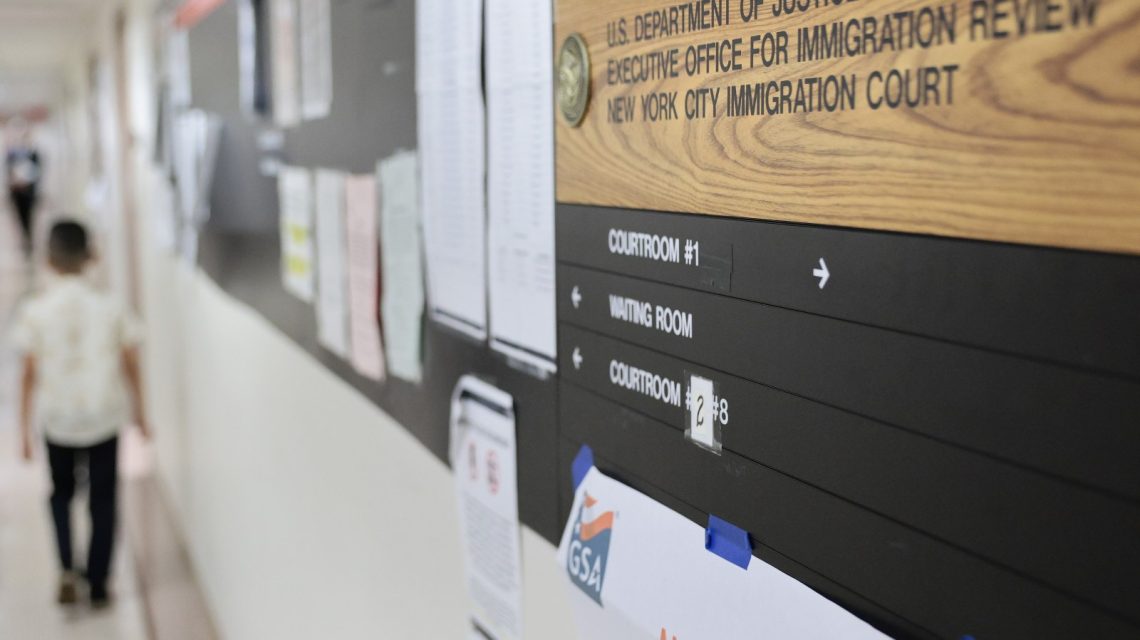
Immigrants may soon have only 10 days to appeal many immigration court decisions if a Trump administration rule takes effect. This adjustment, aimed at accelerating an overwhelmed system, revives a change that was previously halted by a federal judge.
The Department of Justice (DOJ) plans to publish this rule in the Federal Register. It would cut the current 30-day appeal period to 10 days. This forms part of broader restrictions on appeals before the Board of Immigration Appeals (BIA).
“This rule is a part of the Trump Administration’s efforts to provide only a facade of due process,” said Jill Family, a professor at Widener University Commonwealth Law School. “These procedures do not provide meaningful internal review of immigration judge decisions.”
Under the Trump administration, immigration court hearings have significantly increased. This influx is partly due to U.S. Immigration and Customs Enforcement (ICE) detaining more individuals lacking legal status. The system faces backlog issues as longstanding judges have been replaced.
Changes for Immigration Appeals
The BIA serves as the Justice Department’s main body for interpreting and applying immigration laws. The proposed rule would reduce the appeal window for most cases from 30 to 10 days. Asylum cases would retain a 30-day window.
The system broadens the scope for summary dismissals. Unless the BIA accepts a case by majority vote, the immigration judge’s decision would become final.
The DOJ aims to address the rise in backlog, with pending cases increasing from 35,837 in 2017 to 325,774 by 2026.
Why the 10-Day Deadline Was Blocked
The DOJ introduced this policy in February, sparking a legal challenge. The U.S. District Court for the District of Columbia intervened, citing that the new deadline restricts meaningful BIA reviews. Judge Randolph D. Moss invalidated parts of the rule due to procedural oversights by the DOJ.
Moss noted the DOJ failed to adhere to necessary notice-and-comment procedures when implementing the policy.
Due Process Concerns
The 10-day deadline raises questions about due process. The DOJ maintains that while noncitizens have due process rights in removal cases, the Constitution doesn’t guarantee an administrative appeal before the BIA. Opponents argue that the rule undermines appeals, especially affecting vulnerable groups such as detained individuals or those with less-common languages.
“The BIA Interim Final Rule makes a mockery of due process,” said Emilie Raber, Senior Attorney at the Amica Center for Immigrant Rights.
In 1994, the Ninth Circuit Court of Appeals deemed a 10-day deadline unconstitutional in certain cases. The DOJ argues techno-logical advances alleviate some issues previously arising from short deadlines.
Next Steps
The DOJ’s rule will be published on November 17. It will take effect 30 days after publication, applying to new cases. Ongoing cases will not be affected by the reduced deadline.
Continued legal challenges are likely, given the nature of concerns surrounding due process and appeal access. Despite the BIA being the last tribunal layer, dismissed cases could still reach federal courts.
 Mayor Mamdani’s Policing Reform Plans
 Gen Z Voter Shifts and Their Impact on the 2026 Midterm Elections
 Disappearance of US Senate Candidate Raises Questions
 Hakeem Jeffries’ Bid for House Speaker Faces Progressive Hurdles
 Ohio Judge Dismisses Defamation Lawsuit by Rep. Max Miller
 Supreme Court Declines Challenge to California Law on Speech