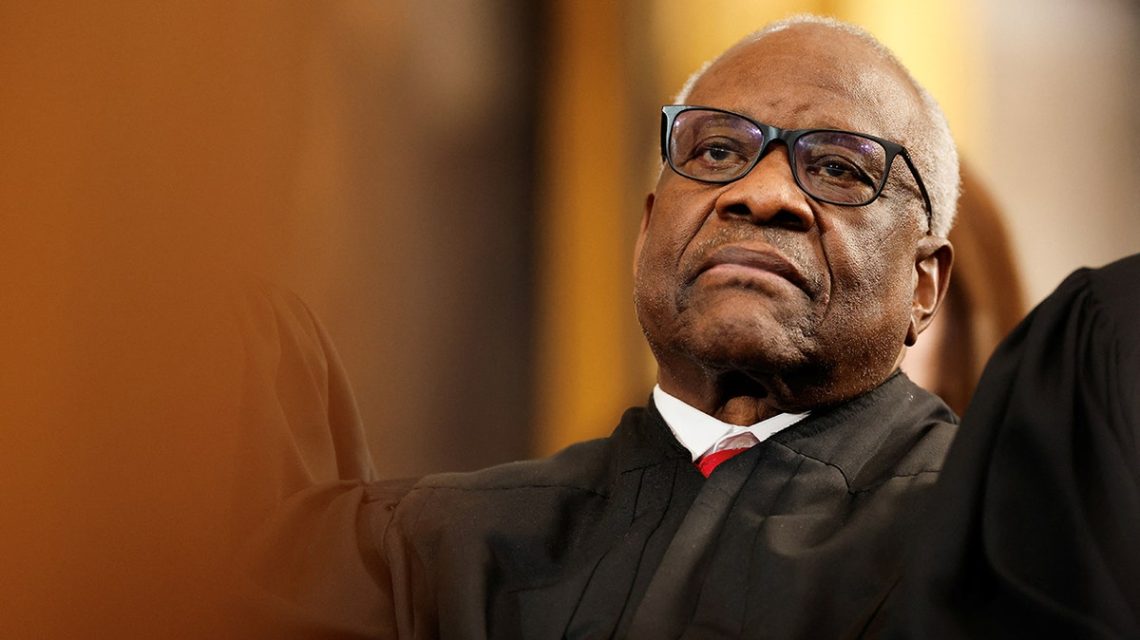
Justice Clarence Thomas expressed concern that the Supreme Court’s recent decision might allow states to compel speech from private citizens. This came after the court declined to hear a challenge to a California law.
The case involved a California physician who argued that she was being forced by the state to express views she did not agree with while instructing a mandatory course for doctors. Justice Thomas, joined by Justice Samuel Alito, dissented from the court’s choice not to review the case, warning of potential broader implications beyond the medical realm.
California’s Medical Education Requirements
California mandates that all licensed physicians complete 50 hours of continuing education every two years. These courses must include teachings on implicit bias, discussing its impact on healthcare outcomes or suggesting ways to address related disparities.
“When, as here, the government does not issue its own messages but instead requires private speakers to communicate the government’s viewpoint, the First Amendment applies,” Thomas wrote.
Thomas criticized using government-speech doctrine as a means to enforce speech and censorship, emphasizing the First Amendment’s role in such scenarios.
The Case Against the Law
Dr. Azadeh Khatibi, teaching a continuing education course in California, challenged the law alongside the nonprofit Do No Harm. They claimed the law forced instructors to promote a state-favored message, violating the First Amendment.
California argued that while instructors must discuss implicit bias, they are not obligated to support the theory. Instructors can openly disagree with it in their courses.
The state asserted its right to set educational requirements for doctors as part of their licensing conditions. The Ninth Circuit previously ruled that the courses constitute government speech, placing them outside First Amendment scrutiny.
Justice Thomas disagreed with this characterization, asserting the requirement compelled instructors to affirm state views on bias affecting health outcomes.
Potential Broader Implications
Thomas suggested that upholding California’s law could affect many other professions regulated by the state, allowing government regulation to dictate speech in various fields.
“Applying the Ninth Circuit’s logic, enough government regulation of the field would convert the private speaker’s message… into government speech unprotected by the First Amendment,” Thomas stated.
Justice Neil Gorsuch also dissented from the decision but did not elaborate on his reasons. The Supreme Court’s decision maintains the Ninth Circuit’s ruling, leaving open the question of whether California’s law violates the First Amendment.
 Mayor Mamdani’s Policing Reform Plans
 Gen Z Voter Shifts and Their Impact on the 2026 Midterm Elections
 Disappearance of US Senate Candidate Raises Questions
 DOJ Rule Change Reduces Appeal Time for Immigrants Facing Deportation
 Hakeem Jeffries’ Bid for House Speaker Faces Progressive Hurdles
 Ohio Judge Dismisses Defamation Lawsuit by Rep. Max Miller