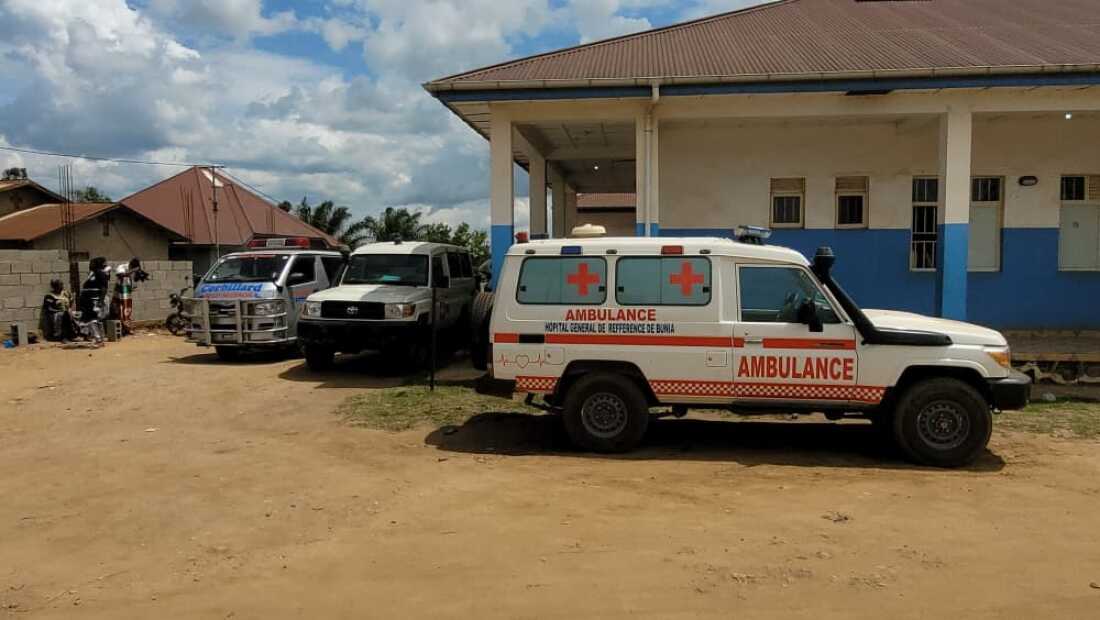
Ambulances lined up outside a hospital in Bunia, Congo, signal a troubling situation. On Sunday, the World Health Organization (WHO) declared a new Ebola outbreak in the Democratic Republic of Congo (DRC) and Uganda as a “public health emergency of international concern.” However, WHO’s Director-General, Tedros Adhanom Ghebreyesus, emphasized that the outbreak doesn’t qualify as a pandemic emergency, advising against border closures.
Originating in DRC’s eastern Ituri province, the outbreak was initially reported on Friday. Hundreds of suspected cases have emerged, with one confirmed crossing into Uganda. The Africa Centres for Disease Control and Prevention (Africa CDC) reports no vaccine is available for the current Ebola strain. Transmission occurs through blood, bodily fluids, and contaminated surfaces. Symptoms include fever, body pain, weakness, vomiting, and occasional bleeding.
Dr. Jean Kaseya, Africa CDC’s director-general, revealed during a video conference that the outbreak likely began in late April. Most detected cases are in DRC’s mining towns, Mongbwalu and Rwampara, known for their high mobility owing to work-related travels. “This region is very vulnerable,” Kaseya noted, underlying the challenge.
As per the U.S. CDC, there are 10 confirmed cases, 336 suspected cases, and 88 deaths in DRC. Uganda has reported two confirmed cases and one death. Despite the severity, risks to the American public remain low. Dr. Satish K. Pillai, CDC’s Ebola response manager, assured collaboration with interagency partners to manage the outbreak’s spread.
CDC also declared plans to safely withdraw a minority of Americans affected by the outbreak. Over 30 CDC staff are already stationed in DRC, with more en route. Africa CDC leads the regional response aimed at preventing further spread.
Dr. Kaseya recounted a case involving a 59-year-old Congolese man dying in Kampala, Uganda’s capital. Prior to his death, the man interacted with numerous individuals after crossing from DRC. Protective measures, like head coverings, goggles, masks, gloves, and gowns, are advised for healthcare workers treating Ebola patients.
The protective gear availability remains a concern, with Kaseya admitting ongoing efforts to address funding and supply challenges. The Ebola strain, Bundibugyo, has had two past outbreaks. Its transmission details remain elusive, with standard rapid tests often failing detection.
Dr. Boghuma Titanji, an infectious disease researcher, commented on the situation’s urgency, stating, “The virus is ahead of the response, and we’re playing catch-up.” With no approved vaccines or treatments, a candidate experimental vaccine showing 50% efficacy in monkeys is under study.
The African CDC collaborates with health bodies, nonprofits, and pharmaceutical firms to boost surveillance, preparedness, and response measures across borders. Dr. Craig Spencer, sharing insights from the 2014 Zaire strain outbreak, emphasized the challenge of uncovering the outbreak’s extent after significant spreading.
Between 2014 and 2016, the biggest Ebola outbreak infected 28,600 and claimed 11,325 lives, beginning in Guinea and impacting Sierra Leone, Liberia, and beyond.
 Trump Administration Distributes ACA Refund Checks
  Higher Consumption of Ultra-Processed Foods Linked to Increased Health Risks
  Understanding Inflammation: Myths and Facts
  Calm Parenting: Strategies to Manage Stress
  Trump’s Executive Order to Combat Mosquitoes and Ticks in D.C.
  Overcoming Weight Loss Challenges: Brain Health and GLP-1 Medications