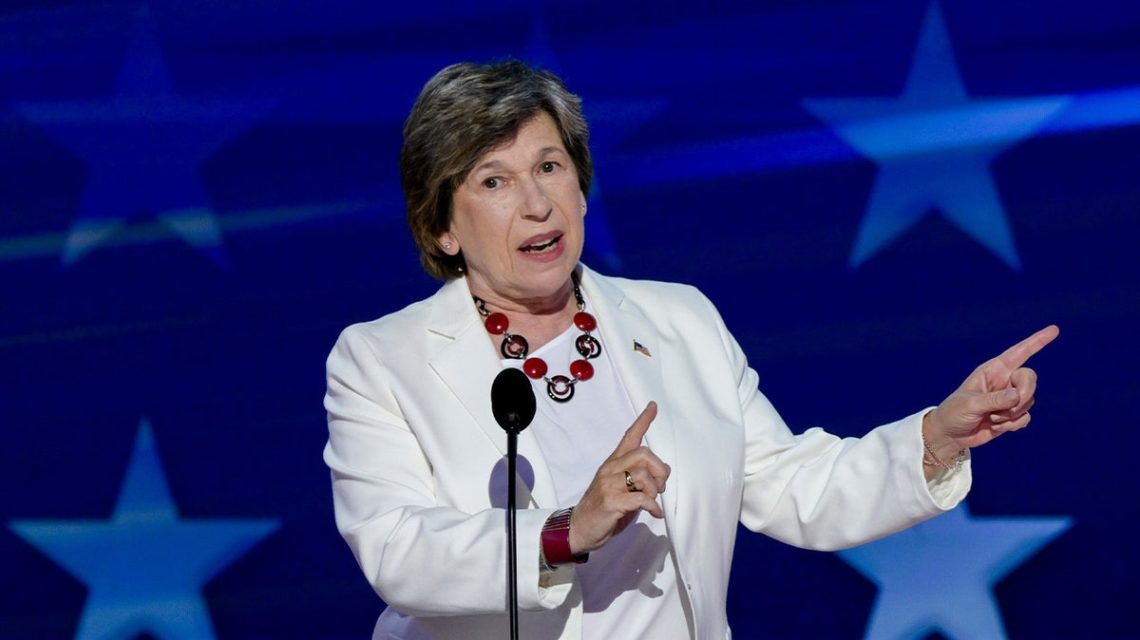
Randi Weingarten, leader of a teachers union, along with her supporters, claims that Republicans’ setbacks in the midterm elections are due to their stance on school choice. She argued that voters opposed school defunding and a privatization agenda.
Texas Democrats have actively challenged school choice. Gina Hinojosa, newly elected Governor of Texas, criticized the state’s voucher program in her victory speech. Proposals have emerged to remove scholarships from over 100,000 low-income students. Despite campaigning for affordability, most Democratic Senate cosponsors of these proposals attended or sent their children to private schools.
Gina Hinojosa stunned Greg Abbott and made history as the first Latina Governor of Texas.
The popularity of the school choice program refutes claims of backlash. In its first year, 274,000 students applied for Texas Education Freedom Accounts, with over 100,000 receiving funding. Many families remain on a waiting list after funds depleted.
NBC exit polls from 2022 and 2026 show Governor Greg Abbott’s share of rural votes, between 64% and 66%, was stable despite shifts elsewhere. Education ranked low on voters’ priority list, trailing behind the economy and immigration issues.
While Democrats gained more than 20 seats in the Texas House, only one flipped in the 30 most rural districts. Voters rejected nearly $7 billion in public school funding and approved a significant reduction in school district property taxes.
Senator Ted Cruz noted a ‘blue tsunami’ in Texas following Democrats’ sweeping victories.
A University of Texas poll highlighted voters’ equal trust in both gubernatorial candidates on education. Historically, Democrats have had an advantage in education issues. However, in this instance, Hinojosa’s platform did not stand out.
Polling showed strong support for school choice. A University of Houston poll revealed 69% backing for universal education savings accounts. Similarly, a University of Texas at Tyler poll found 60% support for school choice in 2023.
In the 2022 Republican primary, 88% of voters supported school choice, and recent elections showed strong support for school-choice candidates. Notably, anti-school-choice incumbent Glenn Rogers lost the 2024 primary by a large margin.
The argument that school choice harms rural communities lacks evidence. Expanded choice offers families more options, improving education quality through competition.
Historical context shows voucher programs in Maine and Vermont have supported rural areas since the 1800s. These states recognized the need for educational options, a principle still valid today.
The narrative that school choice affected election outcomes remains speculative. If anything, embracing school choice might have bolstered Democratic victories. Maintaining school choice could become a key factor for future elections.
 Texas Governor-elect Expanding Abortion Exceptions and Pennsylvania’s Abortion Rights Debate
 Gov. Hochul’s Upcoming Battle Against New York’s Trial Lawyers
 Governor Hochul’s Strategy to Enhance New York’s Affordability
 States Challenge Immigrant Enforcement Amidst Legal Battles
 The Rule of Law and the Fall of the Roman Republic
 Latest Developments in Politics, Technology, and Economy