An active-duty U.S. Army sergeant admitted guilt in a long-running scheme to sell sensitive military information to buyers in China. Jian Zhao, 37, used his personal phone to take photographs of restricted Army documents, shared excerpts from technical manuals for the High Mobility Artillery Rocket System (HIMARS), and attempted to sell military computers and government hard drives, according to federal prosecutors.
Security Breach Details
U.S. Attorney Scott E. Bradford emphasized the importance of holding accountable those who endanger armed forces by violating their oath. He stated, “Jian Zhao violated that trust by exploiting his access to military information and equipment for personal gain while knowingly supplying materials to individuals linked to China.” Zhao admitted to conspiring to gather, transmit, and transfer national defense information. Enlisting in 2017, he worked as a battery supply sergeant at Joint Base Lewis-McChord in Washington. His role and security clearance gave him access to sensitive Army details and equipment.
Extent of the Espionage
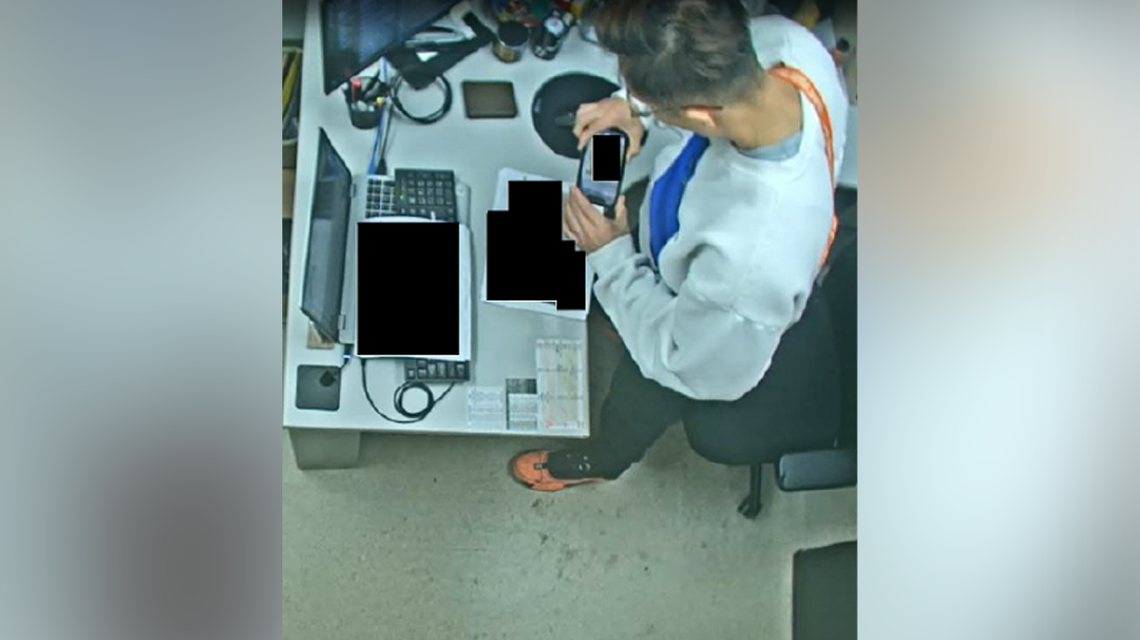
An image released by the Justice Department shows a person using a phone at a desk, highlighting Zhao’s unauthorized actions. He photographed Army documents covering operations, communication networks, military exercises, rockets, and missile systems. Zhao unlawfully took military storage devices and received thousands of dollars for items deemed sensitive or secret.
Brig. Gen. Sean Stinchon, head of Army Counterintelligence Command, commented on this betrayal of military trust. “This guilty plea reflects a deliberate betrayal of the oath every soldier takes to defend our nation and safeguard fellow service members,” Stinchon stated. He urged soldiers to report unusual activity.
Investigation Origins and Arrest
The scheme traces back to late 2021, involving Ruoyu Duan, a former Army soldier in Hillsboro, Oregon, who recruited Zhao and other troops. Duan arranged payments from Chinese buyers and had already pleaded guilty to similar charges. When federal agents arrested Zhao at his Lacey, Washington home on March 6, 2025, they confiscated $30,000 in cash, electronic devices, and several Army hard drives.
Zhao agreed to relinquish $17,500 obtained from the scheme and surrendered his claim to the seized cash. FBI special agent Doug Olson noted, “By pleading guilty, Jian Zhao has admitted to betraying that trust and abusing the responsibilities that came with his position and security clearance.” Olson stressed the risks posed by individuals compromising military information for personal gain.
Zhao potentially faces a 10-year federal prison sentence, a $250,000 fine, and up to three years of supervised release. His sentencing date is set for March 1, 2027.
 The Silence of Women in Tech Regarding Jensen Huang’s Return
 Mother Protects Infant during Los Angeles Earthquake
 The Controversy Surrounding Lake Ontario’s Renaming
 Opportunities and Challenges in Recent Developments
 Catholic Dioceses Enhance Support for Retired Priests
 Marine Veteran Warns of Threats to Historical Monuments