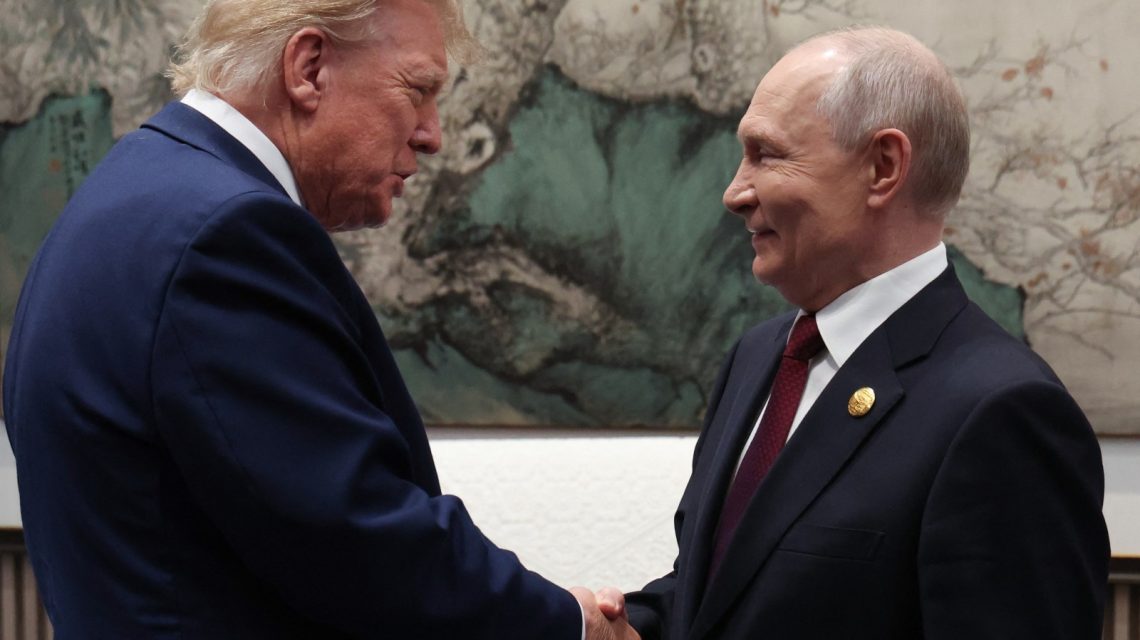
Donald Trump’s book The Art of The Deal emphasizes negotiating from strength, using leverage, and walking away. His interactions with Vladimir Putin, however, suggest future editions might include a chapter on flattery.
Within a week, Trump labeled the Russian leader a “friend,” and envoy Jared Kushner called Putin a “political grandmaster.” This praise comes amidst questions on whether it can aid in ending the war in Ukraine. When questioned, Trump explained that his warm depiction of Putin contrasts with his call for Russia to “pull back all military aggression” from Europe via Truth Social.
Trump recently invited Putin to attend the upcoming G20 in Miami, though he expressed doubt that Putin will accept. Trump’s strategy focuses on “getting a deal done,” suggesting that friendly interactions might facilitate cooperation.
“I could say he’s not a friend and ‘I don’t like you,’ but that might lead to the same issues between Ukrainian leader Volodymyr Zelensky and Putin, who ‘really hate each other.'”
Oleg Ignatov from the International Crisis Group stated, “Trump calling Putin a friend is part of his business culture, nothing more.” He believes this means little to Putin, though the Russian leader may find it gratifying given his background.
Newsweek reached out to the White House and Ukrainian presidential office for comments via email.
Kushner’s Compliments
Despite Trump’s history of praising Putin, his “friend” tribute still surprises. Ukrainian President Volodymyr Zelensky criticized it, describing the gesture as “strange” and highlighting Putin’s role as an “aggressor and a killer.” Social media users were also critical of Kushner, who praised Putin for restraint in not using nuclear weapons, characterizing Europe’s defense of Ukraine as a “proxy war.”
Yuriy Boyechko, CEO of Hope for Ukraine, told Newsweek that the Trump administration’s handling of the conflict reflects a “misreading of the war” and that Kushner’s views reduce the situation to “a routine real estate dispute.”
Ukrainian outlets objected to Kushner’s claims that talks were derailed by a Ukrainian attack on Putin’s residence, which both the CIA and Trump disputed. Boyechko suggested Kushner’s statements showed “a startling susceptibility to Moscow’s disinformation.”
Diplomatic Views and Outcomes
Boyer noted that Kushner’s commentary represents a worldview where authoritarian leaders are rational dealmakers, while democratic allies are seen as hurdles. No agreement emerged from the high-profile meeting of Trump, Putin, and Chinese counterpart Xi Jinping at the APEC sidelines, and official statements bypassed any mention of Ukraine.
Ignatov believes Moscow prioritizes Washington’s approach to negotiations, describing it as constructive and peace-oriented. Kushner and other officials emphasize mediation over escalation.
“I think Moscow is comfortable with that approach,” Ignatov mentioned. Trump’s recent Truth Social post condemned Putin’s “aggression” and “complete bloodbath” of the war, showing willingness to confront Moscow. Yet, his mixed messages attract as much attention as his praise.
Even if Putin misses the G20 starting December 14 due to objections from other members, negotiations in 2027 when the war reaches five years will still be difficult. Ignatov explained key success relies on cooperation between Putin, Zelensky, and European allies. He believes Trump’s collaboration with European allies is crucial in managing Russian diplomacy and requires bringing Europeans along for U.S. diplomatic goals.
 Spanish Election Shifts Power Dynamics: Trump Responds to Sánchez’s Defeat
 Japan’s LDP Proposes Financial Support for Families to Counter Population Decline
 Texas Governor-elect Expanding Abortion Exceptions and Pennsylvania’s Abortion Rights Debate
 Netanyahu Faces Setback Amid Unity Government Talks
 Gov. Hochul’s Upcoming Battle Against New York’s Trial Lawyers
 Governor Hochul’s Strategy to Enhance New York’s Affordability