China Decoded is a newsletter by Newsweek that explores China’s influence on global affairs. It is authored by Didi Kirsten Tatlow, a Senior Correspondent for International Affairs and Investigations, and John Feng, the China Editor. The newsletter delves into Beijing’s strategies and their global implications, especially concerning the United States and its allies. Subscribers receive these insights directly via email.
Preparing for More Political Power?
An article titled “After China’s Xi will be More Xi,” published in September, speculated that Xi Jinping might secure a fourth term as the Communist Party of China’s general secretary at the 21st Party Congress in autumn 2027. This scenario could extend his leadership until 2032, when he would be 79. The predictability of this event is uncertain, as is the rationale behind the recent investigation into Chen Jining, Shanghai’s party secretary and a Politburo member.
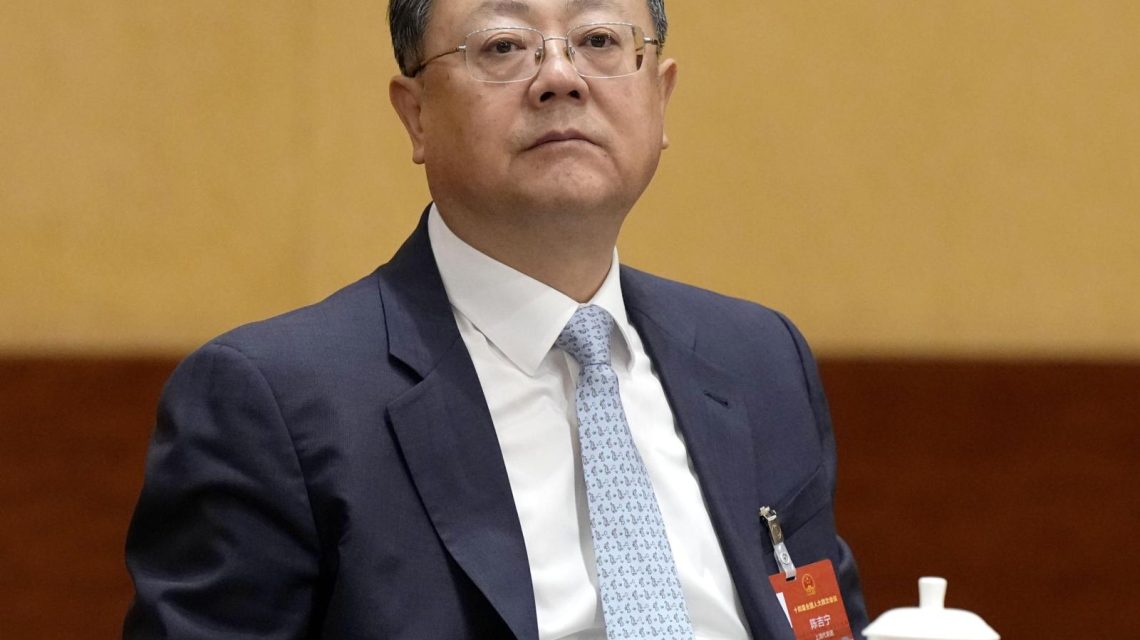
Chen’s involvement in a formal probe could hint at a connection to internal party dynamics. Is Xi reshaping the political landscape to eliminate potential challengers ahead of future congresses? The role of Shanghai’s party secretary has historically been a stepping stone to senior positions, and Xi has previously removed numerous high-ranking officials.
Chen Jining’s Political Challenges
Chen belonged to a political network centered around Tsinghua University in Beijing, known for producing party-state officials. Despite being highly educated, with a decade spent studying in the U.K., Chen’s loyalty to the Communist Party had not been publicly questioned. However, the CPC announcement regarding his investigation suggests its gravity, despite its brevity. In China, shorter announcements can signify importance.
The charge of corruption is commonly used in such cases. China’s one-party system inherently lacks the external checks that could prevent corruption, often making it a tool for control. Xi has consistently campaigned against corruption, emphasizing political discipline.
Political Power Dynamics
Xi’s association with Tsinghua’s influential group and his own promotion of Chen Jining pose risks in a competitive political environment. A satirical video circulating online underscores these dynamics, as it allegorically depicts political figures strategizing over chess in a prison yard, symbolizing political intrigue.
A Call for Change
In an audacious move, Chinese entrepreneur Xue Jian urged Xi to forego a fourth term. Xue’s letter suggested that Xi’s experiences of political turmoil during his youth shaped his leadership style. His father, Xi Zhongxun’s purge in 1962, followed by personal adversities, likely contributed to his current governance approach.
Xue argued for a transition to a committee-led government, contrasting with Xi’s apparent concentration of power. This taboo suggestion points to dissatisfaction with China’s current political climate.
Political Purges and Aftermath
Chen Jining’s investigation mirrors past removals, such as Chen Liangyu’s ousting in 2006. Despite the limited sample size, Shanghai party secretaries have often ascended to the CCP’s highest ranks. Historically, figures like Jiang Zemin and Xi Jinping himself have leveraged this post for greater influence. Chen’s investigation could disrupt these prospects.
The current Politburo, initially 24 members strong, now counts 22 following disciplinary actions. Chen’s fate rests in the hands of his peers, with Xi likely playing a decisive role behind the scenes.
Conclusion
The concentration of power under Xi Jinping raises questions about the future of China’s political landscape. While some credit Xi’s approach with stabilizing China by combating corruption, others view this centralization skeptically. Observers underscore the risks associated with excessive power consolidation.
 Texas Governor-elect Expanding Abortion Exceptions and Pennsylvania’s Abortion Rights Debate
 Gov. Hochul’s Upcoming Battle Against New York’s Trial Lawyers
 Governor Hochul’s Strategy to Enhance New York’s Affordability
 States Challenge Immigrant Enforcement Amidst Legal Battles
 The Rule of Law and the Fall of the Roman Republic
 Latest Developments in Politics, Technology, and Economy