DOJ’s Argument for Trump’s Ballroom Project
The U.S. Department of Justice (DOJ) has submitted a court filing justifying the construction of President Donald Trump’s ballroom project. They cite a recent shooting near the White House as a reason to dismiss legal challenges against the development plan. The project aims to replace the East Wing, and its critics argue it requires further review.
Trump and his aides have stated that the ballroom contributes to national security. They suggest it would have prevented a shooting at the White House Correspondents’ Dinner, assuming the event was held in the new facility. Saturday’s shooting, occurring close to the White House, is seen as another threat to the president’s safety.
According to the filing, the recent attack underscores the need for enhanced security. The ballroom is described as a key part of the East Wing Project, essential for national security, providing a secure environment for the president’s duties.
Details of the White House Shooting
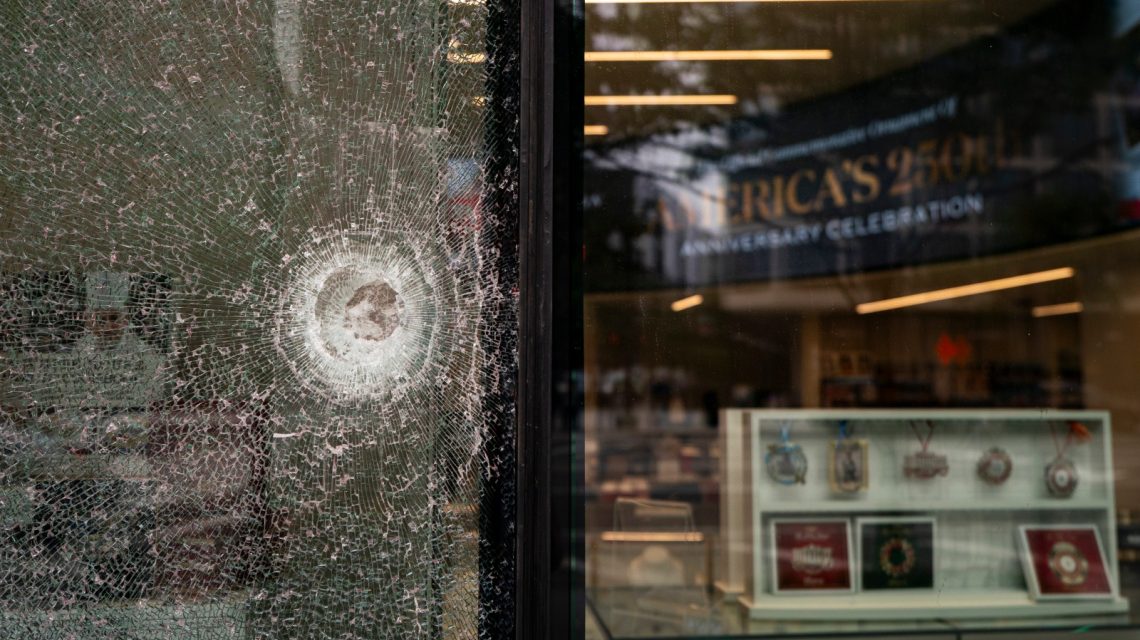
During the White House shooting incident, journalists nearby reported hearing gunshots. They were taken to the press briefing room for safety while the Secret Service responded. The shooting took place near 17th Street and Pennsylvania Avenue NW.
The suspect, identified as 21-year-old Nasire Best from Maryland, approached a checkpoint, displayed a weapon, and engaged officers. The Secret Service returned fire, resulting in Best’s hospitalization and later death. Whether a bystander was injured remains unclear.
Best had previous encounters with the law. He was detained in June 2025 for threatening officers and arrested in July 2025 for unauthorized entry attempts at a security checkpoint. Records reveal he claimed to be Jesus Christ during the incident.
Ballroom’s Security Features
The DOJ document, filed in the U.S. District Court for the District of Columbia, describes the ballroom’s construction cost of $400 million. It is intended for the safety and security of presidents, their families, staff, and guests.
The ballroom provides advanced security compared to temporary event tents, which are deemed vulnerable. Features include:
- Bomb shelters
- State-of-the-art medical facilities
- Military-grade installations
- Missile-resistant columns
- Bullet and blast-proof glass
- Drone port
- Government sniper facilities
The DOJ claims certain features disclosed in the lawsuit pose risks to national security. The ballroom is designed to prevent air contamination by foreign threats, being hermetically sealed without rooftop equipment.
Need for Immediate Construction
The DOJ emphasizes the urgency of moving forward with construction due to recent assassination attempts. Another armed threat occurred at the White House Correspondents’ Dinner, involving suspect Cole Allen. Though no shots were fired, he faced charges of attempted assassination.
The DOJ reiterates the project’s importance for national security. It highlights contributions from President Trump and private donors to support the initiative for the security of future presidents and other occupants.
Newsweek reached out to the National Trust for comment following the April incident. Despite calls to dismiss objections, the organization maintains its position, requesting adherence to the law.
Future Developments
Construction continues until at least June 5, pending further legal actions. An injunction remains on hold until this date.
 The Trump Team’s Challenge to the Military Leadership
  Maryland First State to Restrict Electronic Pricing in Grocery Stores
  Activists Push for Nationwide Ban on Child Marriage in the U.S.
  Democratic Hopes and Historical Warnings in 2026 Senate Race
  Republicans Face Challenges Amidst Cost of Living Concerns
  A Different Kind of Fall for Congress This Year