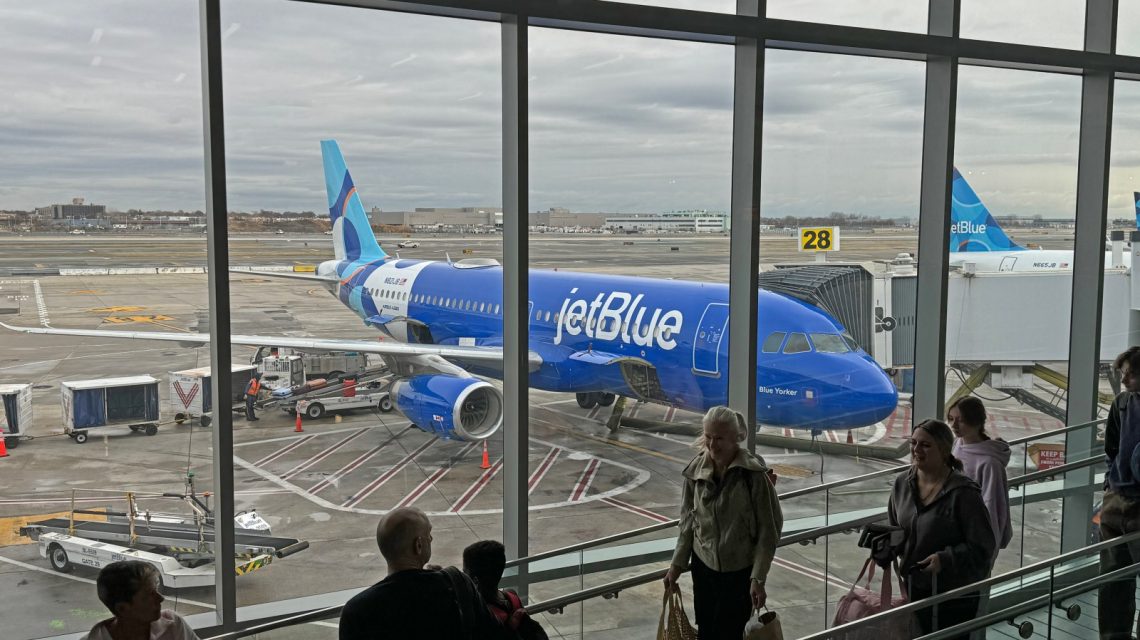
The U.S. government has widened the range of airports for arrivals from Ebola-impacted nations amid warnings that the current outbreak could rank among the deadliest recorded. The Department of Homeland Security (DHS) announced the inclusion of New York’s John F. Kennedy International Airport (JFK) in its list of designated entry points, joining three other major airports.
Designated Entry Points
A DHS spokesperson informed Newsweek that U.S. citizens and nationals may be redirected to enter through the following airports: Washington-Dulles International Airport (Virginia), Atlanta’s Hartsfield-Jackson International Airport (Georgia), Houston’s George Bush Intercontinental Airport (Texas), and JFK in New York.
Enhanced health screenings will commence on May 29th. The CDC will verify contact information for these travelers to facilitate public health follow-up if necessary.
Why Entry is Limited
The strategic decision to limit entry from regions affected by Ebola aims to balance public health safeguarding with ongoing international travel. Centralizing travelers through four airports allows U.S. officials to focus screening and monitoring resources, ensuring prompt identification of symptoms.
Ebola poses serious health risks, being highly fatal, thus early detection is critical to forestall widespread outbreaks.
List of Designated U.S. Airports
Travelers from countries impacted by Ebola are now directed to specific airports:
- John F. Kennedy International Airport (New York)
- Washington Dulles International Airport (Virginia)
- Hartsfield-Jackson Atlanta International Airport (Georgia)
- George Bush Intercontinental Airport (Houston, Texas)
These locations serve as centralized screening points, with outbreaks largely concentrated in Africa.
Thomas A Russo, professor at SUNY, stated that outbreaks typically originate in Africa following infection through contact with fruit bats, the virus’s reservoir, or consumption of bushmeat. Airborne transmission is rare, with direct contact with bodily fluids from symptomatic individuals being the primary mode.
Reasons for Choosing These Airports
Historically, the U.S. employs a limited airport framework during outbreak scenarios to enhance health screening operations and maintain trained personnel availability, improving coordination between the DHS, CDC, and local health bodies.
DHS and CDC were approached for further comments by Newsweek.
Current Safety Measures
Several precautions are in place at designated airports:
- Health screenings for arrivals from affected regions
- Collection of contact and travel information
- Monitoring for symptoms after entry
- Coordination with health authorities via on-site or nearby public health teams
- Protocols for rapid isolation if symptoms occur
- Health monitoring and guidance for affected travelers
These protocols aim to identify potential cases early, preventing the spread within airports and communities.
Russo highlighted common transmission methods and stated that airports pose low to no risk unless physical contact with symptomatic individuals occurs.
Potential for Additional Airports
JFK’s addition broadens capacity, yet there’s no confirmation of further expansions. The list might grow if case numbers increase or more widespread screening capacity becomes essential.
Thoai D Ngo, from Columbia University, noted the strategic preparedness and surveillance approach at existing airports and suggested future expansions could accommodate evolving travel patterns amid international events.
Current Status of Ebola Cases
Health authorities are actively monitoring the Ebola outbreak, considered at risk as one of the most lethal recorded. The CDC recently restricted entry for non-U.S. citizens who had visited the Democratic Republic of Congo, Uganda, or South Sudan.
The International Rescue Committee reports over 900 suspected cases and a minimum of 223 deaths in DRC and Uganda.
Advice for Travelers
Travelers from affected regions should anticipate additional screenings upon arrival in the U.S. They must be ready to provide travel details and comply with monitoring directives.
Restrictions won’t extend to all travelers; measures primarily base their decisions on travel history and exposure risk.
Sharon Nachman, chief of pediatric infectious diseases, emphasized the importance of nuanced screening avoiding whole-country labeling as infection sources.
Future Developments
The situation is fluid, with expected adjustments to protocols based on the outbreak’s progression.
DHS has already incorporated JFK into the entry list, and changes may occur as travel volumes shift or the outbreak extends to other regions.
 Patrick McEnroe Advocates for Collegiate Athletic Reform
  Push for Reparations Faces Challenges and Calls for Strict Eligibility
  Texas Man Arrested for Threatening State Capitol Attack
  The Key Debate Between Xavier Becerra and Steve Hilton: What You Need to Know
  Physicians Urge Senate to Reject FDA Nominee
  Trump’s Executive Order to Combat Mosquitoes and Ticks in D.C.