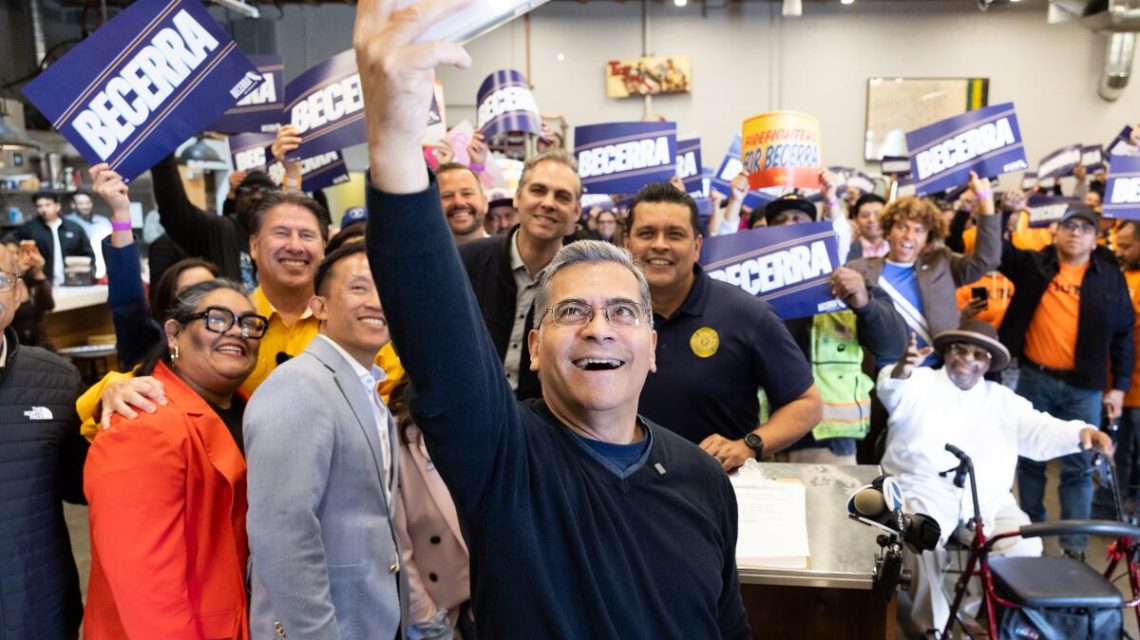
As California approaches the June 2 gubernatorial primary, voters remain divided among three leading candidates aiming to succeed Governor Gavin Newsom. The state faces pivotal moments for both its own future and that of the nation.
According to a poll by UC Berkeley’s Institute of Governmental Studies, 25% of likely California voters support Democrat Xavier Becerra, former Biden Cabinet secretary. Republican Steve Hilton, once a Fox News commentator, secures 21% backing, with 19% for Democrat Tom Steyer, a billionaire turned environmental activist. This survey suggests these candidates have distanced themselves from the rest.
Xavier Becerra campaigns in San Francisco. (Credit: Benjamin Fanjoy / Getty Images)
Voter support for Becerra, Hilton, and Steyer has increased since the last poll in March. Becerra notably surged from 5% to become the front-runner. Meanwhile, Riverside County Sheriff Chad Bianco and others saw their support diminish, leaving them trailing in lower ranks.
Mark DiCamillo, poll director, noted uncertainties in predicting which candidates will secure the top spots, allowing them to proceed to the November general election. Low voter turnout complicates these predictions, especially since many mail-in ballots remain unreturned.
Steve Hilton at San Jose Diridon rail station. (Credit: Jason Henry/Bloomberg via Getty Images)
The survey indicates Democratic turnout lags past primary trends, but DiCamillo expects it to rise, benefiting Becerra. Among likely Democratic voters, Becerra leads Steyer by 11 percentage points. Independents are split among the three candidates, while Republican support largely favors Hilton over Bianco.
Regional support varies: Hilton leads among libertarians and voters in Orange County and the Central Valley. Becerra does well with women and Latino voters, while Steyer appeals to Black voters. Still, 7% of voters remain undecided.
California’s gubernatorial race, with no clear front-runner, draws attention again after historical figures like Arnold Schwarzenegger and Jerry Brown left their marks. Domestic challenges and global events, including past wildfires and immigration raids, frame this contest’s backdrop.
Tom Steyer campaigns in Santa Rosa. (Credit: David Paul Morris / Bloomberg via Getty Images)
High-level campaign contributions are notable; Steyer alone injected $212 million, setting records. Independent expenditure groups have added nearly $85 million, with various policy interests at stake in the new administration.
Californians grapple with healthcare cuts, volatile budgets, and environmental threats. High gas prices and affordability issues force many to reassess living in the state. These realities affect voter priorities, with many backing voting rights protection amid partisan tensions.
California’s unique “jungle” primary permits the top two vote-getters to advance, regardless of party. This system causes concern over potential Democrat vote-splitting but now suggests a slim chance of two Democrats advancing.
Chad Bianco after a debate in Los Angeles. (Credit: Jason Armond / Los Angeles Times)
President Trump’s endorsement shifted dynamics, especially strengthening Hilton among Republican voters. Despite passionate Bianco supporters, Hilton’s broader base and Trump’s support have elevated him.
Hilton defies typical campaign methods, relying more on free media than traditional advertising, puzzling analysts as a top candidate despite limited visibility. Democrats, fearing exclusion, urged lower-polling candidates to exit, which reshaped the election landscape.
A poll involving over 8,500 registered California voters, conducted online, showed a 2% margin of error. It illustrates a dynamic race poised to impact state and national political futures.
 Sen. Cotton Opposes Permanent Daylight Saving Time
  Steve Hilton’s Latino Outreach and Gubernatorial Ambitions
  The Need for Reform in Presidential Nominations
  Controversy Surrounds Performances at Gillette Stadium
  Celebrity Controversies Over Political Activism and Speech
  Trump Pushes for Permanent Daylight Saving Time, Sharing Senator’s Contact Information