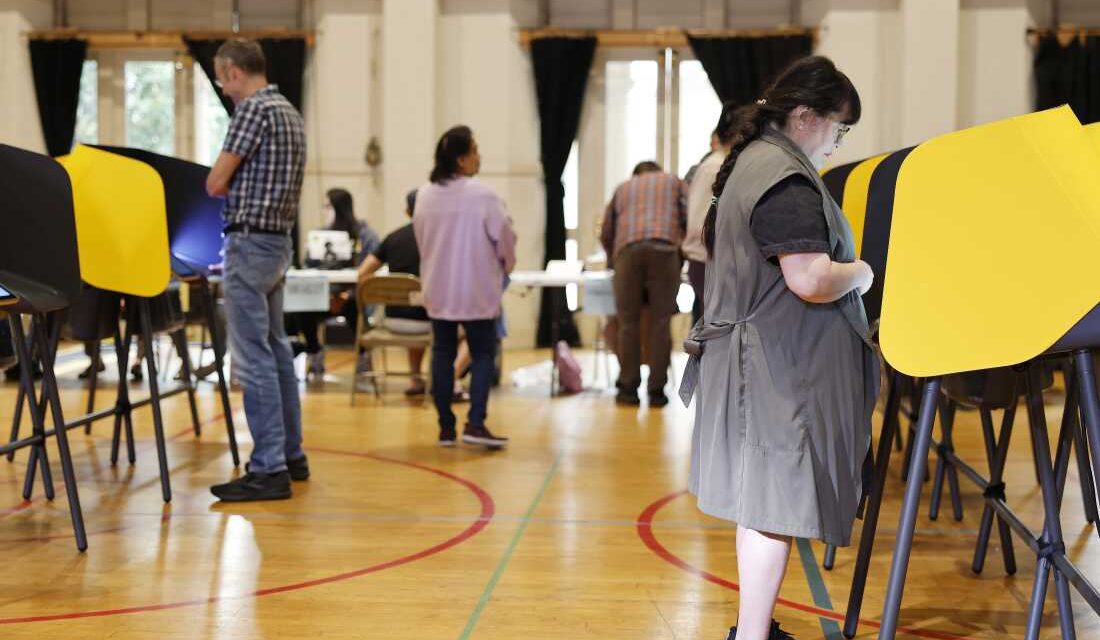
A Republican-led voting overhaul returns to Capitol Hill, adding a photo identification requirement. This move, supported by President Trump, aims to change the election process in a midterm year. Critics argue the legislation would disenfranchise millions.
The Safeguard American Voter Eligibility Act, now called the SAVE America Act, narrowly passed the U.S. House. It received support from all Republicans and one Democrat. The bill’s approval came nearly 10 months after the House last passed the SAVE Act.
The proposed legislation faces challenges in the GOP-controlled Senate, primarily due to Democratic opposition and the legislative filibuster requiring 60 votes. Some Republicans suggest bypassing the filibuster, but party leaders remain hesitant.
New Voter ID Requirements
The overhaul demands that voters provide proof of citizenship, such as a U.S. passport or a birth certificate with a valid photo ID. The updated version includes voters showing photo ID when casting ballots.
“This bill takes a strong piece of legislation, the SAVE Act, and makes it even stronger in the SAVE America Act,” stated Rep. Bryan Steil, R-Wis., on Capitol Hill.
Current laws already make it illegal for non-citizens to vote in federal elections. Instances of fraud are rare. However, Steil and other Republicans argue existing laws aren’t stringent enough and require documentary proof of citizenship.
Opposition and Concerns
Some states verify citizenship for new voters, and around 36 states require some form of ID for voting. Critics claim the new requirements are more stringent and could hinder voting for millions without easy access to necessary documents. Half of Americans lacked a passport as of 2023.
The bill’s immediate effect concerns opponents, who cite unfair burdens on voters and election officials with no additional funding. Officials could face penalties, including imprisonment, for registering voters without proof of citizenship.
The bill’s prospects appear dim in the Senate, though Trump and his administration continue to push for it. Trump has suggested nationalizing elections and teased a potential executive order relating to voter ID.
Specific Provisions
- Photo ID Requirement: Only U.S. passports, driver’s licenses, state IDs, military IDs, and tribal IDs are accepted. Voters must vote provisionally and return with an ID, or sign an affidavit for religious objections. Non in-person voters must also submit a photo ID copy.
- Name Discrepancies: New guidelines address name discrepancies in citizenship documents. Applicants can sign an affidavit for name changes, impacting numerous married women whose names differ from their birth certificates.
- Service Members Exemptions: The measure provides exemptions for absent military members and their families.
- Voter List Verification: States must submit voter lists to the Department of Homeland Security for comparison with the SAVE system. Though intended to remove non-citizens, the system has mistakenly flagged citizens.
 The Trump Team’s Challenge to the Military Leadership
  Maryland First State to Restrict Electronic Pricing in Grocery Stores
  Activists Push for Nationwide Ban on Child Marriage in the U.S.
  Democratic Hopes and Historical Warnings in 2026 Senate Race
  Republicans Face Challenges Amidst Cost of Living Concerns
  A Different Kind of Fall for Congress This Year