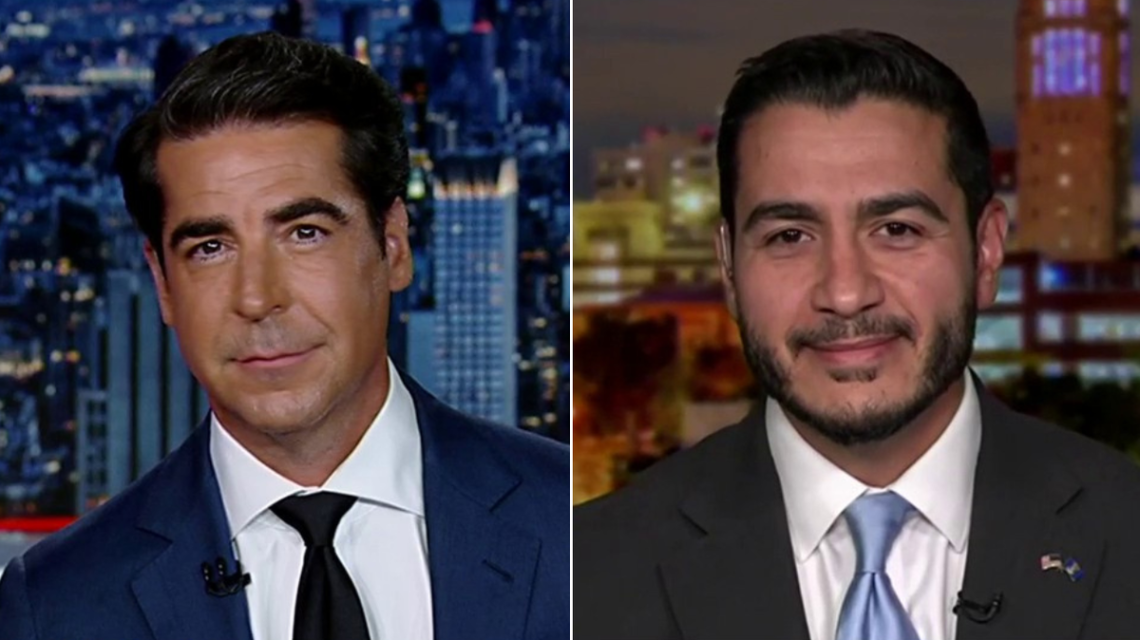
Abdul El-Sayed, a Democratic Senate candidate in Michigan, recently drew attention during an interview with Fox News anchor Jesse Watters. The controversy arose when El-Sayed compared Sharia law to Christian canon law, igniting a debate on social media. Watters questioned El-Sayed’s past comments opposing a ban on Sharia law, suggesting it resembled efforts characterized by White supremacy.
During the interview, El-Sayed explained that Sharia law, based on Islamic religious texts, is similar to Catholic Church law. He stated that nobody is attempting to impose Sharia law, just as Christian canon law isn’t forced on others, emphasizing the importance of religious freedom.
“Nobody is trying to push Sharia law on anyone else, just like I hope nobody is trying to push canon law on anybody else, because we live in an America where you should have the freedom of your religion,” El-Sayed said.
This comparison led to criticism on social media, with users highlighting differences between Sharia law and Christian canon law. Andrew Kolvet of ‘The Charlie Kirk Show’ noted that canon law governs Church affairs, while Sharia law covers broader aspects of life, including state affairs.
Carl Jackson, a political commentator, argued on social media that Sharia law is incompatible with Western civilization, accusing El-Sayed of playing the victim. Fox News contributor Kaylee McGhee White predicted electoral defeat for El-Sayed, while Dana Loesch and Michael Knowles criticized El-Sayed’s defense of Sharia law.
El-Sayed’s stance on Sharia law has been consistent, previously expressing a personal obligation to follow Sharia-compliant practices, emphasizing the importance of choice based on religious beliefs, rather than fear.
The debate around Sharia law has sparked broader discussions about White supremacy and historical injustices in the U.S. El-Sayed has argued that efforts to ban Sharia law echo past discrimination against minorities.
El-Sayed highlighted historical events such as the Trail of Tears and the Tulsa massacre in the context of efforts to ban Sharia law, suggesting that these attempts are part of ongoing persecution rooted in White supremacy.
 State Department Simplifies Passport Process with Online Applications
 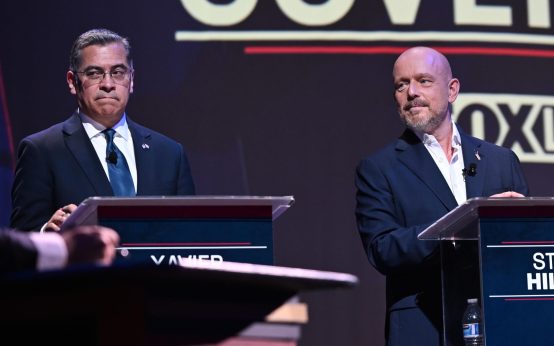 Becerra and Hilton Clash in California Gubernatorial Debate
  California Voters to Decide on $7.5 Billion State Research Fund
 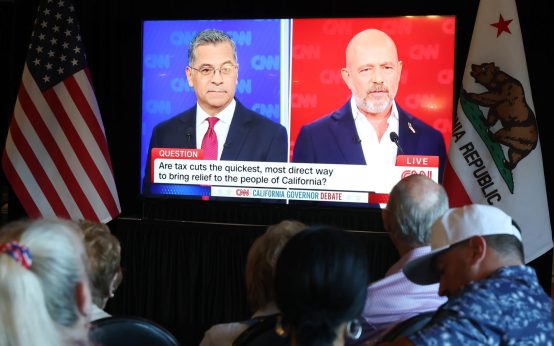 Highlights from the California Gubernatorial Debate: Becerra vs. Hilton
  Becerra vs. Hilton: The Debate and Key Issues in the California Governor Race
  Senate Confirms New Labor Secretary