Abelardo de la Espriella, a conservative figure, was sworn in as Colombia’s president on Friday in Cali, an unconventional location meant to emphasize his strong stance against illegal armed groups in the region. De la Espriella, 48, follows Gustavo Petro after narrowly defeating Petro’s ally, Sen. Iván Cepeda, in a runoff election on June 21. Having never held public office before, de la Espriella campaigned as an outsider, financing his run through his wealth acquired as a lawyer and businessman. His inauguration at a university auditorium before Congress signals a rightward shift in regional politics.
Notable attendees included King Felipe VI of Spain, acting U.S. Attorney General Todd Blanche, FIFA President Gianni Infantino, and several Latin American leaders, such as Argentina’s Javier Milei, Ecuador’s Daniel Noboa, and Chile’s José Antonio Kast. Following the ceremony, de la Espriella planned to visit a military battalion in Cali to address the troops. He seeks to raise military morale and warn illegal groups to surrender or be declared “military targets.”
Known as “El Tigre” or “The Tiger,” de la Espriella has pledged to address Colombia’s ongoing violence by abandoning Petro’s negotiation tactics with armed groups, labeling the peace efforts as unsuccessful.
“Security presented the main challenge during the inauguration,” authorities said. Strict measures, including vehicle checks, were enforced to deter potential threats like explosives or suspicious individuals.
Illegal operations such as drug trafficking and illegal mining have caused conflicts among groups such as dissident factions of the Revolutionary Armed Forces of Colombia, the Clan del Golfo cartel, and the National Liberation Army guerrilla group.
Regional Impact
As a Colombian-American, de la Espriella ascends to the presidency with support from U.S. President Donald Trump, amid escalating concerns over crime, immigration, and economic issues in the region. Glaeldys González from the International Crisis Group remarked on the strengthening rightward shift in Latin America, aligning conservative governments against dwindling left-wing administrations.
De la Espriella announced plans for Colombia to join the “Shield of the Americas,” a regional coalition against drug trafficking proposed at a Trump-led summit. He also declared intentions to restore diplomatic ties with Israel and sever them with Cuba and Nicaragua, citing their regimes as tyrannical.
Petro’s Strong Opposition
Petro will provide formidable opposition to de la Espriella, initially rejecting de la Espriella’s election victory and alleging widespread voter fraud. These fraud claims have been dismissed by international observers and Colombian election officials. Despite this, Petro accepted the election outcome and left the presidential palace on Friday, vowing to respect the popular decision.
Political analyst Sergio Guzmán predicts Petro will be a relentless opponent, seeking to strengthen his leadership. Petro has urged social movements in the southwest to form “people’s militias” for self-defense against what he perceives as fascist threats. He also called for preparations for a general strike should he be imprisoned post-office. Petro was labeled a “priority target” by U.S. Drug Enforcement Agency earlier this year.
These tensions between Petro’s mobilization efforts and de la Espriella’s hard-line stance may result in confrontations during demonstrations or more forceful responses from authorities, according to conflict researcher Andrés Macías from Externado University.
In Cali, where Petro has significant support, protests erupted with demonstrators making it clear they do not recognize de la Espriella’s presidency. Protests also occurred in Bogota and Barranquilla, with social and student groups rallying.
“We are here to defend dignity and show that de la Espriella did not win in this area,” said Sebastián Ocampo, 25, during demonstrations in Cali’s Puerto Resistencia. Amanda Castro, a 29-year-old merchant from southern Cali, expressed hope for peaceful protests.
 State Department Simplifies Passport Process with Online Applications
 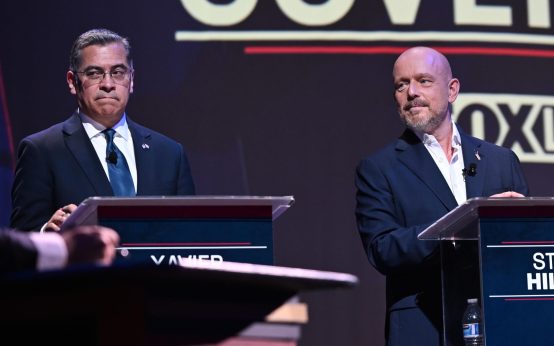 Becerra and Hilton Clash in California Gubernatorial Debate
  California Voters to Decide on $7.5 Billion State Research Fund
 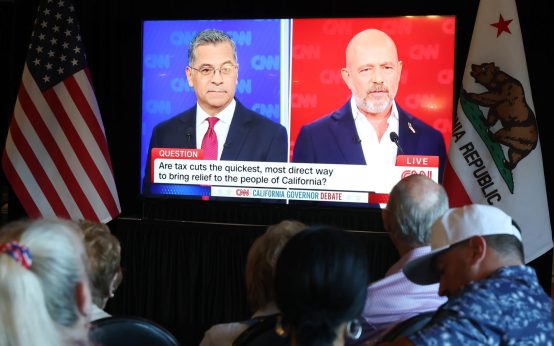 Highlights from the California Gubernatorial Debate: Becerra vs. Hilton
  Becerra vs. Hilton: The Debate and Key Issues in the California Governor Race
  Senate Confirms New Labor Secretary