Humanoid Robot Surgeons Complete First Remote Surgery
In a milestone achievement, doctors at UC San Diego harnessed humanoid robots worth $20,000 to conduct remote gallbladder surgery on a pig. This advancement underscores the role of artificial intelligence in alleviating surgeon shortages and enhancing global healthcare access. The development also raises privacy concerns associated with advanced AI robots, exemplified by a new $8,000 home robot capable of performing chores.
Revolutionizing Dental Procedures with Miniature Robots
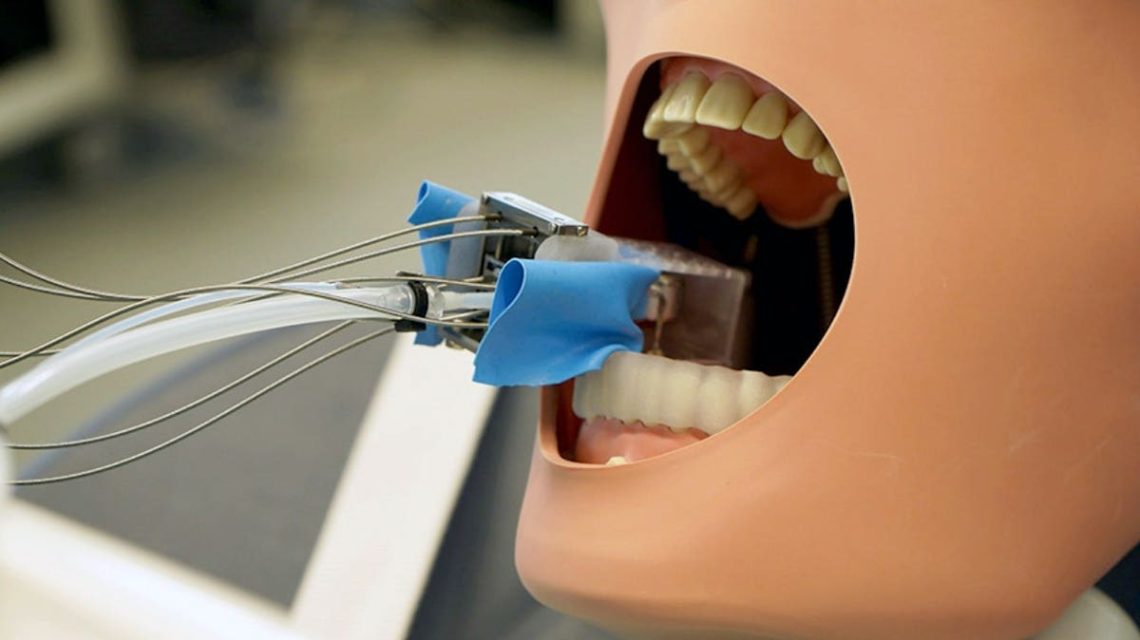
Research teams in Switzerland are pioneering technology that could transform dental care. The University of Basel is developing the Miniature Intraoral Robot (MIR) to streamline the crown preparation process. Unlike traditional methods that require multiple appointments, MIR aims to minimize them by digitalizing the workflow.
Innovative Design of Dental Robot
This design places the larger motor and controls outside the mouth, connecting to the smaller unit within through flexible shafts, cables, and tubes. MIR, attached to a custom-fitted dental splint based on the patient’s scan, moves with the patient’s head movements. This mobile response ensures precise operation, unlike conventional dentists where even minor movements are significant.
MIR’s Functionality and Testing
The robot follows a digital treatment plan, utilizing drills of varying sizes to prepare tooth models. It ensures dental precision with positional errors below 0.2 millimeters, although it currently lacks sensors for real-time adjustments. Testing indicates forces during drilling remain minimal, enhancing safety while awaiting further developments like sensor integration.
Future of Dental Robotics and Current Limitations
Despite promising trials, MIR is yet to be incorporated into dental practices pending advancements like sensors and cameras for enhanced monitoring. Researchers emphasize the importance of safety, aiming for a robot capable of continuing operations accurately even post power interruptions.
Collaborative Efforts in Development
The MIR prototype results from collaboration across various institutions, including the University of Basel, University of Zurich, Camlog Biotechnologies, and ARTORG Center, sponsored by Innosuisse. Insights shared in IEEE Transactions on Medical Robotics and Bionics highlight the collaborative research process.
Potential Impact on Dental Appointments
MIR aspires to improve the dental crown procedure, reducing appointments through digital scanning and planning. Although far from widespread dental acceptance, its development aligns with the broader shift toward digital dental solutions. A future integrated with such robotics promises increased efficiency and reduced patient visits.
Considerations for the Future
While the concept of robots operating within the mouth may seem daunting, their potential to minimize subsequent dental visits is appealing. As technology evolves, procedures involving robots like MIR may become standardized, making dental treatments quicker and more predictable.
Would utilizing a robot for dental procedures, if proven effective, be preferable to traditional methods? Share your views at CyberGuy.com.
 Trump Unveils AI-Powered America.gov Platform
  Increased Funding Needed for Psychiatric Hospitals
  Trump Administration Distributes ACA Refund Checks
  Higher Consumption of Ultra-Processed Foods Linked to Increased Health Risks
  Trump’s 2024 Campaign Targets Young Men Through Cryptocurrency
  How Modern Windows Improve Home Insulation