
AI Advances in Weather Forecasting in China
Recent days have seen meteorologists monitor Typhoon Dolphin’s approach to China, utilizing a new breed of artificial intelligence (AI) weather models alongside traditional methods. This development underscores China’s growing influence in the quest to enhance weather prediction capabilities.
AI Technology in Forecasting
Notable AI systems developed in China include Fengwu by Shanghai AI Laboratory, Huawei’s Pangu, and Fuxi from Fudan University. These models are recognized for generating weather forecasts swiftly and maintaining, or at times improving upon, existing models’ accuracy. These AI tools analyze vast amounts of historical weather data to detect patterns, producing forecasts much more quickly than traditional systems reliant on numerical models executed on supercomputers.
The application of AI technology is particularly evident during East Asia’s typhoon season. Here, even minor enhancements in track forecasts can significantly aid in flood preparation, evacuation planning, and mitigating transport disruptions.
International AI Weather Systems
The global landscape also features advanced AI forecasting systems such as Google’s GraphCast and GenCast, Nvidia-supported FourCastNet, and the European Centre for Medium-Range Weather Forecasts’ AI Forecasting System (AIFS). Among these, Fengwu has distinguished itself by outperforming GraphCast in about 80% of tested weather variables, providing reliable global, medium-range forecasts extending beyond ten days.
Sun Zhi, CTO of Techwind, the company behind Fengwu’s industrial application, emphasizes the growing need for accurate weather data. Such information empowers governments, individuals, farmers, and fishers to make informed decisions in the face of extreme weather.
Role and Limitations of AI Models
Despite AI systems’ growing significance, they remain a complement to traditional forecasting methods given their rapid processing and reduced computational costs. However, full replacement is not imminent. AI models excel in tracking typhoon paths, as demonstrated by Fengwu’s ability to predict Typhoon Dolphin’s landfall time and location within a 30-minute and 30-kilometer margin.
Yet challenges remain. Predicting storm intensity and significant climate changes still surpass AI capabilities. As Sun highlights, reliable AI prediction of climate events requires extensive scientific validation before gaining public trust.
The pursuit of more advanced AI forecasting methods continues apace. For now, the integrative use of AI and traditional forecasting systems is set to persist.
 Trump Unveils AI-Powered America.gov Platform
  Atlantic Ends September Without a Hurricane for First Time Since 1994
  Bobcat Sightings and Conservation Efforts in Illinois
 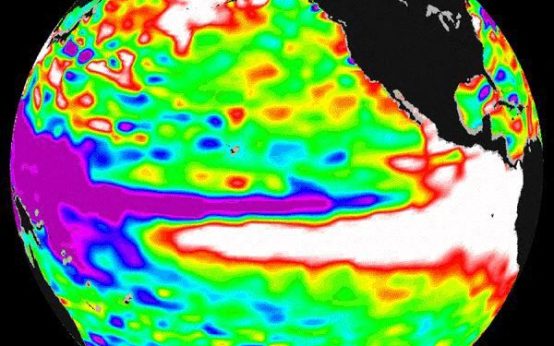 2026 El Niño: A Historical Comparison and Future Projections
  U.S. Records Warmest September in History
  Trump’s 2024 Campaign Targets Young Men Through Cryptocurrency