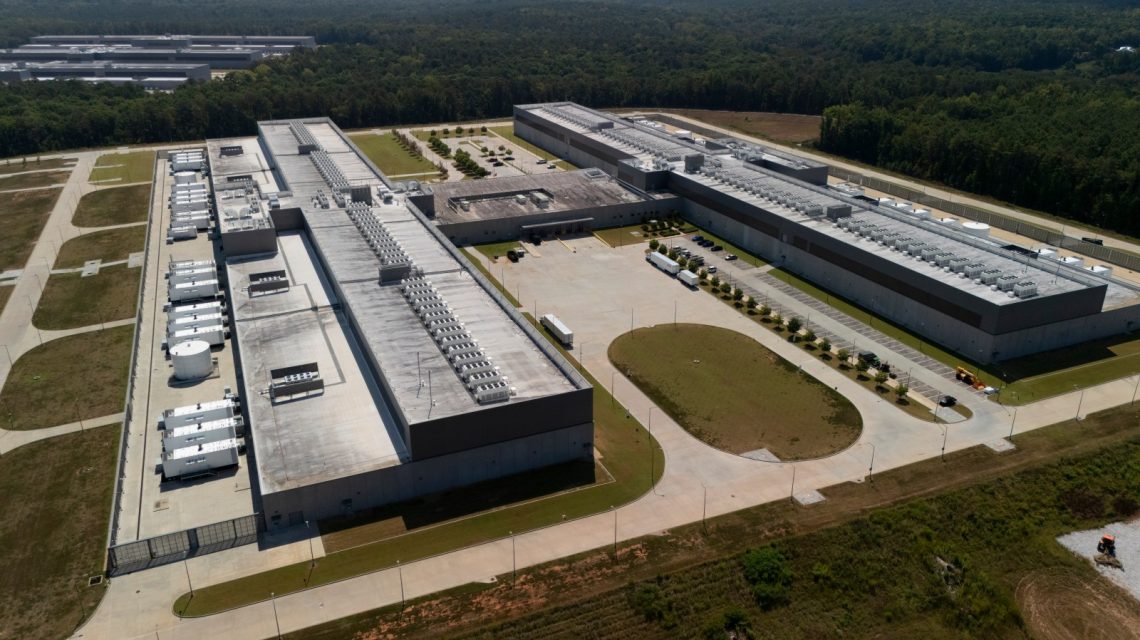
Artificial intelligence is emerging as a unique issue that crosses political lines as the midterm elections approach. According to a recent NBC News Decision Desk poll, Americans from all political affiliations are expressing concerns about the quick growth of AI infrastructure.
Political Alignment on AI Concerns
The survey revealed that 34% of respondents identify as Republican, 29% as Independent, and 37% as Democrat. Overall, 69% of Americans oppose the construction of an AI data center in their local area, with 45% strongly against the idea. Only 31% support having one built nearby. Furthermore, 70% are more worried about AI, with just 30% feeling more excited about it.
These findings highlight that AI-related issues can transcend traditional party lines when they have a direct impact on communities. When asked which political party they trust more to make sound policy decisions about AI, 20% favored Democrats, 16% preferred Republicans, 44% chose neither party, 5% trusted both parties equally, and 15% were unsure.
Demographic concerns over AI transcend usual political and societal divides. Republicans and Democrats, men and women, college-educated and non-college educated, urban, suburban, and rural dwellers each shared similar discomforts about AI. Even tech-savvy young individuals mirrored the concerns of their older counterparts, as noted by NBC News in their analysis of the poll.
The poll included responses from 7,105 adults surveyed online from August 20 to September 1, with a margin of error of plus or minus 3.3 percentage points.
Bill Gates’ Take on AI Risks
Microsoft co-founder Bill Gates expressed that the public debate on AI has been too muted. He spoke out due to concerns about the technology developing rapidly without adequate safeguards. He pointed to potential risks such as cyberattacks, bioterrorism, and broader societal impacts, revealing to CNN’s Anderson Cooper his surprise at the modest regulatory response to date. Gates also suggested that limiting data centers would not impede AI’s progress since companies could simply relocate development projects.
Data Center Concerns and Political Implications
Debates around data centers often focus on their demands for electricity, water, and land, as well as who pays for the supporting infrastructure. Proponents argue that data centers generate jobs, investments, and economic growth. Critics, however, highlight potential resource strain and higher utility costs, turning data center development into a pressing political topic.
The Trump administration is actively promoting AI capability expansion and encouraging data center investments. However, Republican figures like Texas Governor Greg Abbott are voicing concerns against AI data centers, citing their possible negative effects on local resources.
“My directive has halted up to 1,800 data center projects,” Abbott commented. “Data centers should not consume water meant for local communities or power needed by the Texas power grid. They need to lower electricity costs and not disrupt neighborhoods or rural areas.”
Abbott’s guidelines are now standard in Texas, highlighting challenges data centers might pose as communities weigh projected economic benefits against local impact. As the midterms loom, this issue has the potential to sway voters’ opinions on proposed projects.
President Donald Trump argued against rejecting data centers, emphasizing their economic advantages through job creation and tax reductions. In a recent Truth Social post, Trump warned about the global competition, highlighting China’s eagerness to lead AI developments.
Concerns Over AI Leadership
The survey shows 38% are extremely or very concerned about China leading AI development, while 28% are somewhat concerned, and 34% are not very concerned or not concerned at all. These concerns are notably pronounced among Republicans.
At a White House briefing, Vice President JD Vance expressed community apprehensions regarding data centers, worried about their potential to degrade neighborhoods and increase power bills. To mitigate this, Vance suggested reinforcing local power grids.
AI’s Influence on Jobs and Society
The poll presents diverse opinions on AI’s influence across different domains. 53% believe AI will harm the job market more than good. In contrast, 27% see AI as creating more benefits, and 20% remain uncertain. Additionally, 81% think the government under-regulates AI, compared to 19% who believe the government’s efforts are sufficient.
Nearly 30% rate AI’s societal benefits as high, 38% assess them as medium, while more than 30% view them as low. Regarding democracy and elections, 64% see AI doing more harm. In healthcare, 47% expect AI to benefit more than cause harm. In contrast, 30% predict more harm from AI, and 23% are undecided.
More than half of the respondents report using AI sometimes or frequently, while 26% claim rare use, and 22% admit never using AI.
 AI Accountability: The Need for Clear Liability Standards
  Texas Senate Candidates Address Attacks with New Ads
  Innovative Developments and Trends in Small Business Technology
  AI Coaches in the Workplace: Benefits and Limitations
  Republicans Withdraw Financial Support from North Carolina Senate Campaign
  Defense Secretary Ensures Military Votes Are Counted