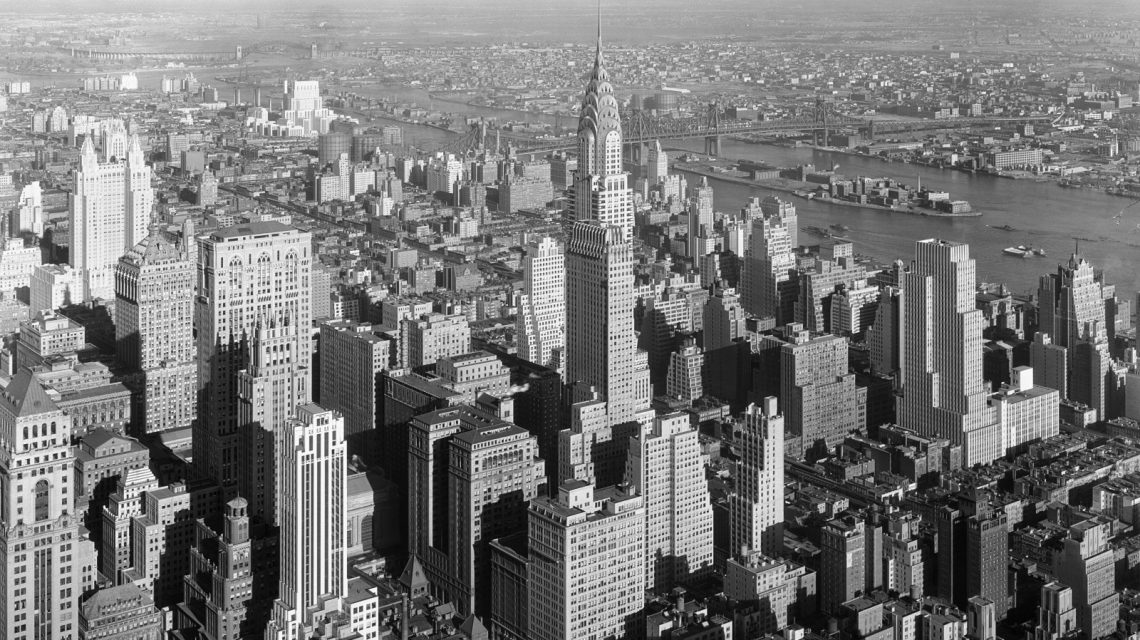
As the United States marks its 250th anniversary, architects emphasize the risk of losing historic character if new developments prevail over preservation. Many argue that replacing older buildings has already erased landmarks of local identity and culture. They call for a stronger commitment to adaptive reuse to safeguard the nation’s architectural heritage.
Gordon Gill, the architect known for Jeddah Tower, advocates for preservation. He highlights the importance of existing structures, stating, “It’s the existing building stock you have to keep your eye on…refreshing that stock and keeping them relevant, part of the sustainability legacy.”
A Historical Debate
The tension in the U.S. between preserving old buildings and tearing them down for new development has historical roots. Historian Whitney Martinko tracks the debate on historic preservation back to the late 18th and early 19th centuries. During this period, Americans debated whether historic structures should remain or give way to profit-driven real estate development.
Smithsonian magazine cites a 19th-century example where John Hancock’s house in Boston was demolished for new residences. Conversely, Mount Vernon was saved by preservationists.
Recently, there is renewed interest in restoring older buildings. For instance, New York City’s Flatiron Building is being converted into private residences, showing a preference for adaptive reuse.
Financial Drivers of Demolition
Leeswann Bolden, a licensed architect, points to financial motivations for America’s demolition-first mentality. She notes that this mindset dates back to the Industrial Revolution when fast, inexpensive construction was prioritized over longevity. Even today, developers often find rebuilding more economical than retrofitting due to evolving building codes and demands.
Miles Smith, another architect, traces this mentality further back to America’s need for rapid growth during its colonial period. The rise of stick-frame construction, he argues, led to a culture valuing speed over sustainability. This persists with a construction economy reliant on constant new developments.
The Risk of Losing National Stories
Bolden warns that focusing on demolition threatens America’s historic narrative, significant as the nation celebrates its 250th anniversary. Many historic churches, downtown areas, and theatres have vanished in favor of newer structures.
Smith shares these concerns. He notes some developers subvert preservation protections, risking communities losing places that nurture social connections and cultural identity. These might be replaced by profit-driven, lifeless architecture.
Preserving Identity for Future Generations
Despite these issues, Smith acknowledges the U.S. has made progress in preserving historic structures. He contrasts this with Europe, where buildings often undergo multiple adaptations over centuries, signifying extensive preservation.
Bolden highlights European cities using centuries-old stadiums, emphasizing a difference in American and European values. Smith views preserving historic structures as crucial to maintaining cultural identity, reflecting the various influences of immigrants over time.
He emphasizes there’s no singular ‘American’ architectural style. Instead, the nation features a “patchwork quilt” of styles brought by immigrants, embodying a melting pot of customs and beliefs.
Smith asserts that embracing adaptive reuse intentionally is essential to preserve American architecture for another 250 years. He warns that prioritization of short-term financial returns jeopardizes historic structures, risking their replacement by arenas, stadiums, and shopping centers. “By committing to adaptive reuse,” Smith concludes, “the country’s architecture can continuously narrate the story of ‘what it was and what it became.’”
 Columnist Resigns Over Unpublished Piece on Women’s Sports Activism
  Ancient Traditions and Modern Celebrations of Qixi Festival
  The Power of Kindness and Connection
  Exploring the Twins Days Festival in Ohio
  Wattpad Addresses Concerns Over Content Guidelines
  Matt Gaetz Provides Legal Counsel to Royce White for WNBA Draft