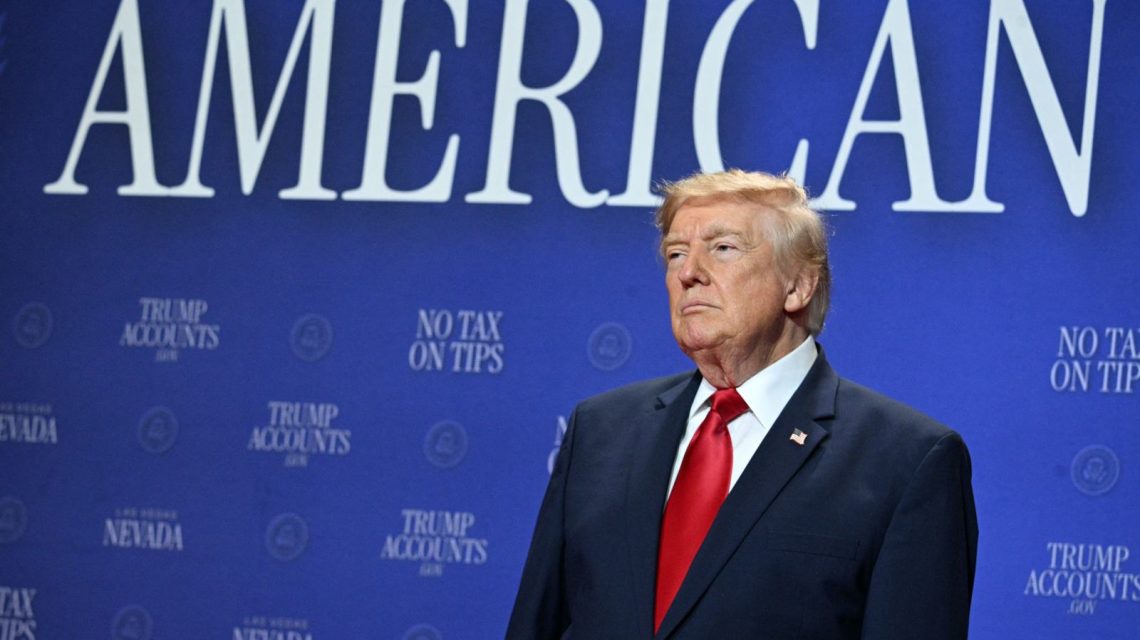
During the 2026 election cycle, President Donald Trump’s endorsement has been among the most valued assets within the Republican Party. His support has helped most of his chosen candidates win their GOP primary contests. However, recent developments have shown that Trump’s backing does not always lead to victory.
Trump’s Influence and Recent Defeats
On Thursday, Representative Andy Ogles of Tennessee lost the Republican primary for the newly redistricted 5th Congressional District despite receiving Trump’s endorsement. This marked a rare defeat for a president-supported candidate in this cycle. Historically, from 2017 to 2021, Trump made 305 endorsements tracked by Ballotpedia. In 2026 alone, he has endorsed 312 candidates in primaries, with 97% winning their races through early July, according to election trackers.
Ogles, one of Trump’s reliable allies in Congress who was described as “a Conservative Warrior” by Trump, succumbed to former Tennessee Agriculture Commissioner Charlie Hatcher. Hatcher had the backing of Tennessee Governor Bill Lee, which contributed to his success in this competitive primary following the state’s congressional redistricting.
Other Notable Losses for Trump-Backed Candidates
Beyond Ogles, Amir Hassan, a Trump-endorsed candidate in Michigan’s 8th District, lost to Thomas J. Smith. This was unexpected as Smith had suspended his campaign but still won 50.4% of the vote, while Hassan secured 33.2%.
Phil Berger from North Carolina faced an early notable defeat when he lost the Republican nomination for the state’s 26th Senate District. Berger, a long-standing influential figure, was surpassed by Rockingham County Sheriff Sam Page.
Georgia’s Lieutenant Governor, Burt Jones, experienced a significant failure when he lost the Republican gubernatorial runoff in June, highlighting a challenging test of Trump’s sway in a decisive state.
In Indiana, Brenda Wilson and Bruce Borders both failed to secure nominations. Wilson, a Vigo County Council member, lost her bid for the state Senate. Borders, an incumbent in the state’s House of Representatives, also did not win renomination.
Sid Miller, Texas Agriculture Commissioner, was another major casualty. Though backed by Trump, relatively few statewide incumbents failed to gain renominations.
Additionally, Iowa’s Randy Feenstra lost the state’s GOP gubernatorial primary, a race that highlighted tensions among Republican factions.
South Carolina’s Lieutenant Governor, Pamela Evette, led the primary but lost the subsequent runoff. Trump had initially supported Evette before issuing a dual endorsement that included state Attorney General Alan Wilson days before the runoff.
Florida candidate Jon Maples lost a general election for District 87 after winning the primary with Trump’s backing. He is now competing in a regular election for the same position.
Endorsement’s Overall Impact
Despite these setbacks, Trump’s endorsement record remains predominantly favorable. He has endorsed hundreds of candidates running for various positions this cycle, with losses being outliers rather than the norm. Still, Ogles’ defeat highlights that even a high-profile endorsement does not ensure a nomination win.
 The Trump Team’s Challenge to the Military Leadership
  Maryland First State to Restrict Electronic Pricing in Grocery Stores
  Activists Push for Nationwide Ban on Child Marriage in the U.S.
  Democratic Hopes and Historical Warnings in 2026 Senate Race
  Republicans Face Challenges Amidst Cost of Living Concerns
  A Different Kind of Fall for Congress This Year