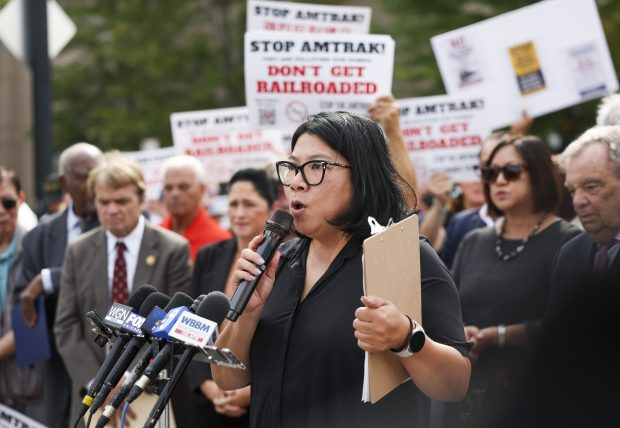
Hundreds of people from Bridgeport, Chinatown, and Armour Square gathered at Rate Field to protest a plan that could change their neighborhood dramatically. Amtrak and billionaire Justin Ishbia have proposed a massive railroad maintenance facility nearby. This could also mean relocating the White Sox from their longtime home on the South Side.
Ald. Nicole Lee of the 11th Ward addressed the crowd, expressing surprise and anger at the proposal announced in August. She stressed that the community did not wish to lose the White Sox or deal with the repercussions of a new railroad yard. She stated, “We’re obviously seriously alarmed, that yard is going to be right over your shoulder,” emphasizing the disrespect felt by the community. A major concern is that Amtrak’s $900 million plan might bring pollution from the trains.
Amtrak did not comment on the matter. Many community activists and politicians joined Lee. This included Cook County Commissioner John Daley and several running for mayor. They expressed clear opposition to Amtrak’s plan. State Rep. Theresa Mah (24th District) declared, “We’re stating in no uncertain terms our vehement opposition.” Another political figure, U.S. Rep. Mike Quigley, acknowledged the need for a new Amtrak facility but criticized the hasty decision to locate it in Bridgeport. He suggested an environmental review be completed before proceeding.
“You do need a new maintenance facility, but not here,” said Quigley.
Amtrak’s plan includes a new four-story facility along a railroad viaduct, north of 35th Street, on land currently used by Union Pacific. Should the plan proceed, transparency must be prioritized according to Illinois Comptroller Susana Mendoza. She noted, “The community deserves full transparency now, not after the decision has been made.”
Previous proposals by the White Sox, including moving to The 78 in the South Loop, fell through due to opposition and subsidy issues. Ishbia’s new development, titled The Railyards, envisions a new White Sox park on Amtrak’s current site along the Chicago River. It’s part of a mixed-use campus centering healthcare, partnered with Northwestern Medicine. Renderings depict a ballpark on Canal Edge, featuring healthcare facilities.
Ishbia bought a minority stake in the White Sox five years ago. He can acquire a controlling interest in 2034. The White Sox’s current lease at Rate Field expires in 2029. Ishbia plans to purchase Amtrak’s 47-acre facility on 14th Street once the railroad controls the railyard near Rate Field. His new stadium proposal claims private financing. Ishbia’s firm, Canal Edge, would develop the site with $125 million investment.
However, the current White Sox ownership clarifies the proposal’s implications are not final. A spokesperson conveyed that they were unaware of the full extent of Amtrak’s plans prior to public disclosure. Ishbia approached the team regarding his Canal Edge vision as a future site option once the current lease runs out. A multi-month study and analysis will evaluate the site viability.
Mayor Brandon Johnson maintained a neutral stance. He emphasized the importance of community involvement in any economic development, avoiding firm positions on tax financing for stadium construction. Notably, he refrained from directly addressing Lee and Daley’s opposition.
“No official decision has been made here,” said Johnson. He stressed centering community voices and adhering to regulations should plans proceed.
Federal plans disclosed Amtrak’s allocation of $700 million for acquiring Union Pacific land near Rate Field and developing the facility. In August, Interim Amtrak President Byl Herrmann highlighted the need for modern facilities enhancing service efficiency. “Investments in maintenance facilities will achieve improved on-time performance,” said Herrmann. An Amtrak spokesperson revealed a federal environmental review exemption granted by the Trump administration.
Lee viewed the exemption as concerning, uncertain of the city’s leverage against Amtrak. Federal status potentially allows bypassing city zoning and building rules. The absence of a detailed site plan and tight timeline heighten tensions. Ald. Pat Dowell stressed their exclusion from the process, highlighting insufficient community engagement.
“It doesn’t seem like a Chicago process. It looks like a Washington, D.C.-led effort,” said Dowell.
 Marine Veteran Suing Oregon School District Over Curriculum Reimbursement
 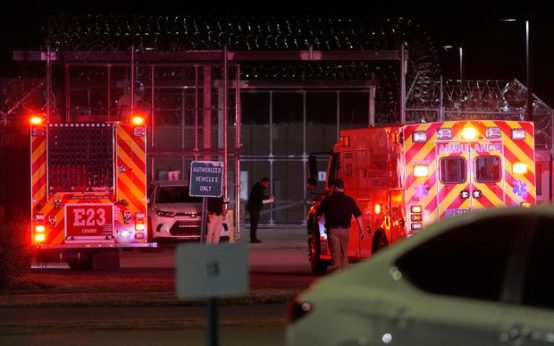 Tennessee Execution Halted as Issues Persist with Lethal Injection Protocol
 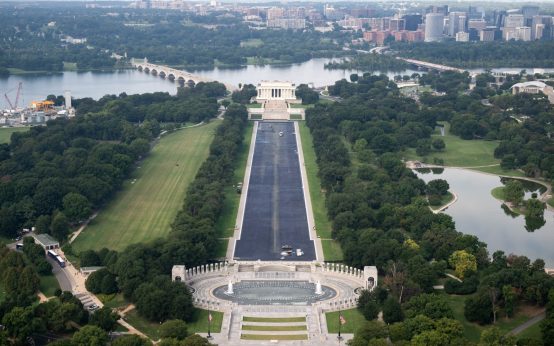 Judge Dismisses Case Against Former Olympian Over Lincoln Memorial Incident
 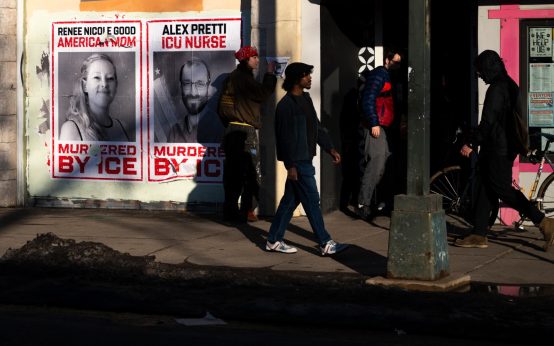 Minnesota Family Files Civil Rights Lawsuit Over ICE Agent Shooting
  California Bans Child Marriage, Protecting Minors
  U.S. States Extend Gas Tax Waivers Amid Rising Fuel Costs Due to Iran Conflict