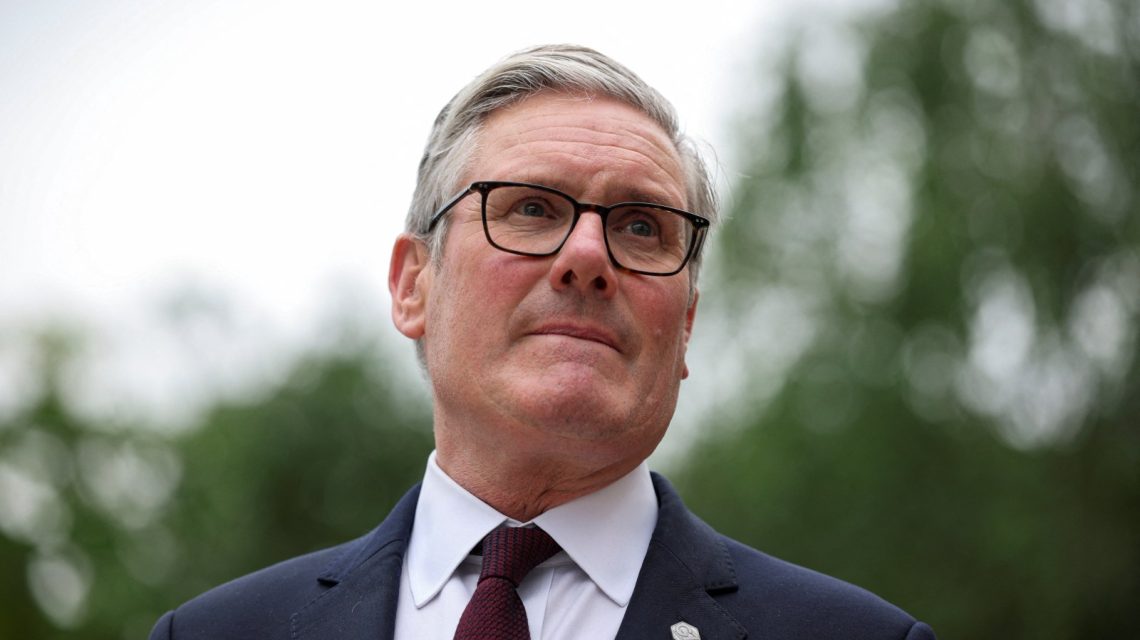
British Prime Minister Sir Keir Starmer has announced his resignation after enduring months of declining support and increasing pressure from within his own party. Despite his initial determination to stay on as leader and fulfill his mandate, Starmer declared on Monday morning that he will step down. This decision arrives just two years after leading Labour to an unprecedented landslide election victory.
The Labour Party will initiate a process to select a new leader before Starmer officially leaves office.
Why It Matters
Starmer’s successor will become Britain’s seventh prime minister in the decade since the Brexit referendum in 2016, highlighting an era of political turnover unseen in modern British history.
What To Know
The likelihood of Starmer stepping down increased when Labour politician Andy Burnham achieved a significant by-election victory, facilitating his return to Parliament. This removed a major barrier to a potential leadership challenge.
If Burnham succeeds in a Labour leadership contest, he would ascend to the role of Britain’s prime minister. Speculation around Burnham’s potential bid for the Labour leadership has been escalating for months, and his reentry into Parliament is widely perceived as a move towards mounting a challenge.
Burnham, currently serving as the mayor of Greater Manchester and formerly a Labour cabinet minister, is regarded as one of the party’s most popular figures.
Despite leading Labour to a substantial election victory in 2024, Starmer’s approval ratings have plummeted amid waning public support and mounting discontent within his own party. Starmer has faced criticism for not fulfilling several of Labour’s key promises, such as economic growth initiatives, while also encountering pressure over immigration policies, welfare reform, and debates on defense spending.
The defense spending controversy became a significant issue when Defense Secretary John Healey resigned, asserting that the government’s military funding plans were inadequate. More broadly, critics argue that Starmer has struggled to articulate a distinct political vision for his government. Some voters view him as cautious and managerial, rather than an agent of substantial change.
Earlier this year, Starmer’s political standing was further damaged by the controversy surrounding his appointment of Peter Mandelson as Britain’s ambassador to the United States. Revelations about Mandelson’s past relationship with convicted sex offender Jeffrey Epstein sparked questions over Starmer’s judgment in choosing Mandelson for one of the UK’s most prominent diplomatic roles and whether proper vetting procedures were followed.
Starmer subsequently stated that Mandelson had misled authorities about the extent of his ties with Epstein and issued an apology for appointing him. However, the fallout significantly undermined Starmer’s authority and he has struggled to regain political momentum.
This is a developing story and more updates will follow.
 Concerns Over Changes to Voter-Registration Form for Americans Abroad
  Trump’s 2024 Campaign Targets Young Men Through Cryptocurrency
  Trump’s White House Visitor Center Proposal Gains Bipartisan Support
  State Department Simplifies Passport Process with Online Applications
  Becerra and Hilton Clash in California Gubernatorial Debate
  California Voters to Decide on $7.5 Billion State Research Fund