During the holiday season of 2023, Chicago witnessed a surge in migrants sent from Texas, forcing local resources beyond their limits. Temporary shelters quickly filled up, leading to the establishment of sprawling tent camps near police stations. These arrivals, primarily asylum seekers, escaped violence and famine in their homelands, carrying only the hope for a better life.
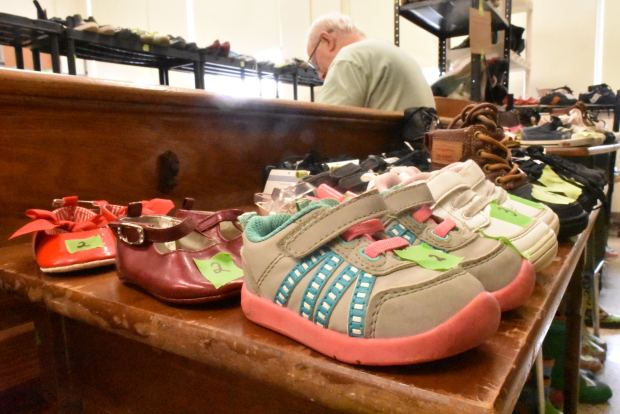
Many migrants sought support at the Oak Park Migrant Ministry, an interfaith initiative founded by the Catholic Parishes of Oak Park in a former school in Forest Park. Every Tuesday, migrants could receive a hot meal, clothing, and assistance with legal documents. Volunteer Celine Woznica recalled the early chaotic days in late 2022 when large groups began arriving. The ministry provided essential emergency services, including clothing and temporary shelter amenities like air mattresses and tents.
The St. Catherine’s-St. Lucy’s rectory became a vital location for these services. Initially, the expectation was that the need would last only a few weeks, but the demand persisted. The rectory supplied more than just showers; it became a hub for diverse needs. As migrants waited for hearings, many of them sought necessities provided by volunteers, such as clothing, fans, and suitcases.
“It’ll only be for a couple of weeks,” Woznica recalled initially thinking.
Organization of resources is key. Inside the ministry’s free store, items like bedding, toiletries, and clothing are neatly arranged. Volunteers distribute folders containing critical information, including legal papers authorizing temporary custody for their children. Many migrants fear filling out this paperwork due to potential actions by federal agents.
Angel Suarez, a Venezuelan migrant based in Chicago for three years, faces an upcoming court hearing. Without legal representation, he relies on his resolve and documentation to secure his stay. His contributions to the local economy through delivery services reflect a small part of his integration efforts. However, uncertainties loom as many migrants like him face the harsh realities of unpredictable immigration processes.
Legal challenges abound. Recent shifts in immigration policy have made processes less stable. For example, changes have affected the temporary protected status of Venezuelan migrants, adding uncertainty amid political upheaval in their homeland. Suarez maintains hope, despite the immigration system’s increasing complexity.
Mega-master hearings, designed to expedite cases, have introduced further distress. These sessions bundle hundreds of cases, often overwhelming participants who lack language support. Immigration advocate Cynthia Brito, who has experienced this environment firsthand, describes the chaotic atmosphere as detrimental to fair decision-making.
The potential consequences are dire. Missed court dates due to detainment could unravel the lives migrants have painstakingly started to build. Many families balance the constant fear of being separated during routine activities. Despite adversity, some, like Suarez, remain hopeful, while others reconsider their future in the face of relentless obstacles.
The journey these migrants endure to reach safety is fraught with peril. Crossing treacherous areas exposes them to disease and violence. Survivors often recount haunting experiences along the way. Now, as they await decisions that could either secure their future or force them into further uncertainty, they reflect on whether their arduous journey will be justified.
 Fishing in El Niño Waters Brings Surprises for Anglers
  Will County Election: Key Races for Clerk, Superintendent, and Treasurer
  Ken Paxton Receives Contributions Amid Senate Bid
  Columbus Day vs. Indigenous Peoples’ Day: Differences on Calendar Apps
  Debate Over Transgender Athlete Participation in High School Sports
  Federal Concerns Over Kratom-Derived Products Grow